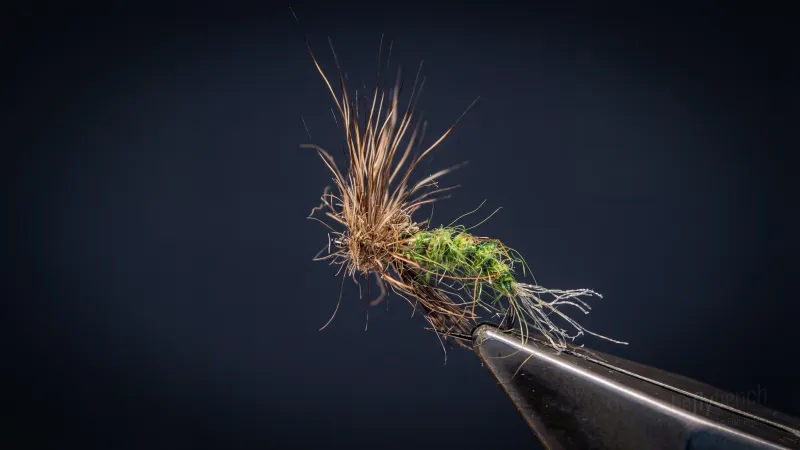
Dry FliesTrout M.R.E.
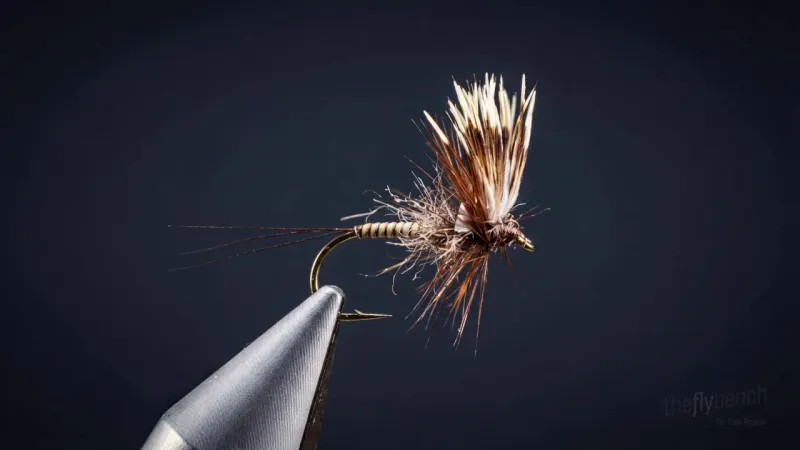
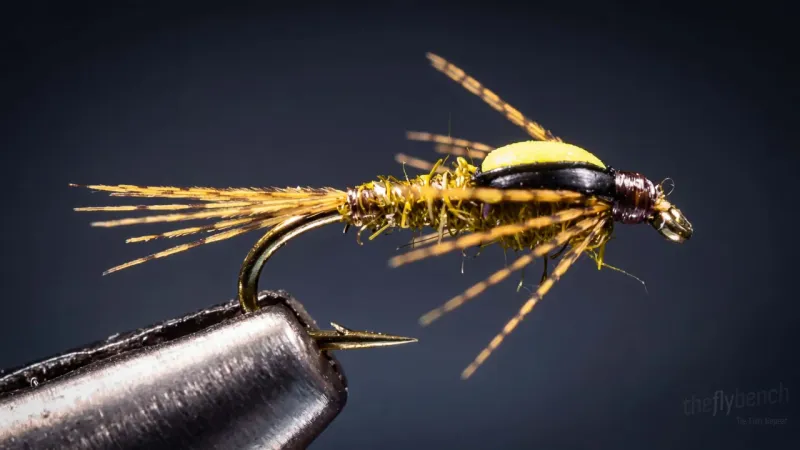
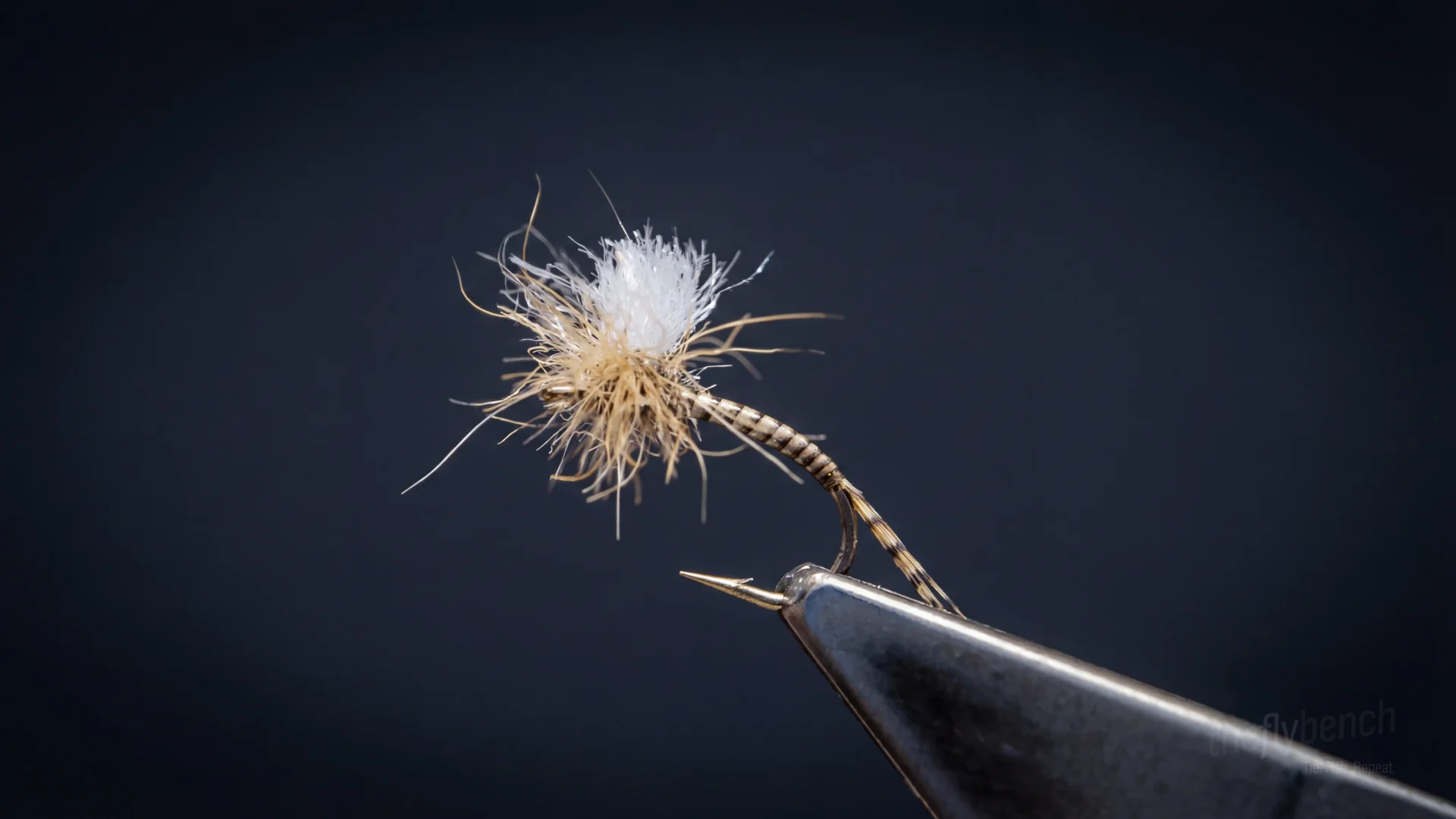
Richard Ross's Trout M.R.E. strips a peacock quill for a segmented abdomen, then finishes with wing buds of cream snowshoe hare, a pine squirrel thorax, and a white Antron sighter that stands out in the film. It's built to sit low in the surface, matching mayflies or caddis caught mid-emergence rather than a fully upright adult.
Spring, Summer, Fall
Intermediate
Trout
Feb 2026
Overview
A stripped peacock quill wound as the abdomen gives a segmented, iridescent body, backed by a lemon woodduck shuck trailing off the bend to suggest a shedding nymphal skin. Cream snowshoe hare tied as wing buds rather than full wings keeps the profile low and unfinished-looking, while pine squirrel dubbing builds the thorax. A tuft of white Antron sits up out of the film as a visible sighter, letting an angler track the fly without disturbing its low posture. Richard Ross designed it to imitate mayflies or caddis caught between the nymphal and winged stages, fished dead-drift so it rides in the surface film.
Where to Buy This Fly
We only link to fly shops we trust. Some links are referral links, which may earn us a commission at no extra cost to you.
Materials
- Hook:
- Umpqua U201 #14 (or equivalent)
- Thread:
- Benecchi 12/0, tan
- Shuck:
- Lemon woodduck barbs
- Abdomen:
- Peacock quill, stripped
- Wing Buds:
- Snowshoe hare, cream
- Sighter:
- Antron, white
- Thorax:
- Pine squirrel back
Behavior & Presentation
Natural Behavior: Adult mayflies and caddis drift on the surface after emergence or egg-laying, wings spread or folded, creating substantial silhouettes that signal high-energy meals to opportunistic feeders. The chunky profile suggests multiple insects or a single large specimen worth pursuing.
Where Trout Eat It: Larger fish hold in runs and pools where substantial drifting insects concentrate, positioning at current breaks and along seams where food funnels naturally. Energy-conscious trout target these feeding lanes during peak surface activity.
How to Fish It: Present with upstream casts allowing drag-free drift through prime holding water, or add subtle twitches near bank structure to suggest struggling insects. The substantial offering triggers aggressive responses from fish seeking calorie-dense meals.
Best Water: Most productive along current breaks, seams, and foam lines where surface insects accumulate, plus tail-outs and pool heads where larger trout intercept drifting food.
Strike Type: Strikes range from confident head-and-tail rises to aggressive splashy takes, reflecting the energy-conscious decision to pursue a substantial meal.
Fishing Strategy
Rigging Suggestions: Fish on 9-12 foot leader with 3X-4X tippet. Heavier tippet matches substantial profile and supports aggressive strikes from larger, energy-conscious fish.
Seasonal Timing: Most effective during terrestrial season June through September when water temperatures range 55-70°F. Mid-day periods produce best results when energy-conscious trout seek substantial food items over frequent small offerings.
Pro Tips: Chunky profile appeals to energy-conscious trout seeking substantial meals. The mixed materials suggest multiple food sources, triggering opportunistic feeding when fish prioritize calorie intake over selective behavior.
Entomology
In nutrient-rich waters, caddis populations explode into massive emergences where hundreds of adults crowd the surface simultaneously. Fish respond to these superhatches with sustained surface feeding, knowing the sheer volume of insects guarantees successful strikes.
- Order
- Trichoptera
- Common Name
- Caddisfly
- Organism Type
- insect
- Life Stage
- adult