Overview
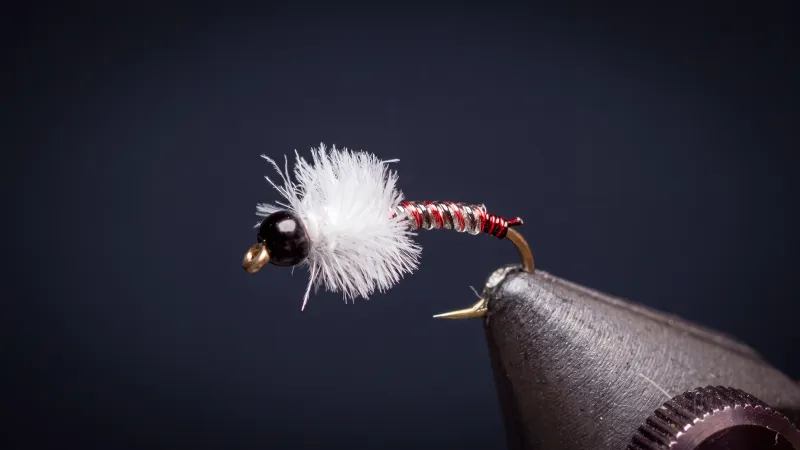
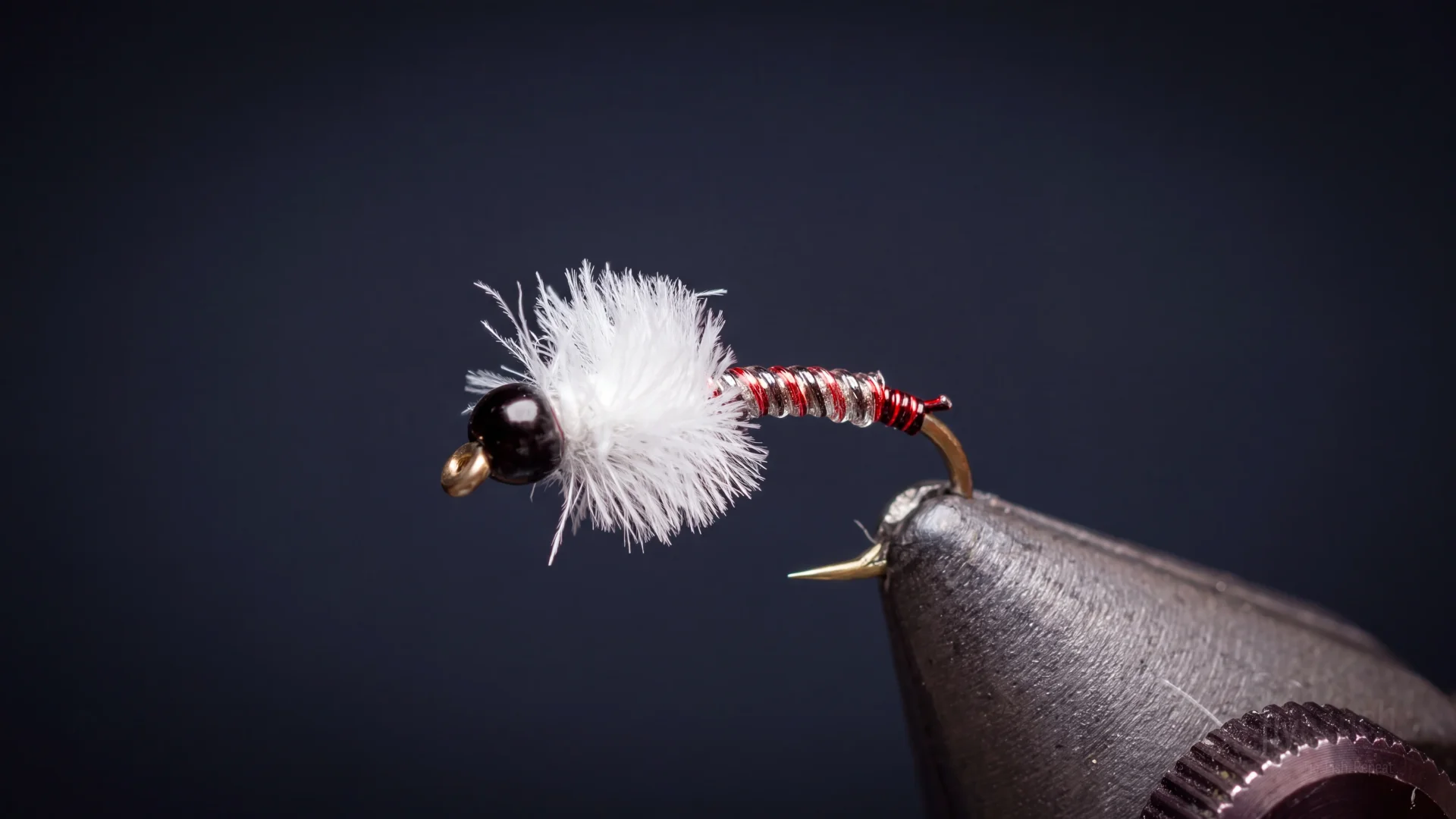
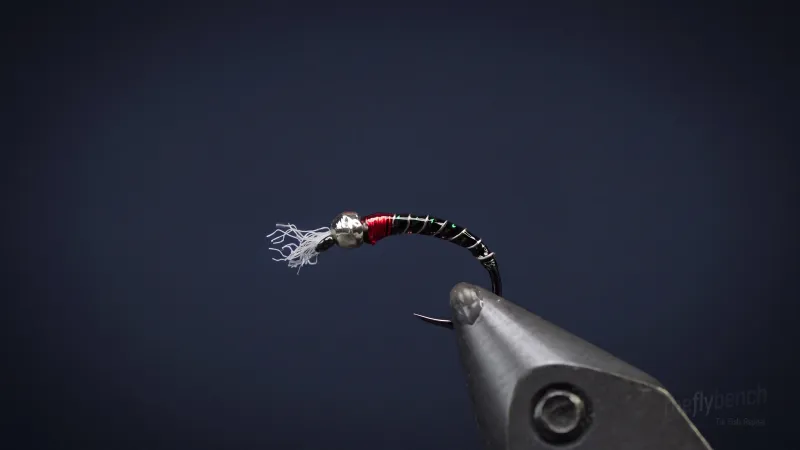
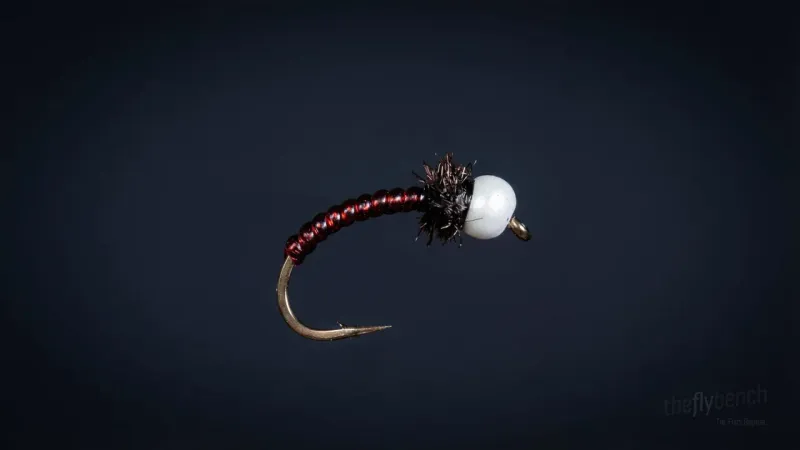
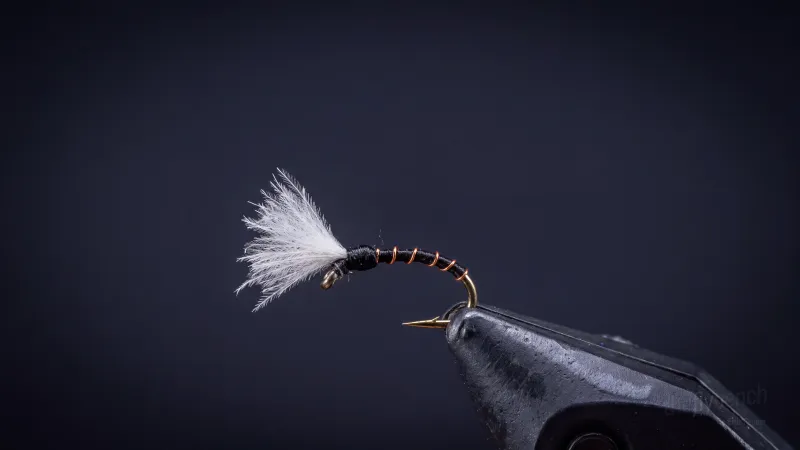
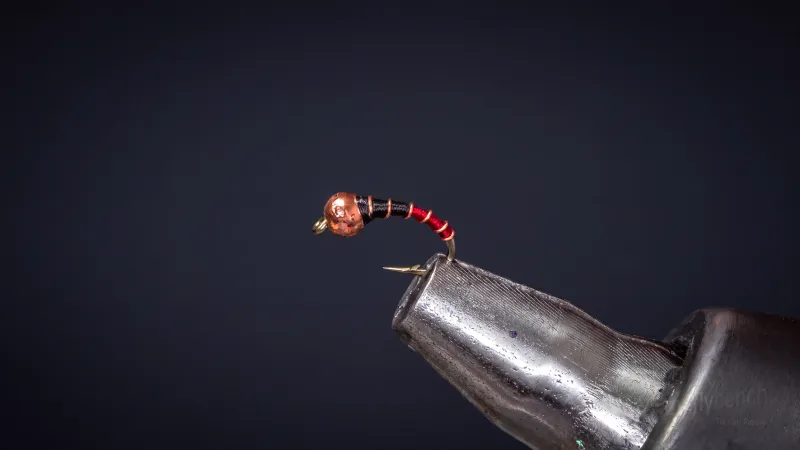
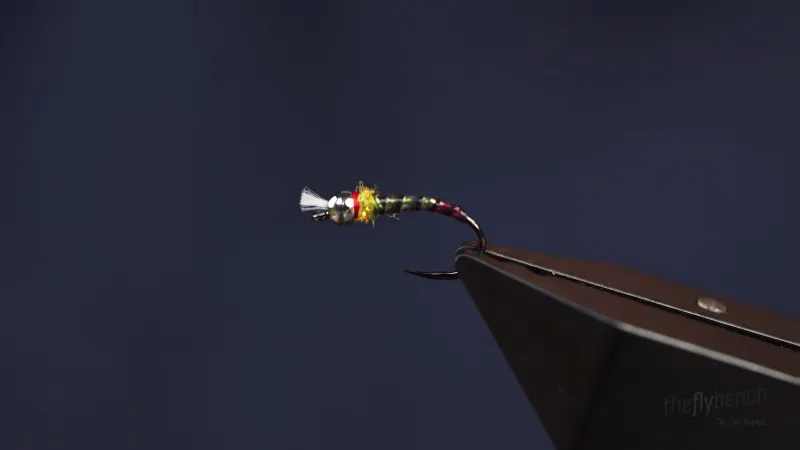
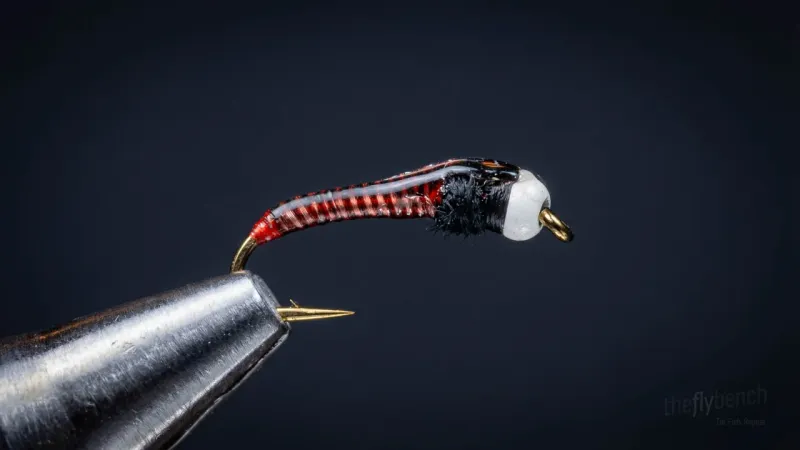
The Titan Tube Midge comes from Landon Mayer's book Guide Flies: Easy to Tie Patterns for Tough Trout, where he presents it as a fly for lake anglers. To load the body, twist the tubing forward over the paired wires instead of pushing the wire through. Keep the black and red wires flat so their stripes alternate. Swap in a tungsten bead to sink it faster, and try other tubing and wire colors to match local larvae.
Related patterns
Behavior & presentation
- Natural Behavior
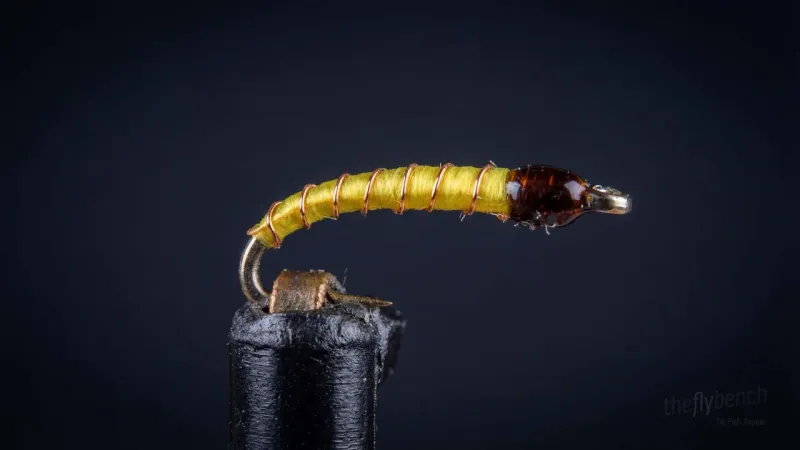
- Bloodworms are red chironomid larvae that live in soft mud on lake bottoms. When they leave their burrows they wriggle slowly in a tight figure-eight, often just off the bottom.
- Where Trout Eat It
- Cruising trout pick bloodworms off muddy shoals and the soft margins of bays. When larvae are active higher in the water, trout also take them from the middle of the water column.
- How to Fish It
- Hang it under an indicator with the fly set a foot or so above the mud, or fish it on a long leader with a very slow hand-twist retrieve. It also works as the point fly below a chironomid pupa.
- Best Water
- Muddy flats and shoals 6-20 feet deep, drop-off edges, weed-bed margins, and sheltered bays of reservoirs and alpine lakes where bloodworms are thick.
- Strike Type
- The indicator slowly sinks or slides sideways as a cruising fish eats the hanging fly. On a hand-twist retrieve the line just goes heavy.
Fishing strategy
- Rigging Suggestions
- Use a floating line and a long leader to 5X fluorocarbon, with an indicator set so the fly hangs just above the bottom. Pair it with a chironomid pupa above it to cover two depths at once.
- Seasonal Timing
- Best from ice-off through June and again from September into late fall, when bloodworms are active near the bottom before and between big chironomid hatches.
- Pro Tips
- Use the brass-bead version when fish cruise high in the water and switch to tungsten to get down to fish feeding on the bottom. Lower the indicator a foot at a time until you find the depth the fish are feeding at.
Entomology
Bloodworms are chironomid larvae colored red by hemoglobin, which lets them survive in the low-oxygen mud of lake bottoms. They come out of their burrows to feed and move to new spots, wriggling slowly through the water just above the bottom. Trout eat them all season because they are so plentiful.
- Order
- Diptera
- Family
- Chironomidae
- Common name
- Bloodworm
- Organism
- insect
- Life stage
- larva
Pattern details
- Stillwater
- Rocky Mountain
- indicator-nymph
- midge-hatch
- modern
- guide-fly
- cold-water