

Overview
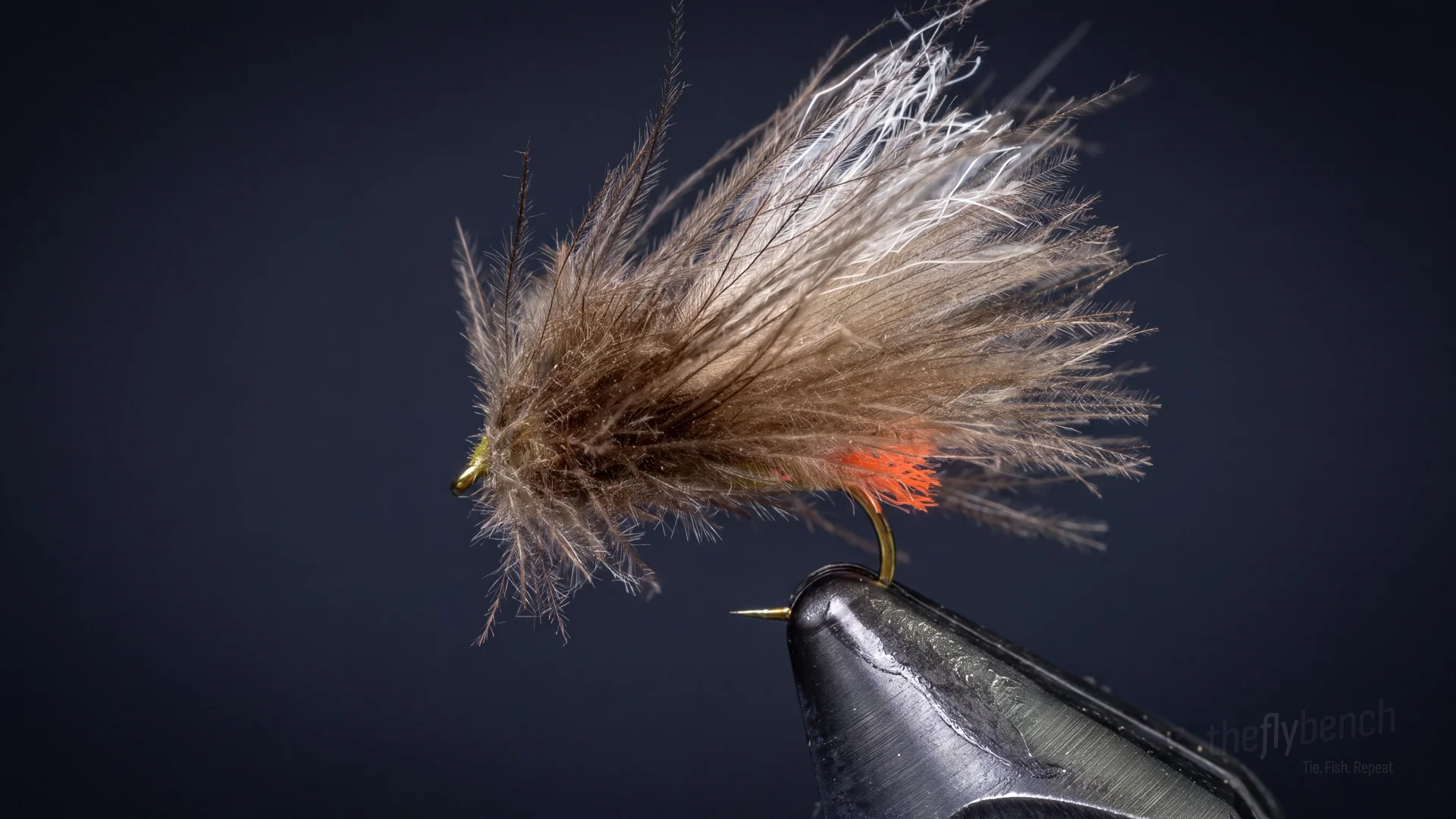
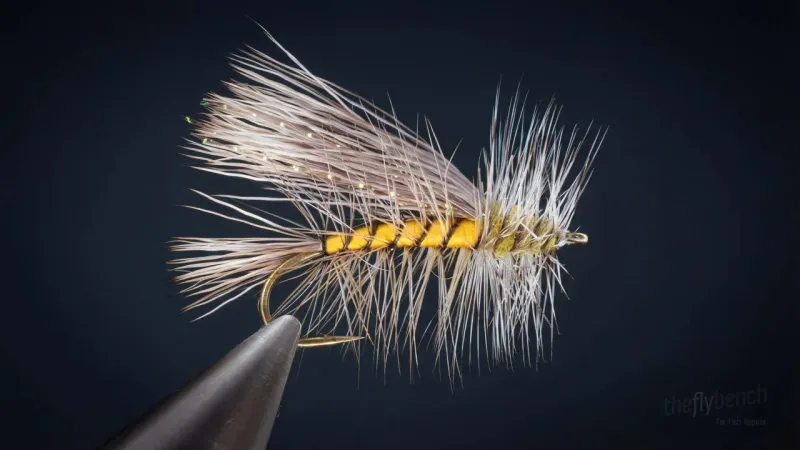
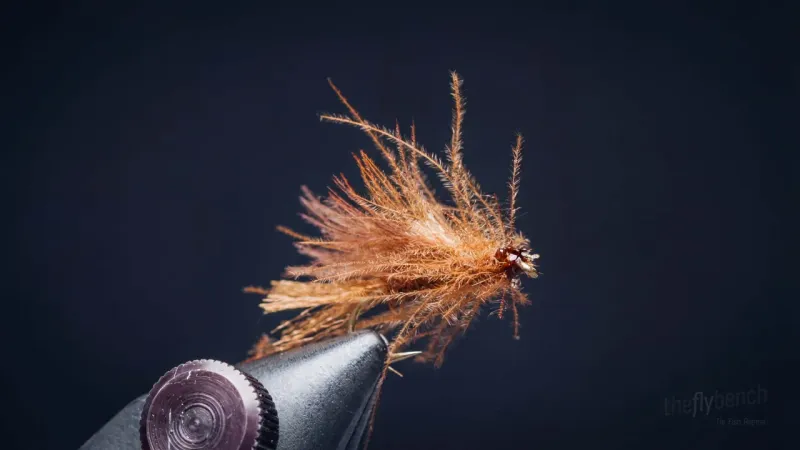
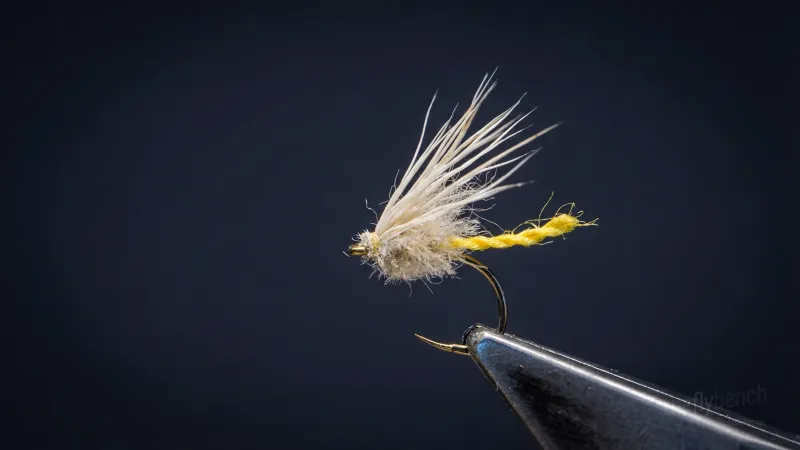
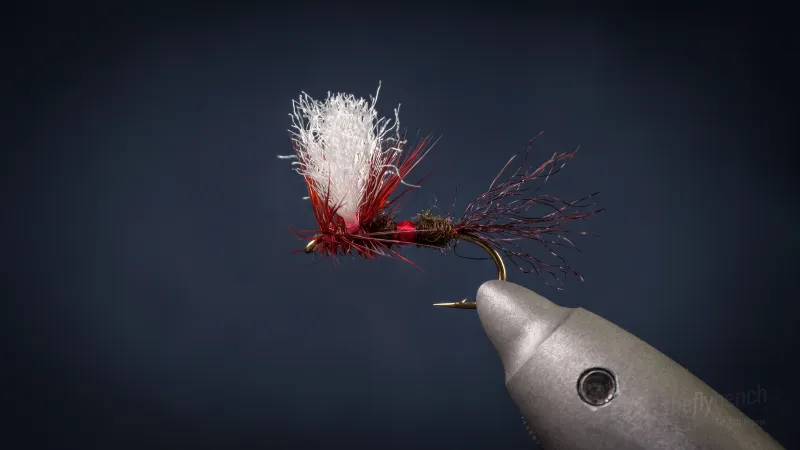
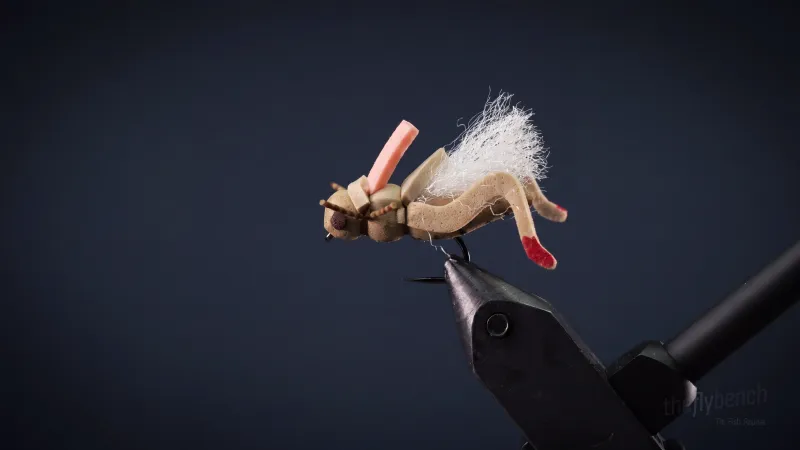
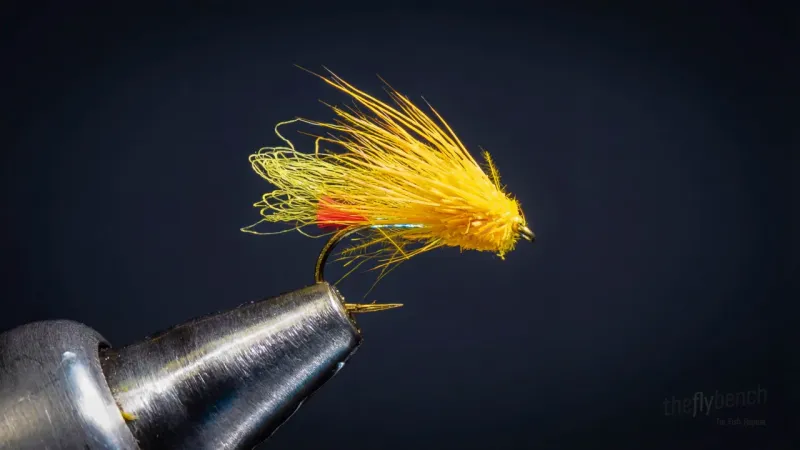
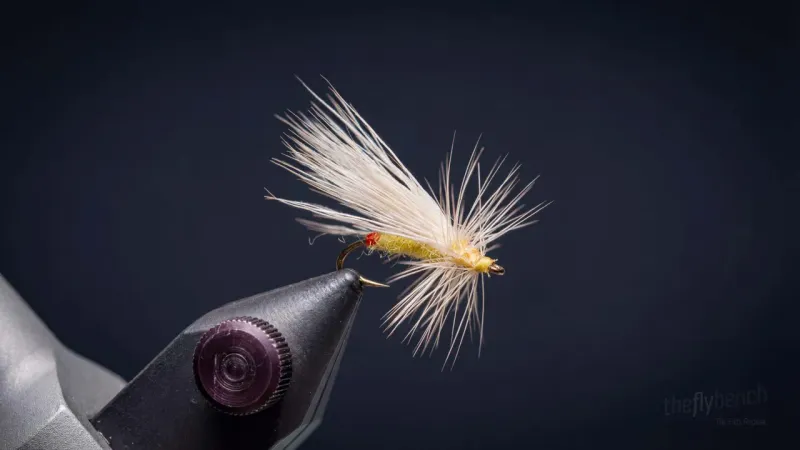
Lance Egan rebuilt his Corn Fed Sally around CDC, borrowing the layout of his Corn Fed Caddis. He wanted something daintier than a yellow Stimulator or a foam stonefly, because trout rise to sallies with more care than they show big Salmonflies or Golden Stones. CDC forms both the wing and the dubbing-loop hackle, and a white EP fiber wing keeps the small fly visible. The hackle is the slowest step to tie.
Related patterns
Behavior & presentation
- Natural Behavior
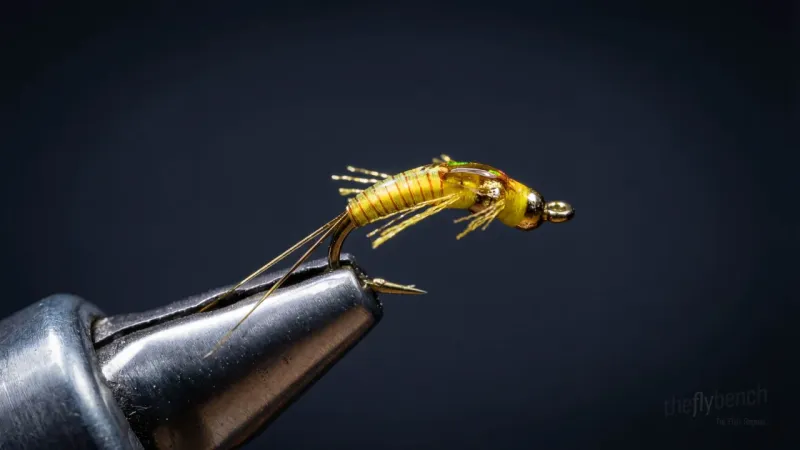
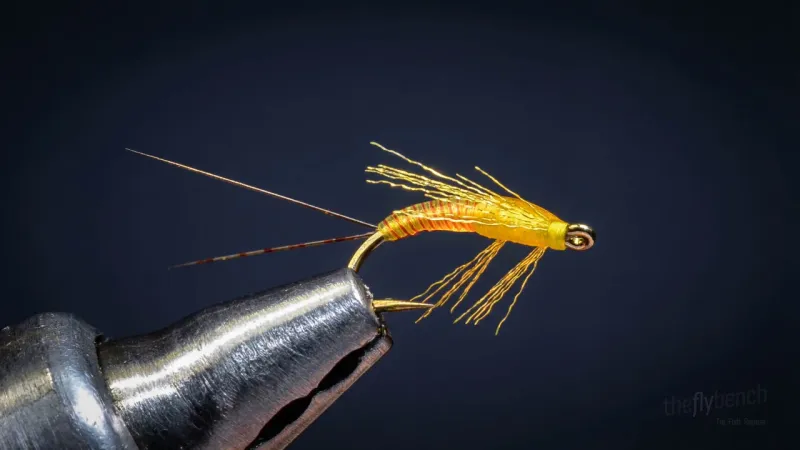
- Yellow sallies are small, pale stoneflies that often come off in large numbers. Adults flutter back to the river to lay eggs, touching down briefly and riding the film with their bright orange-tipped abdomens showing.
- Where Trout Eat It
- Fish slide into soft edges beside riffles and onto flats below them, picking off adults drifting through narrow lanes rather than chasing fluttering bugs.
- How to Fish It
- Cast slightly upstream of a rising fish and let the fly ride drag-free. Use a reach mend or a slack-line cast so it drifts into the lane flush in the film.
- Best Water
- Riffle tail-outs, current seams along cobble banks, and the slick water beside boulders where sallies collect after laying eggs.
- Strike Type
- Expect a careful, unhurried sip rather than the splashy take that a big stonefly draws. Let the fish close its mouth and turn down before lifting the rod.
Fishing strategy
- Rigging Suggestions
- Fish it alone on a 9- to 12-foot leader tapered to 5X or 6X. The light CDC dressing is built to land softly, not to float a heavy nymph, so drop only a small unweighted emerger behind it if you add a second fly.
- Seasonal Timing
- Fish it during yellow sally hatches from late spring through midsummer, often in the warm afternoons and evenings once larger stonefly hatches have tapered off.
- Pro Tips
- Treat the CDC with powder floatant instead of gel, and false cast or dry it with a desiccant after each fish. Carry a few in size 16 for slower water where fish refuse the size 14.
Entomology
Yellow sallies are small, yellow stoneflies that crawl out on streamside rocks to hatch and then return to the water to lay eggs. Large numbers on the water bring trout up to feed steadily but cautiously on the drifting adults.
- Order
- Plecoptera
- Family
- Perlodidae
- Common name
- Yellow Sally
- Organism
- insect
- Life stage
- adult
Pattern details
- Moving Water
- Rocky Mountain
- dead-drift
- stonefly-hatch
- modern
- low-clear-water
- freestone