




Overview
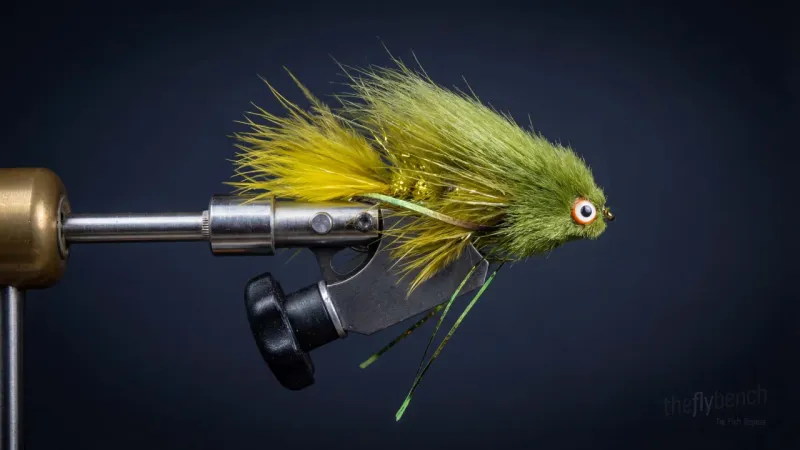
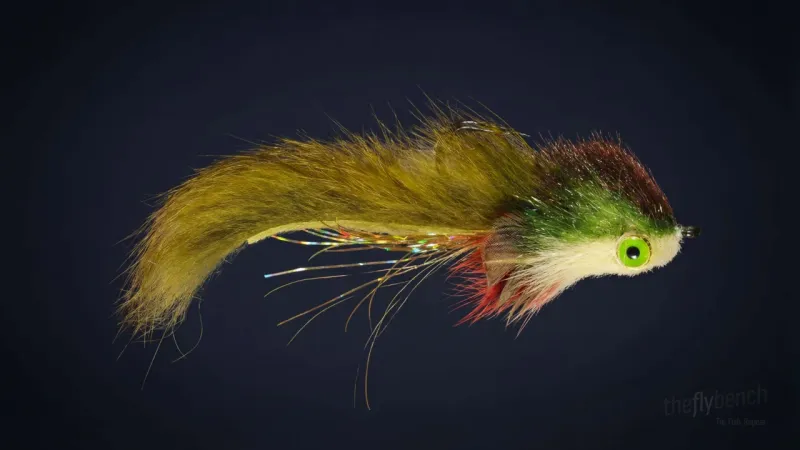
The 3/8-inch black crosseyed conehead front-loads the fly for a quick, jig-like dive and pairs with red holographic dome eyes to trigger reaction strikes, while the articulated Gamakatsu Octopus trailer hook lets the olive variant zonker strip tail and body kick independently on the retrieve. Pearl Ice Dubbing builds a sparkly body between layered collars of red guinea and olive grizzly hen saddle, which flare and collapse with each strip to imitate a sculpin's pectoral fins and gill flare. Fished with a sink-tip line and short, aggressive strips through deep runs and log jams, its size and weight make it a dedicated big-fish streamer year-round.
Related patterns



Behavior & presentation
- Natural Behavior
- Sculpins dart erratically between rocks with oversized pectoral fins creating jerky, bottom-hugging movements while hunting invertebrates and defending territory. A single sculpin provides more calories than dozens of insects, making them worth aggressive pursuit from predatory trout.
- Where Trout Eat It
- Predatory trout ambush from boulder-strewn runs, deep pools, and undercut banks, attacking fleeing sculpins in 3-8 feet of water.
- How to Fish It
- Use aggressive strip-pause retrieves with 6-12 inch pulls, or dead drift along rocky bottom structure, varying cadence to trigger territorial strikes.
- Best Water
- Fish undercut banks and channel swings where predatory fish stage for ambush opportunities in boulder-strewn structure.
- Strike Type
- The strike arrives as a violent grab that stops the fly mid-swing or mid-strip, often jolting the rod; answer with powerful lateral strip-set to bury hooks in large predatory jaws.
Fishing strategy
- Rigging Suggestions
- Use 0X-2X fluorocarbon tippet (12-15 lb test) on 7-9 foot leaders. Sink-tip or full sinking lines (Type III-VI) get the fly into strike zones quickly.
- Seasonal Timing
- Fish , with peak effectiveness October through March when sculpins are most active and trout key on larger meals. Water temperatures between 38-55°F are optimal.
- Pro Tips
- Fish this pattern on overcast days when large trout move into shallower water. The Sculpin Helmet creates significant water displacement, making it effective in off-color water with 1-2 feet visibility.
Where to fish it
Rivers anglers pair with this fly, with local shops that stock it.
River details and fly shops from River & Run, our sister site.
Entomology
Sculpins dart erratically between rocks and substrate cover, their oversized pectoral fins creating jerky, bottom-hugging movements as they hunt invertebrates and protect territory. Predatory fish key on sculpins because a single sculpin provides more calories than dozens of insects, making them worth the energy expenditure of an aggressive chase.
- Organism
- baitfish
- Life stage
- general
Pattern details
- Moving Water
- Pacific Northwest
- Great Lakes
- Alaska
- British Columbia
- Southeast
- active-retrieve
- strip-retrieve
- guide-fly
- swing
