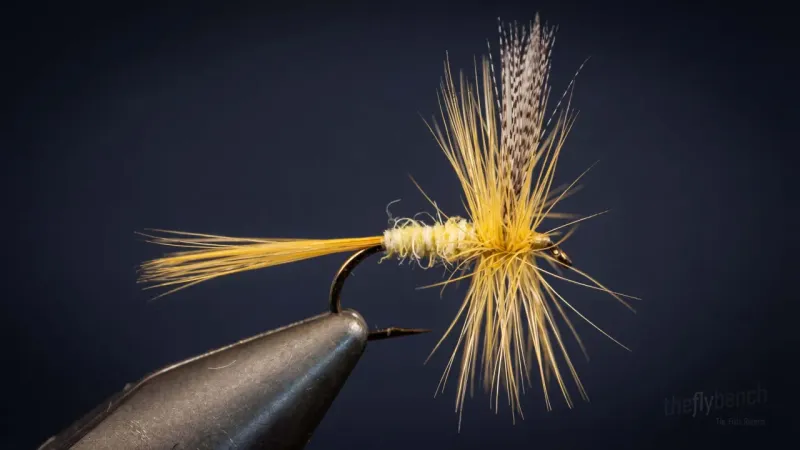
Dry FliesQuill Wing Blue Dun
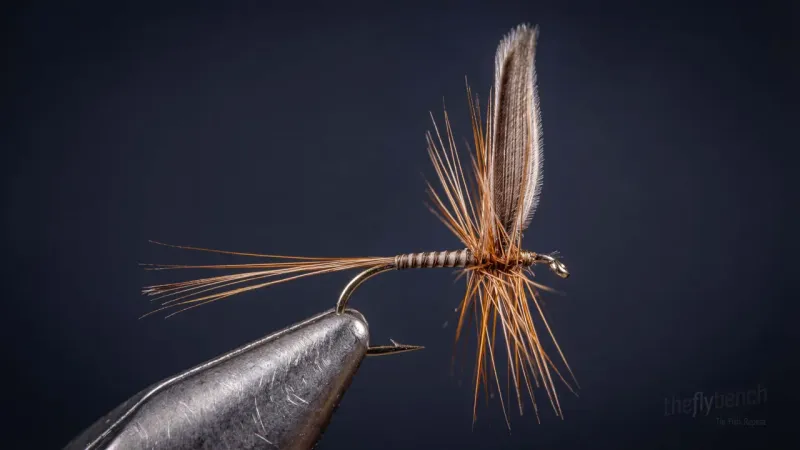
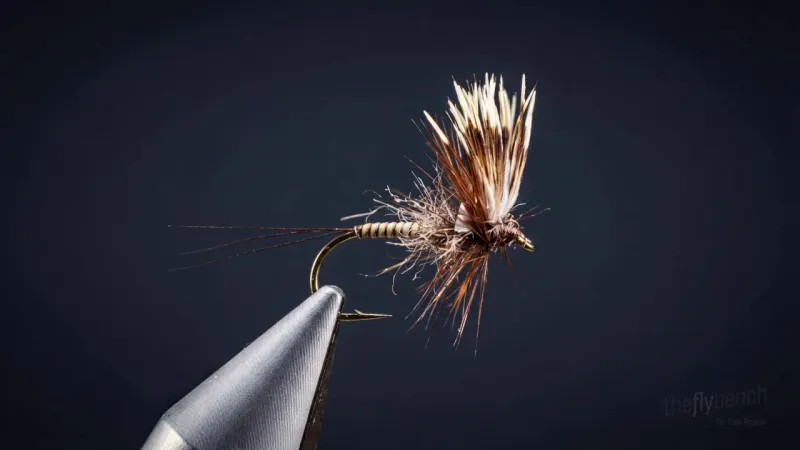
The Quill Wing Blue Dun is a classic dry fly featuring traditional quill wing construction from matched mallard wing quills. This time-honored technique creates one of the best footprints and silhouettes of an adult mayfly. A elegant pattern that excels during Blue-Winged Olive and other mayfly hatches.
Spring, Fall
Advanced
Trout
Dec 2025
Overview
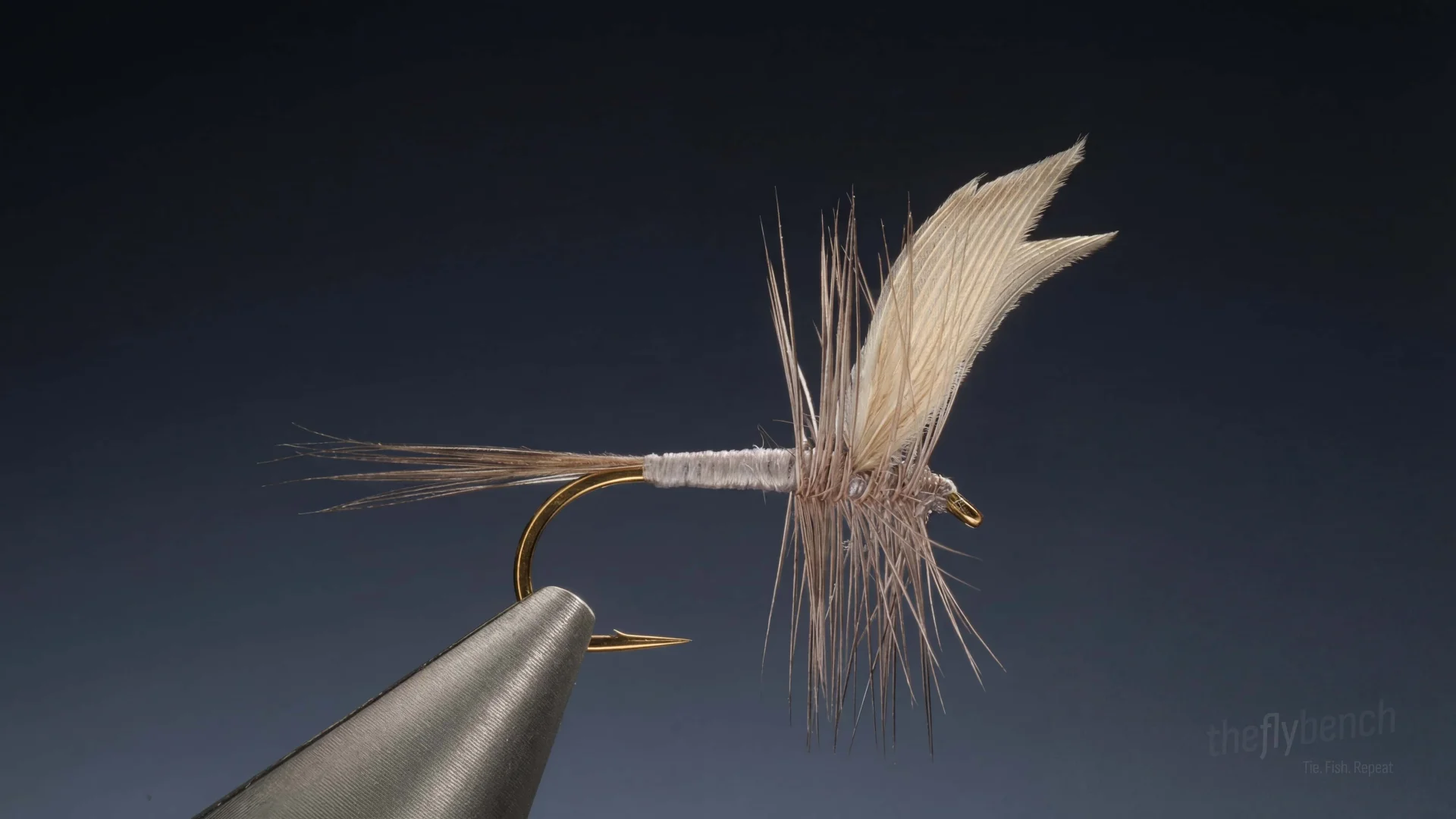
Quill wing construction represents one of the oldest and most refined dry fly techniques, dating back to the origins of modern fly fishing. The matched wing quill sections create a remarkably realistic wing profile that selective trout find irresistible. This technique requires practice to master—proper wing alignment and proportion are critical. Barry Ord Clarke demonstrates the traditional method that produces consistent results. The minimal materials list belies the skill required for execution.
Materials
Hook: Mustad R30, size #12–#16
Thread: Sheer 14/0, grey
Wings: Matched mallard wing quill sections
Tail: Grey hackle fibers
Body: Tying thread, built up
Hackle: Blue dun cock hackle
Behavior & Presentation
Natural Behavior: Freshly hatched mayfly duns float downstream as their wings dry, maintaining stationary positions in the current until achieving flight readiness. Trout target these drifting duns during their predictable surface rides through prime feeding lanes.
Where Trout Eat It: Fish intercept duns in the surface film, focusing on seams and runs where adult mayflies drift helplessly.
How to Fish It: Fish with drag-free drift using upstream casts and careful mending to maintain natural float.
Best Water: Target seams and runs in spring creeks, working current breaks where duns concentrate in moderate flow.
Strike Type: Expect visible sipping rises as fish confidently take drifting adults.
Fishing Strategy
Rigging Suggestions: Use 12-foot or longer leaders tapered to 5X–7X tippet for spooky fish. Fish on the finest tippet practical for the conditions.
Seasonal Timing: and fall Baetis hatches, typically March through May and September through November. The pattern excels when mayflies with grey wings are emerging.
Pro Tips: Apply floatant sparingly to hackle and tail—avoid the wings. The sparse dressing rides well in the film.
Entomology
Freshly hatched mayfly duns ride downstream currents while their wings gradually dry and harden, maintaining stationary positions relative to the current. Fish selectively target these post-emergence duns during extended float times, exploiting the predictable drift patterns and the insects' temporary inability to achieve flight.
- Order
- Ephemeroptera
- Common Name
- Mayfly
- Organism Type
- insect
- Life Stage
- adult