Dry FliesPuterbaugh Caddis Variant
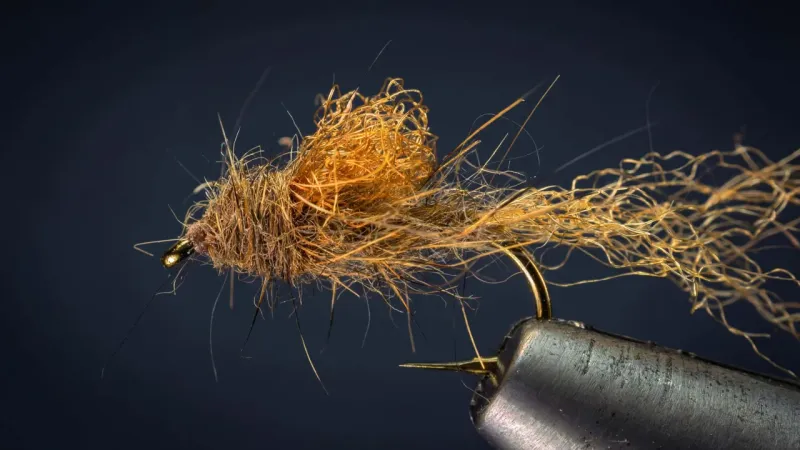
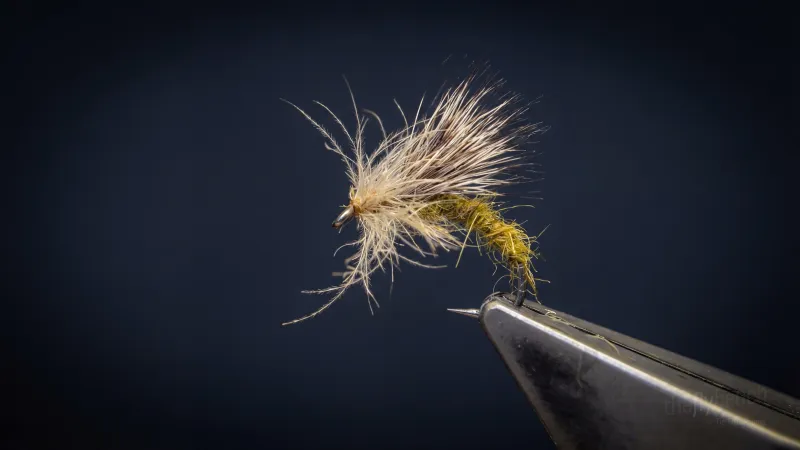
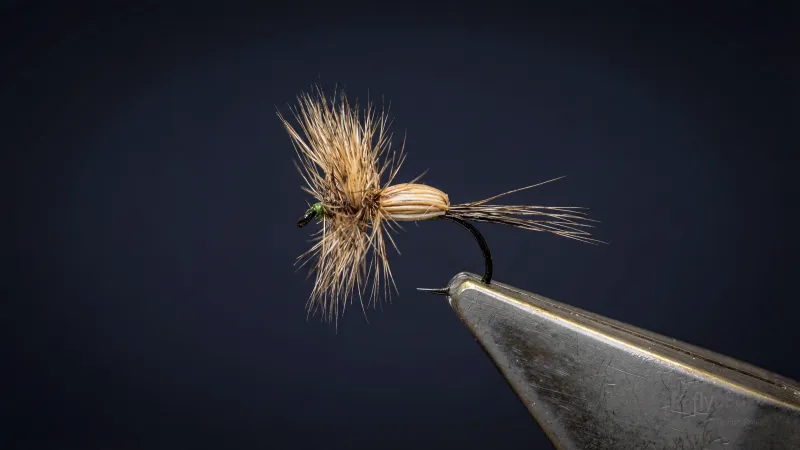
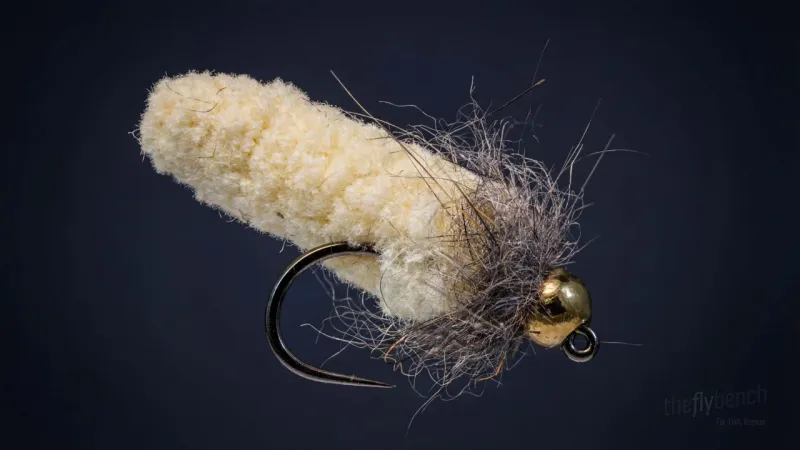
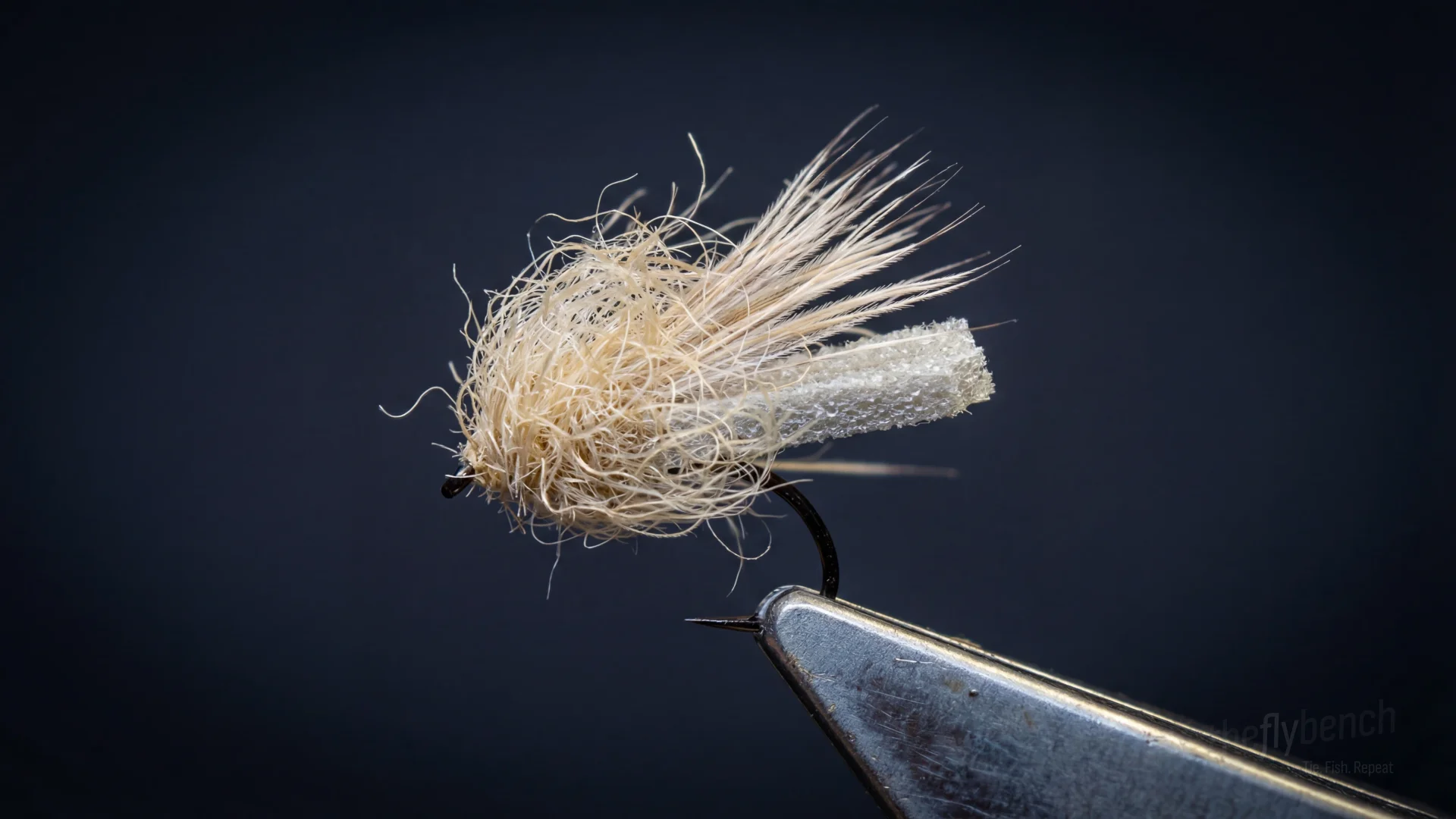
Built on an extended foam body, this caddis variant uses closed-cell foam instead of dubbing or deer hair to carry the abdomen, keeping the fly floating flush in the film through repeated refloatings. A deer hair wing gives it a natural caddis-tent silhouette, while a snowshoe hare thorax spun in split thread adds a buggy collar right behind the eye.
Spring, Summer, Fall
Intermediate
Trout
Feb 2026
Overview
Hans Weilenmann's take on Puterbaugh's original foam caddis swaps the usual dubbed body for a slim foam extension, trading buoyancy problems for a fly that survives repeated floatant treatments and fish takes. The thorax, trimmed flush under the hook after being spun in split thread, keeps the profile low without adding drag. It covers a wide range of sizes on the Tiemco 102Y hook, from 11 down to a fussy 17, useful when exact color match matters less than a durable float.
Where to Buy This Fly
We only link to fly shops we trust. Some links are referral links, which may earn us a commission at no extra cost to you.
Materials
- Hook:
- Tiemco 102Y #11-17
- Thread:
- Benecchi 12/0, tan
- Body:
- Tying thread
- Extended body:
- 1.5mm closed cell foam, grey (or color to match the natural)
- Wing:
- Deer hair (or bleached elk)
- Thorax:
- Snowshoe hare, natural cream (or color to match the natural) - in split thread, trimmed flush under hook
Behavior & Presentation
Natural Behavior: Adult caddis bounce along the surface in short hops as they attempt to dry their wings for flight, creating intermittent splashes that attract fish. During egg-laying, they dive and skate across the surface in frantic movements.
Where Trout Eat It: Surface and surface film in riffles, runs, and pocket water where caddis populations thrive.
How to Fish It: Present with a drag-free dead drift during emergence periods, followed by occasional skating and twitching motions to imitate egg-laying adults because these struggling behaviors make caddis vulnerable. The high-floating design allows for aggressive manipulation without sinking.
Best Water: Riffles, runs, pocket water of freestone streams, tailwater runs with moderate currents, current seams, and spring creek edges. Also productive in lake near inlet streams during evening emergences.
Strike Type: Visible eat or splash as trout intercept the skating or drifting fly. Surface disturbance and rings indicate takes.
Fishing Strategy
Rigging Suggestions: Use a 9-12ft 5X tippet for balanced presentations. In technical water or for selective trout, extend to 6X. Apply generous floatant to maintain high-riding profile. In faster pocket water, 4X provides durability.
Seasonal Timing: Most effective late April through September during active caddis seasons, with peak effectiveness in June and July. Focus on afternoon through evening hours from 3 PM through dusk when caddis activity intensifies, continuing through October during fall caddis hatches. Most effective when water temperatures are 52-68°F because caddis emergence correlates with these conditions.
Pro Tips: The variant design provides enhanced visibility and floatation compared to standard caddis patterns, making it ideal for broken water and fast currents where trout need to locate the fly quickly.
Entomology
Caddis bounce along the surface in short hops as they attempt to dry their wings for flight, creating intermittent splashes. Fish track these stop-and-go movements, timing their rises to intercept the insects during the stationary moments between jumps.
- Order
- Trichoptera
- Common Name
- Caddisfly
- Organism Type
- insect
- Life Stage
- adult