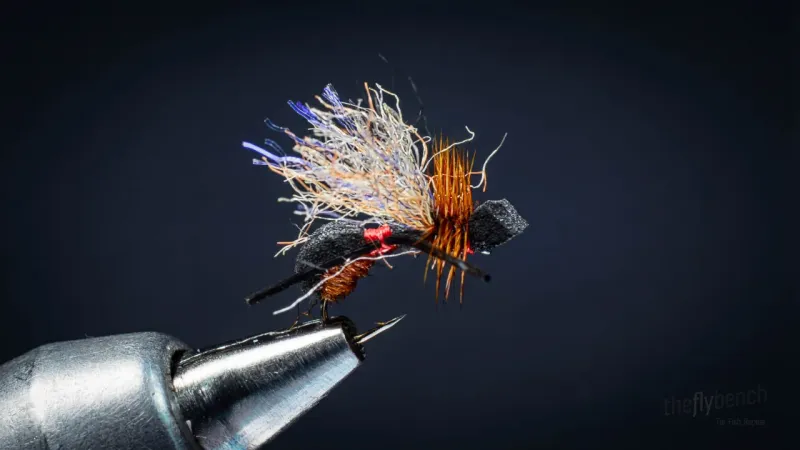
Dry FliesOl' Mr Wiggly
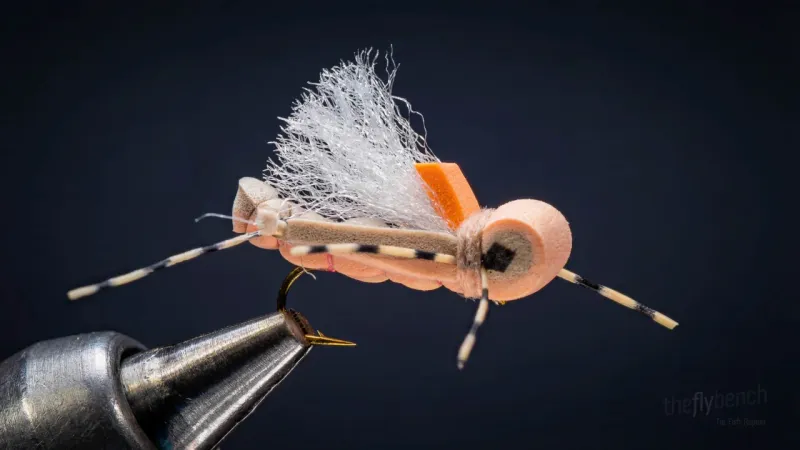
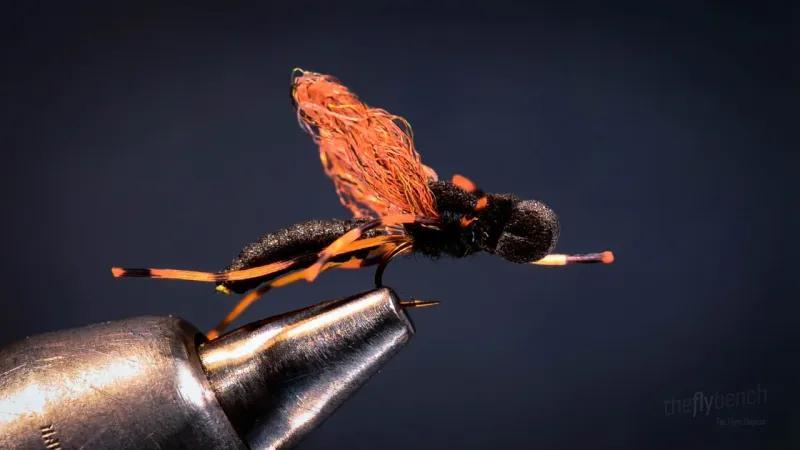
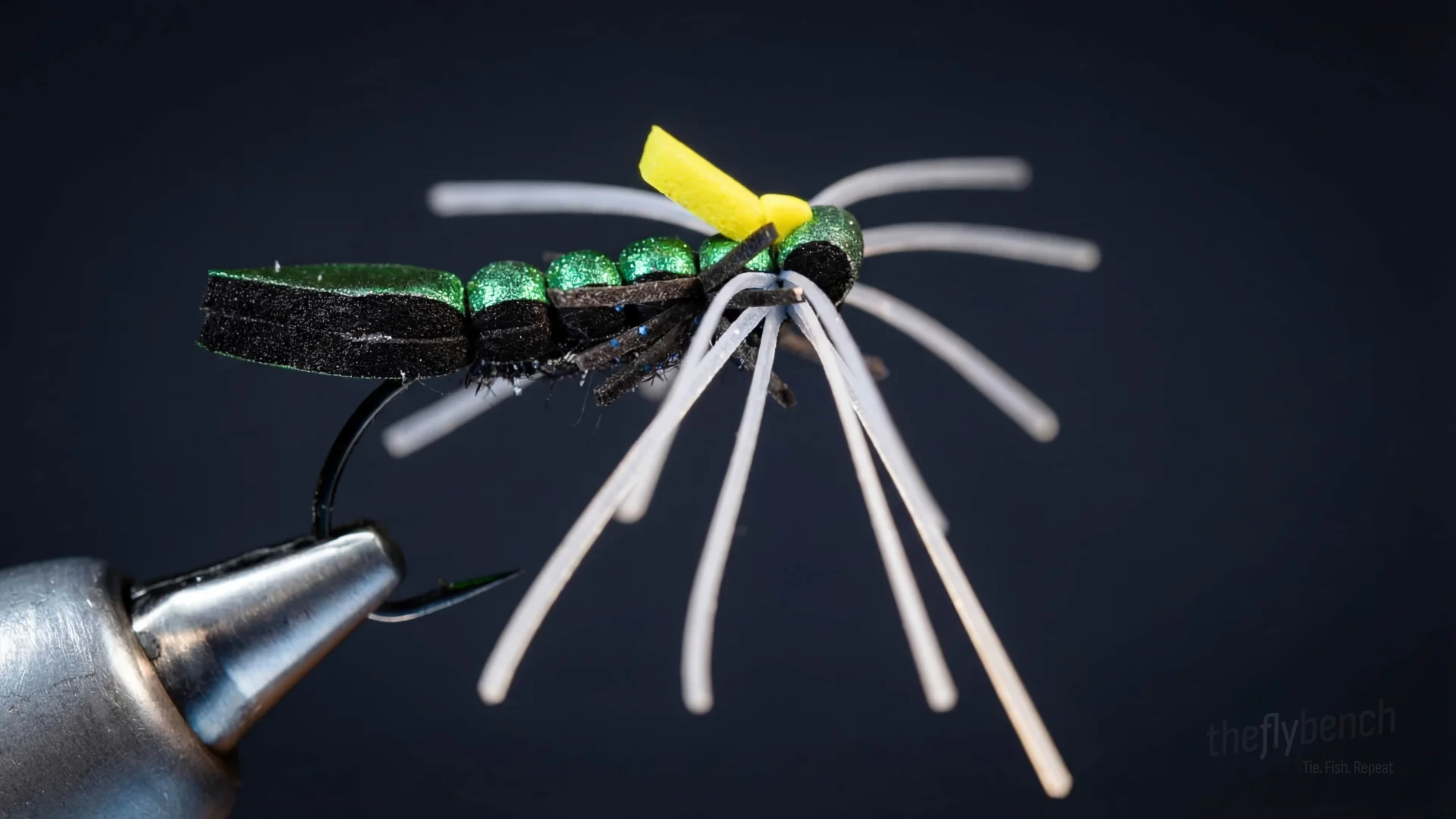
Ol' Mr Wiggly is a subtle, low-floating topwater pattern designed for pressured smallmouth bass in low, clear water conditions. Created by Charlie Piette, this simple foam construction features beetle green Loco Foam over an Ice Dub underbody, multiple sets of extra-long Sili Legs for maximum movement, and a yellow foam hot spot. Unlike loud chugging poppers that can spook educated bass, this stealthy pattern sits low in the film and triggers confident strikes.
Spring, Summer, Fall
Intermediate
Bass, Trout
Dec 2025
Overview
This Charlie Piette pattern tied by Charlie Craven from Charlie's Fly Box represents a paradigm shift in smallmouth bass topwater fishing. Developed at Tight Lines Fly Shop in Wisconsin, the pattern emerged from experimentation with Florida largemouth techniques adapted for Midwest smallmouth waters. Guide Jack Allen's use of oversized sponge panfish spiders for Florida fish inspired Piette to combine these ideas with Western patterns like the Chernobyl Ant and Fat Albert. The resulting fly quickly became a staple pattern across Michigan and Wisconsin, earning enthusiastic endorsement from Fly Fisherman editor Ross Purnell who fished it more than any other smallmouth pattern for an entire season. The extra-long, dangly Sili Legs give the fly its distinctive wiggly action and its name.
Materials
Hook: Gamakatsu B10s, #4
Thread: UNI 6/0, black
Glue: Zap A Gap
Body: Loco Foam (Chocklett's), beetle green
Underbody: Ice Dub, black peacock
Rear Legs: Sili Legs, black blue flake
Front Legs: Sili Legs, metallic silver or smoke grey
Hot Spot: Thin Fly Foam, yellow
Behavior & Presentation
Natural Behavior: Large terrestrials and aquatic insects ride the film with bodies partially submerged, wing movements creating micro-disturbances. Surface tension traps them in visible feeding lanes where trout rise rhythmically to intercept drifters.
Where Trout Eat It: Smallmouth bass and trout target this low-floating attractor in shallow bank runs, eddies, and tail-outs where the dangly Sili Legs create irresistible movement. The pattern sits in the surface film rather than riding high, giving fish confidence to commit in low, clear water conditions.
How to Fish It: Dead drift with occasional twitches to activate the long Sili Legs, creating the 'wiggly' action that triggers strikes. The pattern works best with subtle presentations in clear water—allow it to sit motionless between twitches and be ready for gentle sips rather than explosive strikes.
Best Water: Focus on shallow bank runs along the South Platte and Colorado River, tail-outs with slow current, and eddies where bass and trout hold in 1-3 feet of water. The beetle green foam excels in low-light conditions and grassy shorelines during summer.
Strike Type: Watch for confident rises or aggressive splashes as fish target the substantial surface profile.
Fishing Strategy
Rigging Suggestions: Fish on a 9-foot leader tapering to 10-12 lb fluorocarbon. The simple foam construction floats well without additional treatment. Can be fished on both floating lines and sink-tip setups depending on conditions.
Seasonal Timing: Most effective from when bass are actively feeding on the surface. Particularly productive during warm months when topwater action peaks.
Pro Tips: The beetle green foam body provides natural coloration while the yellow hot spot aids angler visibility. The low-floating design sits in the surface film rather than riding high, giving bass confidence to commit to the take.
Entomology
Terrestrial insects struggle frantically when trapped in the surface film, creating vibrations and visual disturbance that draw attention from great distances. Trout readily consume these land-based creatures because they represent high-calorie meals that require minimal energy expenditure to capture.
- Organism Type
- terrestrial
- Life Stage
- adult