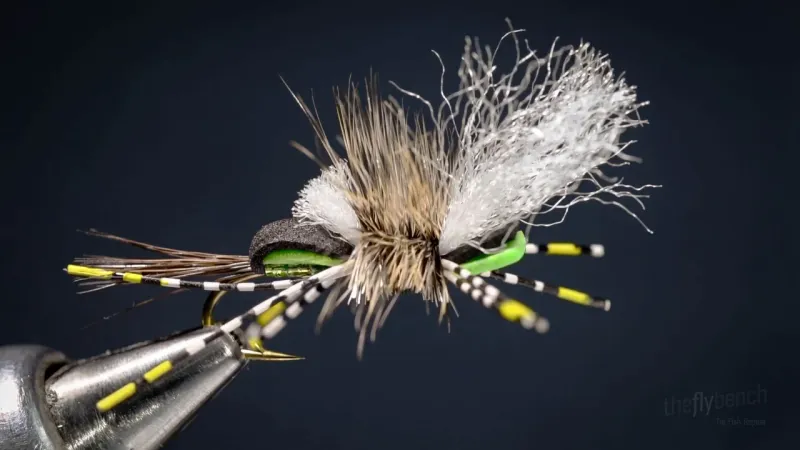
Dry FliesThunder Thighs Hopper
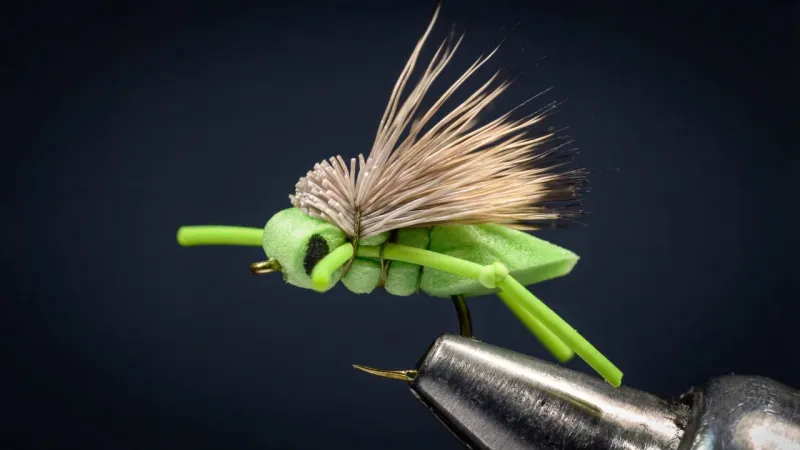
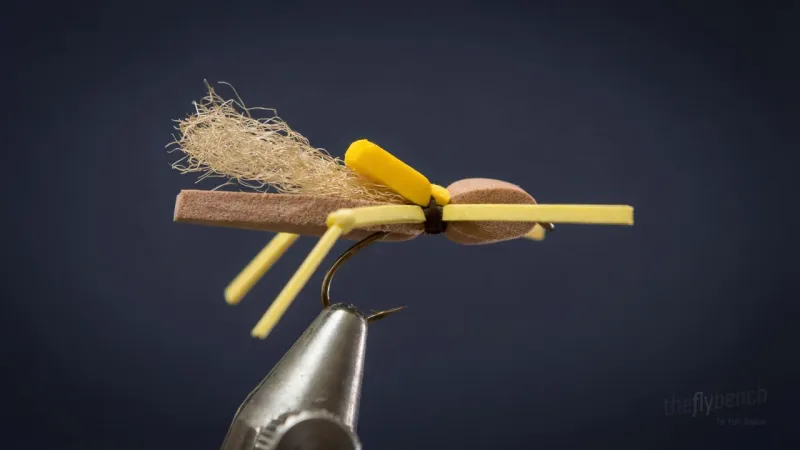
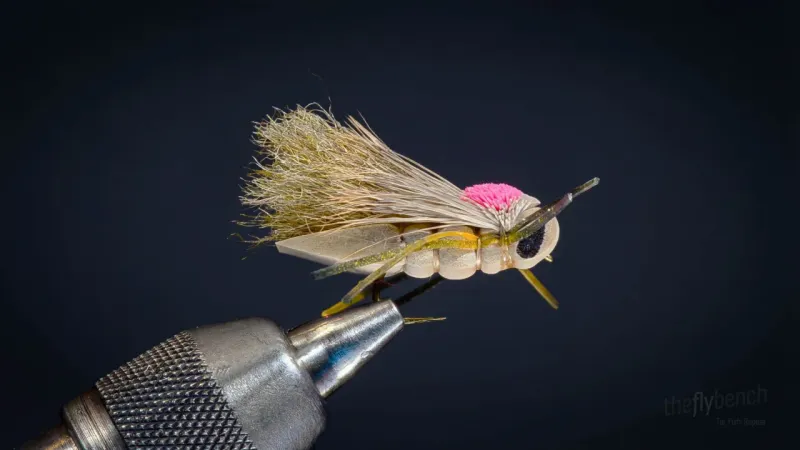
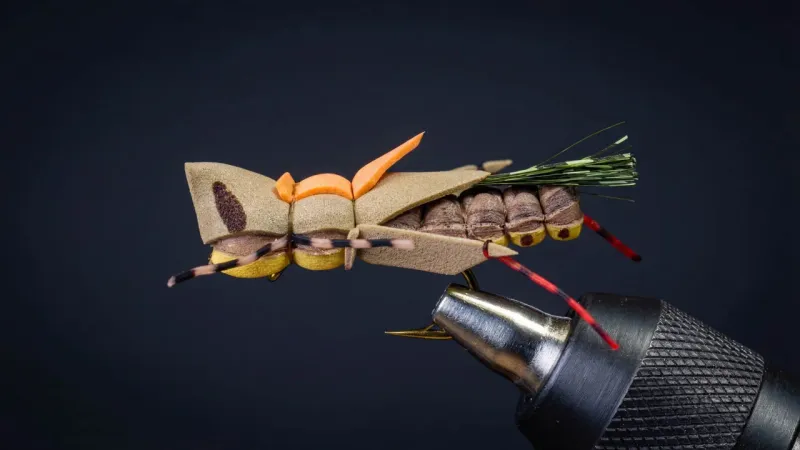
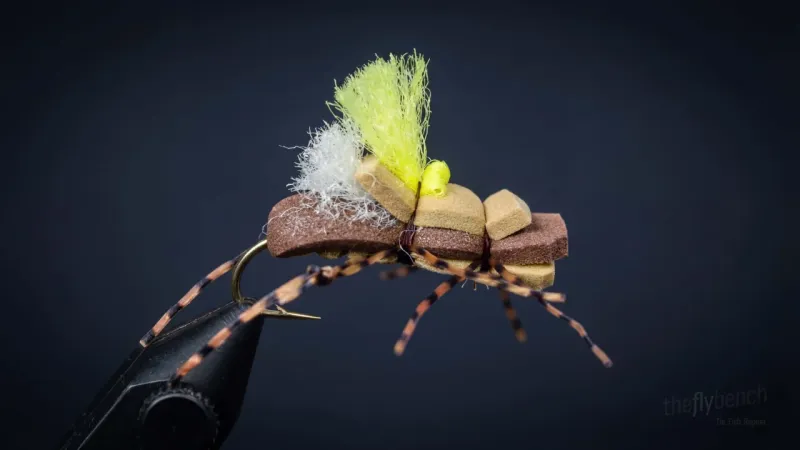
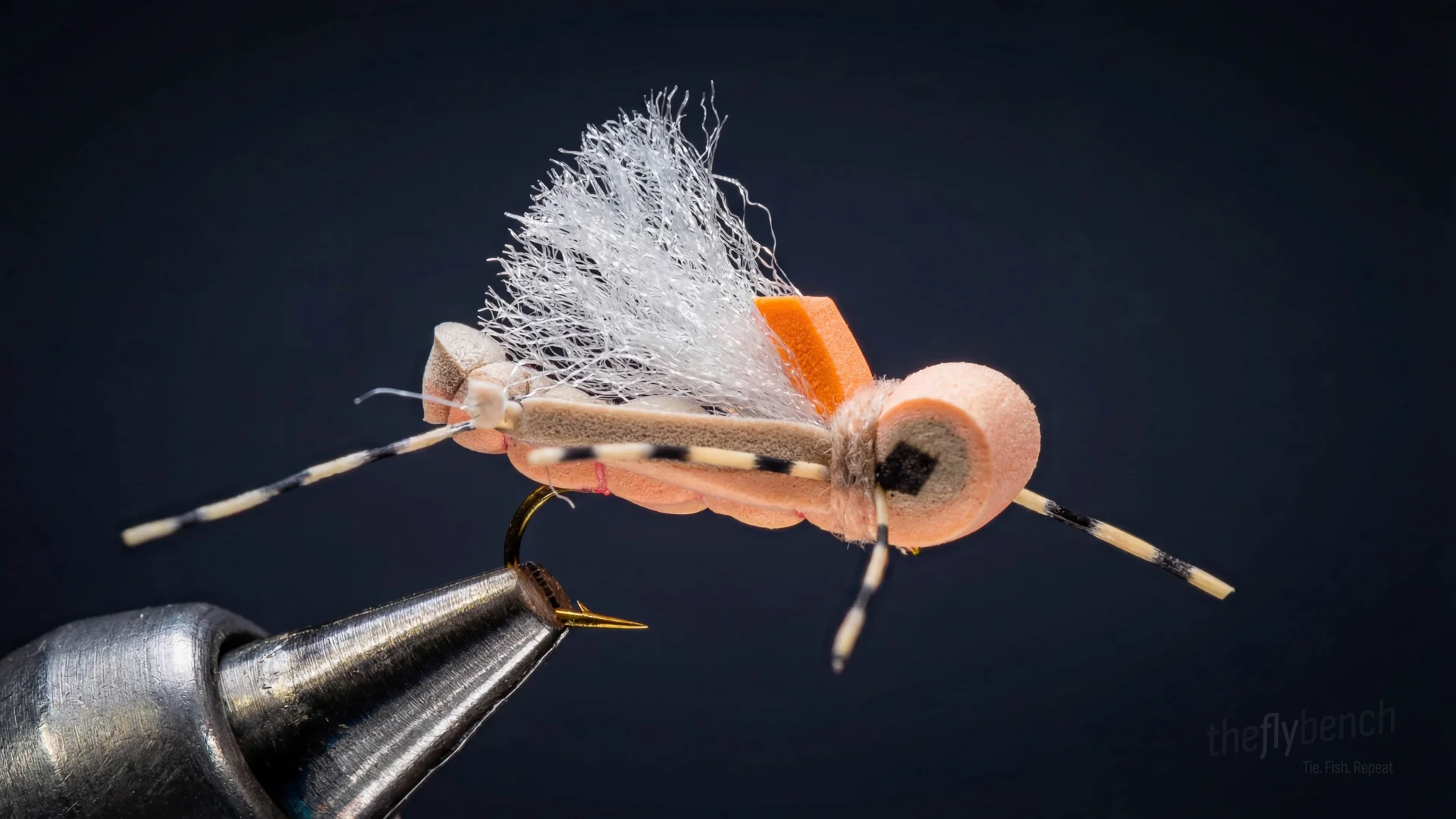
The Thunder Thighs Hopper is a highly realistic grasshopper imitation featuring distinctive oversized foam legs that mimic the powerful hind legs of natural hoppers. This pattern combines multiple foam colors in peach, tan, and orange to create a lifelike body, a white poly yarn wing for visibility, barred sexi-floss leg accents, an orange foam hot spot, and a Hendrickson pink dubbing thorax. The elaborate leg construction is the signature element that gives this pattern its name and effectiveness.
Summer, Fall
Advanced
Trout
Dec 2025
Overview
This Charlie Craven pattern from Charlie's Fly Box represents an advanced approach to hopper imitation that emphasizes realism in the leg construction. The "Thunder Thighs" name references the oversized foam hind legs that accurately mimic the muscular jumping legs of grasshoppers - a key trigger for selective trout. The video demonstrates Craven's technique for creating the elaborate foam legs, which involves cutting and shaping the foam to achieve the distinctive profile. The multi-colored foam body (peach over tan) creates the subtle coloration variation seen in natural hoppers. The orange hot spot serves as an attractor element while the Hendrickson pink thorax provides a subtle undercolor. The white poly yarn wing aids visibility for the angler while suggesting the folded wings of a natural hopper.
Materials
Hook: Tiemco 5262, #4-8
Thread: Veevus 8/0, pink
Body: Thin Fly Foam (2mm), peach and tan
Wing: Polypropylene Macrame Yarn, white
Legs: Sexi-Floss (MFC, small barred), tan
Legs 2: Thin Fly Foam (2mm), peach and tan
Hot Spot: Thin Fly Foam (2mm), orange
Thorax: Superfine Dubbing, Hendrickson pink
Behavior & Presentation
Natural Behavior: Adult grasshoppers leap clumsily from bankside vegetation and crash onto the water with an audible plop, thrashing their powerful hind legs in frantic attempts to reach shore. Their large size and panicked surface commotion make them irresistible targets that draw aggressive strikes from opportunistic trout.
Where Trout Eat It: Fish patrol shallow banks and undercuts where hoppers accumulate after falling from overhanging grasses and streamside vegetation.
How to Fish It: Land the fly with deliberate impact to mimic a hopper hitting water, then follow with dead drift interspersed with occasional twitches that suggest struggling legs.
Best Water: Target foam lines collecting drifting hoppers, undercut banks where trout ambush terrestrials, and grass edges bordering meadow streams.
Strike Type: Expect explosive surface strikes with visible rises as fish attack the large profile aggressively.
Fishing Strategy
Rigging Suggestions: Fish on a 9-foot leader tapering to 2X-3X tippet for adequate turnover of this larger pattern. Can serve as an excellent dry-dropper anchor fly, supporting nymphs 18-24 inches below.
Seasonal Timing: Most effective during early when grasshoppers are abundant and active. Peak productivity occurs during warm, windy afternoons when hoppers are blown onto the water.
Pro Tips: The white poly yarn wing provides excellent visibility for the angler. Multiple foam layers ensure outstanding flotation even in turbulent water.
Entomology
Grasshoppers leap from streamside grasses and land heavily on the water, where they kick wildly with their muscular hind legs while attempting to reach shore. The combination of their large size, erratic movement, and inability to escape makes them irresistible to opportunistic trout during late summer terrestrial season.
- Order
- Orthoptera
- Family
- Acrididae
- Common Name
- Grasshopper
- Organism Type
- terrestrial
- Life Stage
- adult