Dry FliesLucky B
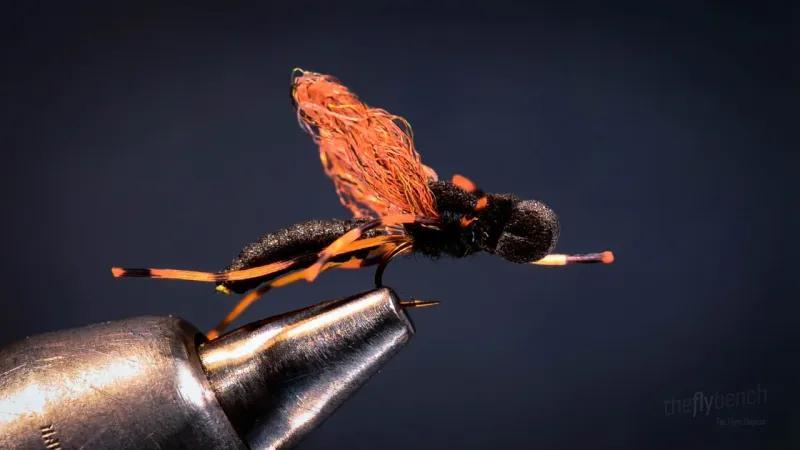
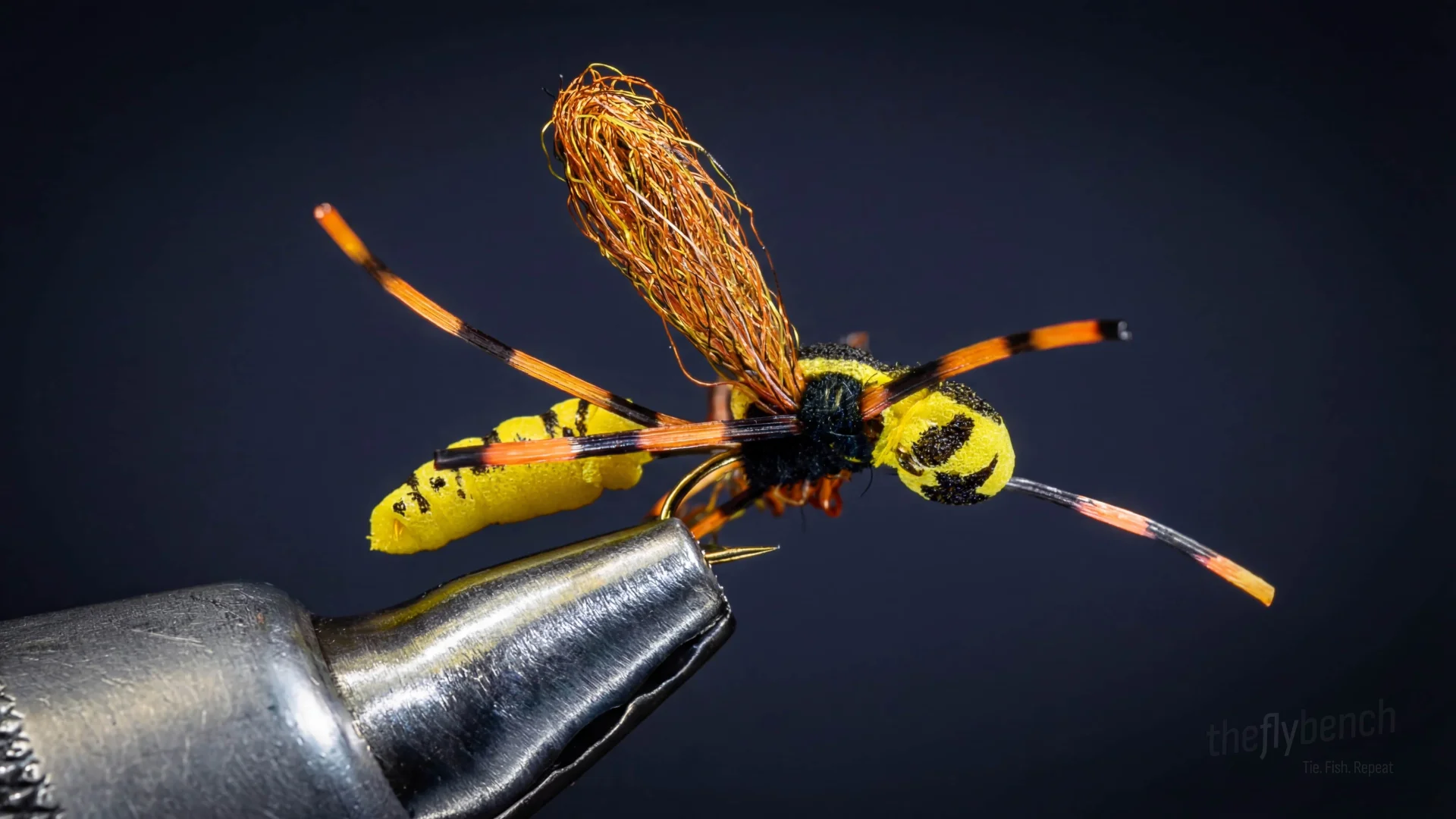
The Lucky B is Charlie Craven's hyper-realistic yellow jacket imitation that took nearly thirty years to develop from concept to finished pattern. This elaborate terrestrial features an articulated foam extended body built on a needle with a distinct wasp waist formed by monofilament, barred sexi-floss legs for lifelike movement, a dubbed thorax, and mixed-color polypropylene macrame yarn wings set in a characteristic V shape. The final detailing is done with Copic markers for a startlingly realistic appearance.
Summer, Fall
Advanced
Trout
Dec 2025
Overview
This Charlie Craven pattern from Charlie's Fly Box represents the culmination of decades of observation and development. Charlie notes that during his guiding days, stomach pumping revealed a single yellow jacket in nearly every trout's belly during summer months. The pattern uses an innovative foam extended body construction built on a sewing needle, with a poly yarn and superglue core that allows the body to slide off the needle. The stout monofilament articulation point creates the distinctive wasp waist between abdomen and thorax that makes this pattern so convincing. The mixed-color polypropylene wings and Copic marker detailing complete the hyper-realistic presentation.
Materials
Hook: Tiemco 2487, #16
Thread: UNI 8/0, yellow
Butt: McFlylon (yellow) and Thin Fly Foam 3mm (yellow)
Connector: 0X Tippet
Legs: Sexi-Legs, barred amber small
Body: Thin Fly Foam 3mm, yellow
Thorax: Superfine Dubbing, black
Wing: Polypropylene Macrame Yarn, yellow tan rust grey black
Behavior & Presentation
Natural Behavior: Yellow jackets contact water while hunting or drinking, their aggressive struggling and buzzing creating violent surface disturbances. Fish recognize these high-energy insects as exceptional caloric opportunities worth the risk of the occasional sting.
Where Trout Eat It: Trout cruise beneath streamside vegetation and near structures where stinging insects hunt, watching for the distinctive yellow-black pattern hitting the surface. Slower pools allow confident inspection of these recognizable terrestrials.
How to Fish It: Cast tight to banks and structure, allowing motionless floats interrupted by occasional twitches that suggest trapped insects struggling against surface tension.
Best Water: Target pools near wasp activity, foam lines that collect terrestrials, and bank edges beneath overhanging vegetation.
Strike Type: Confident surface takes with visible rises mark fish committing to large, struggling terrestrials.
Fishing Strategy
Rigging Suggestions: Fish on a 9-12 foot leader tapering to 4X-5X tippet for delicate presentations. The articulated design provides excellent flotation but apply floatant sparingly to the foam body.
Seasonal Timing: Most effective during early when yellow jackets, wasps, and bees are most active around streams and lakes. Peak effectiveness from late June through September.
Pro Tips: The fly floats low with the abdomen and legs dangling below the surface while the wings protrude above in an easily recognizable V shape. The yellow and black coloration provides excellent visibility for both fish and angler.
Entomology
Yellow jacket wasps hunt near water and occasionally make contact with the surface while pursuing prey or attempting to drink. Their aggressive buzzing and erratic surface struggles attract predatory strikes from fish that have learned to recognize these high-energy food items.
- Order
- Hymenoptera
- Family
- Vespidae
- Common Name
- Wasp
- Organism Type
- terrestrial
- Life Stage
- adult