

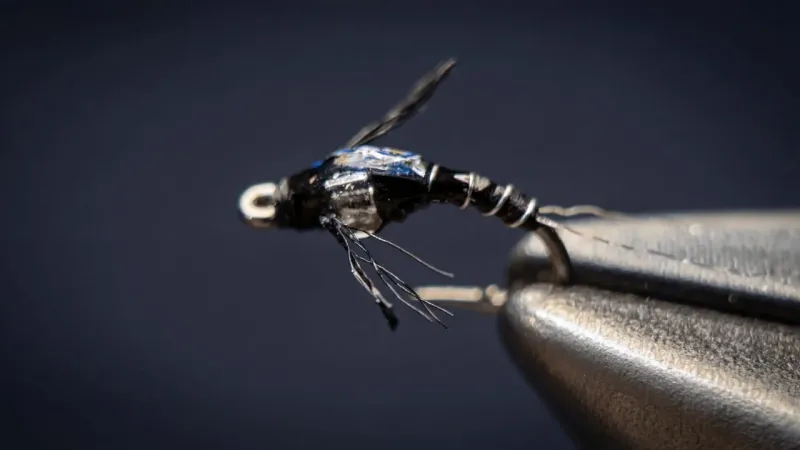
Overview
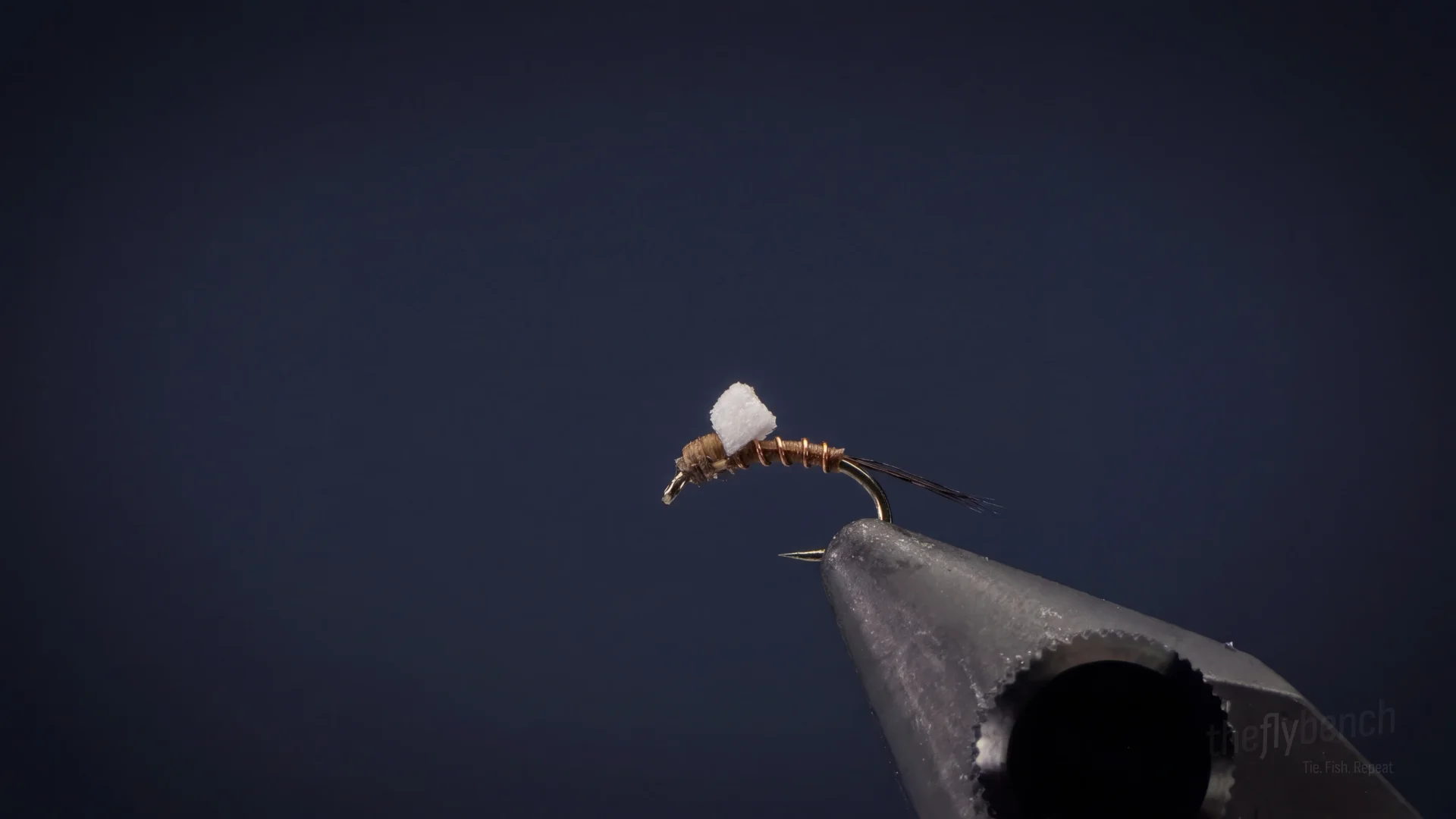
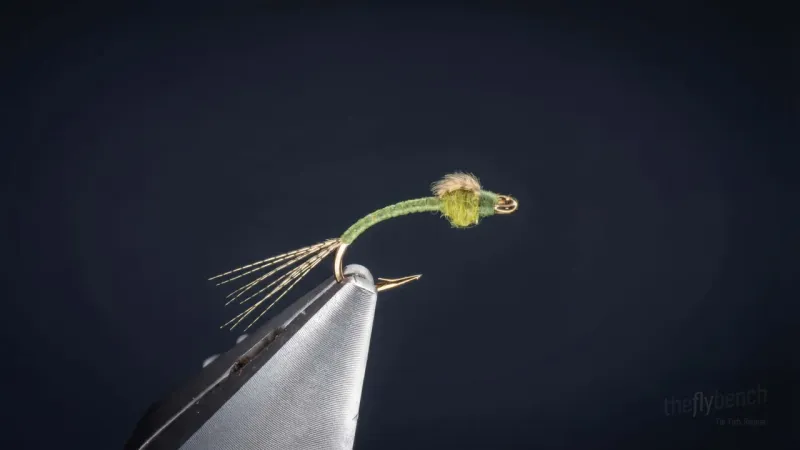
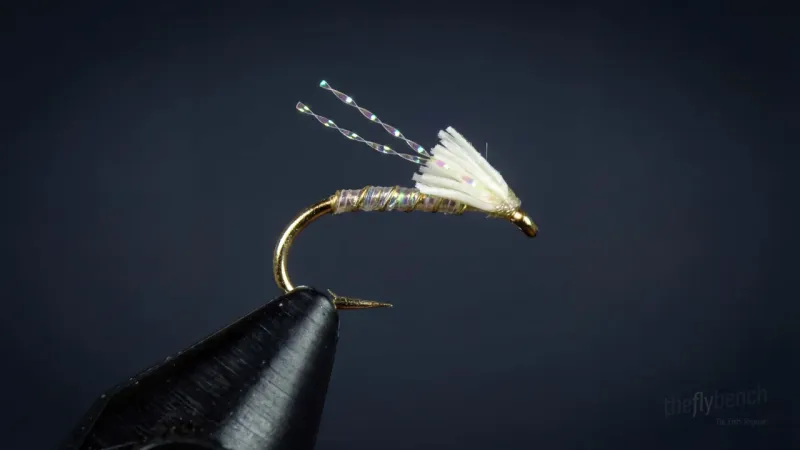
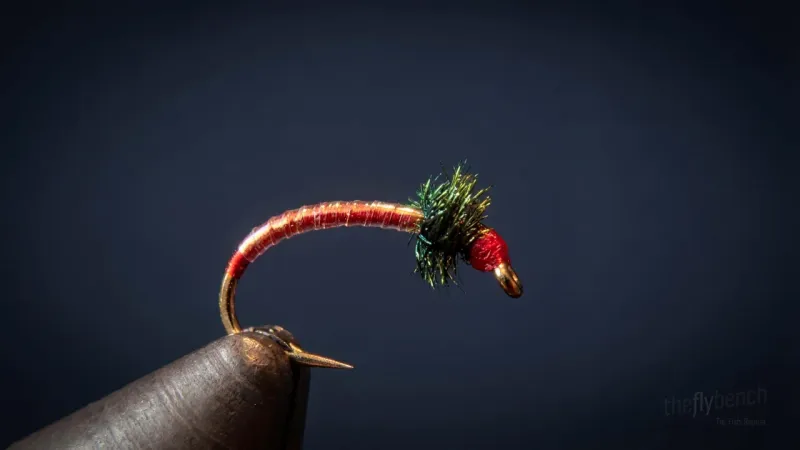
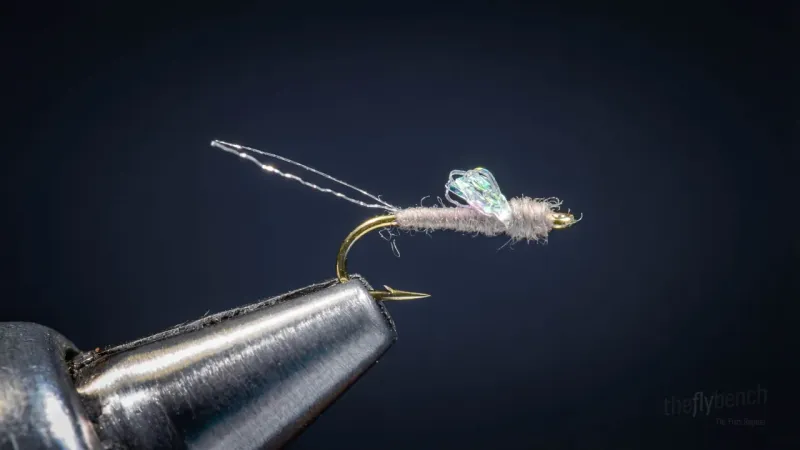
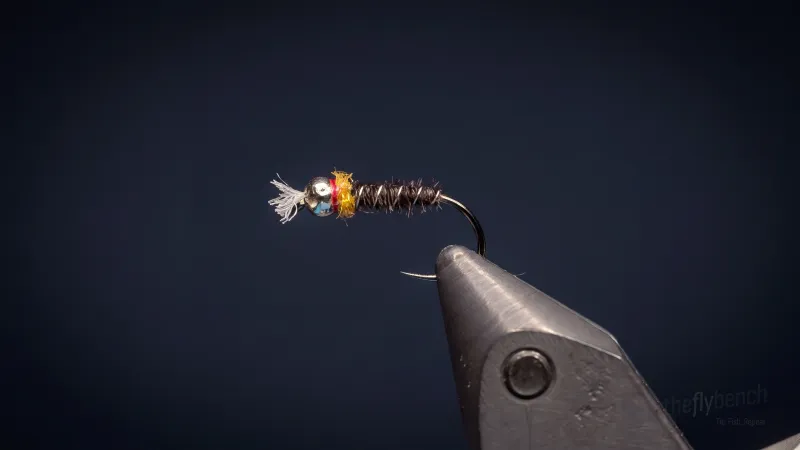
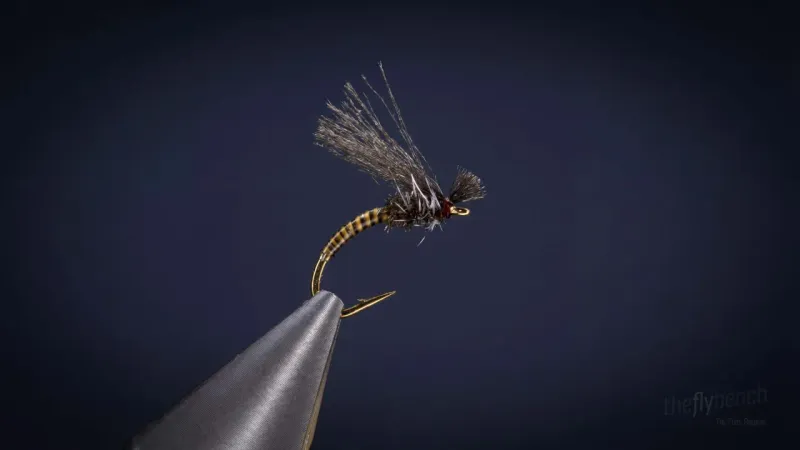
Hans Stephenson of Dakota Angler & Outfitter in Rapid City, South Dakota, ties this version on a curved Tiemco hook in sizes 16 to 24 and switches colors by changing only the thread. With just thread, wire, a few tail fibers and a foam strip, it ties fast. McFly Angler shows a similar tie with black thread, silver wire and an up-eye hook, aimed squarely at emerging midges.
Related patterns
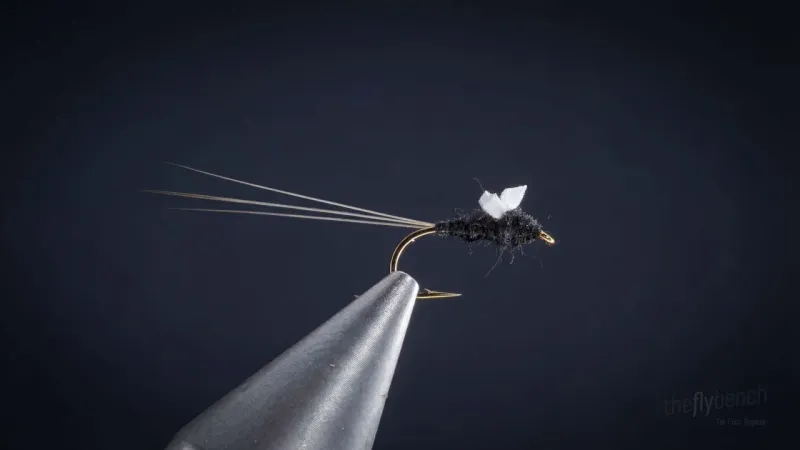
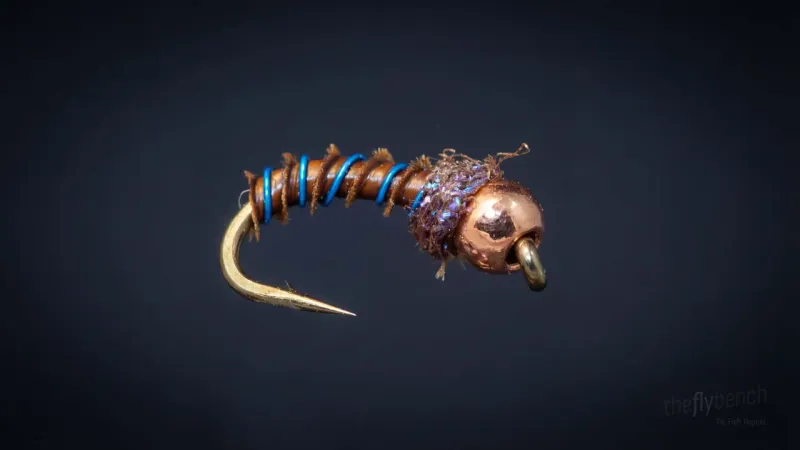
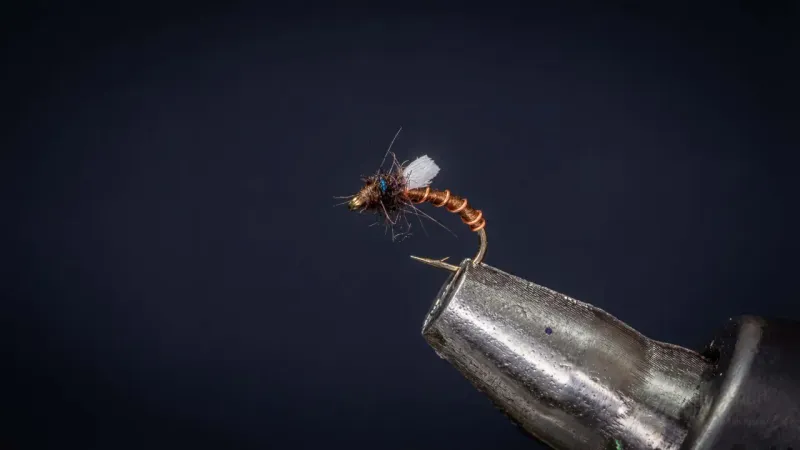
Behavior & presentation
- Natural Behavior
- Midge pupae rise from the bottom and stall beneath the surface tension, hanging with the thorax pressed against the film while the adult works free of the pupal skin. Many get stuck for long stretches and drift helplessly in the current.
- Where Trout Eat It
- Tailwater trout hold just under the surface in slow, smooth currents and sip stalled emergers in a steady rhythm, often ignoring fully hatched adults.
- How to Fish It
- Dead drift it in the film on a long, fine leader, casting a few feet above a rising fish so the fly reaches it without drag. The foam keeps the hook hanging below the surface like a half-emerged pupa.
- Best Water
- Flat tail-outs, slicks below riffles, soft seams along weed beds and foam lines where emerging midges collect in slow current.
- Strike Type
- A quiet sip or a small bulge where the white wing was riding; tighten gently because fine tippet breaks easily on a hard set.
Fishing strategy
- Rigging Suggestions
- Fish it alone on a 10-12 foot leader with 6X or 7X tippet, or drop it 6-12 inches off a small dry. It also works as the top fly above a small midge larva.
- Seasonal Timing
- Midges hatch all year on tailwaters, with the best surface activity on calm winter afternoons and overcast days in spring and fall when small Baetis share the water.
- Pro Tips
- Brown, gray and olive cover most midges and small mayflies, so carry each in sizes 18 to 22. Trim the foam short so the fly sits low, and the foam keeps floating after several fish without dressing.
Entomology
Midge pupae swim slowly to the surface and hang in the film while the adult splits the pupal case and crawls out. Surface tension can hold them there for some time, so trout on slow water can eat them steadily with little effort.
- Order
- Diptera
- Family
- Chironomidae
- Common name
- Midge
- Organism
- insect
- Life stage
- emerger
Pattern details
- Moving Water
- Rocky Mountain
- dead-drift
- midge-hatch
- baetis-hatch
- tailwater
- low-clear-water
- beginner-friendly
- dry-dropper