Overview
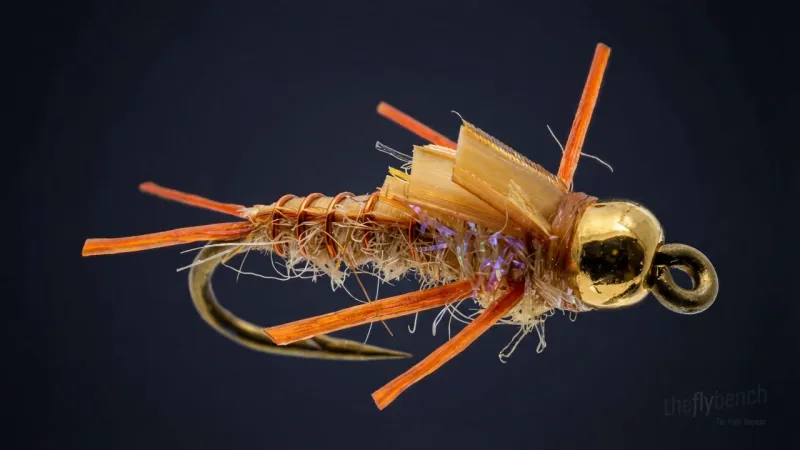
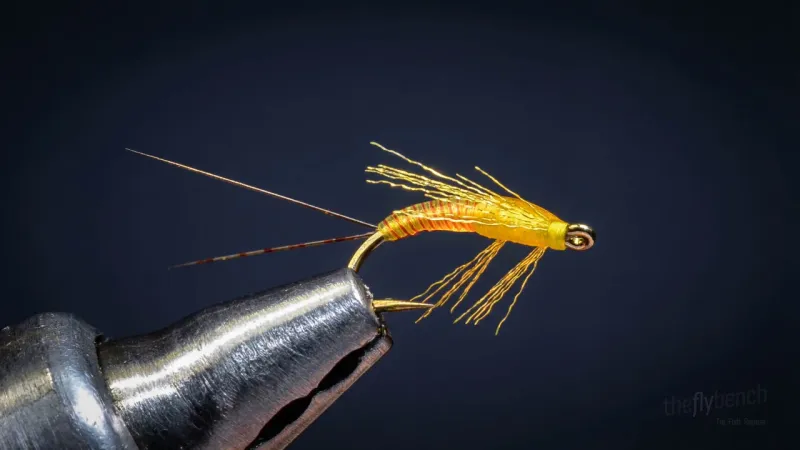
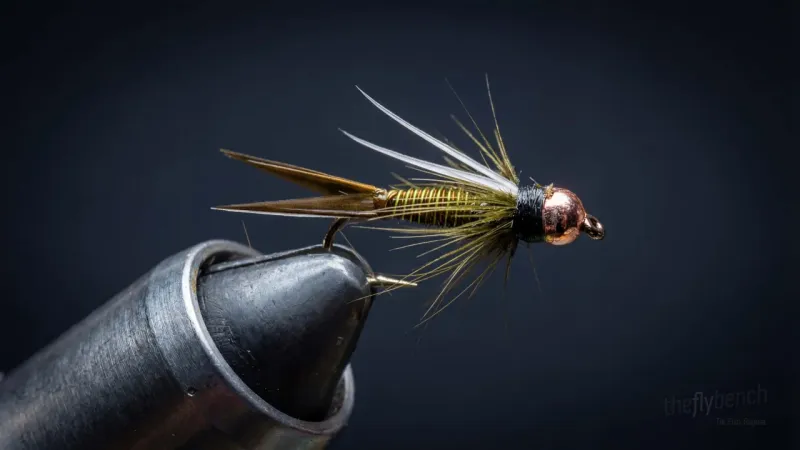
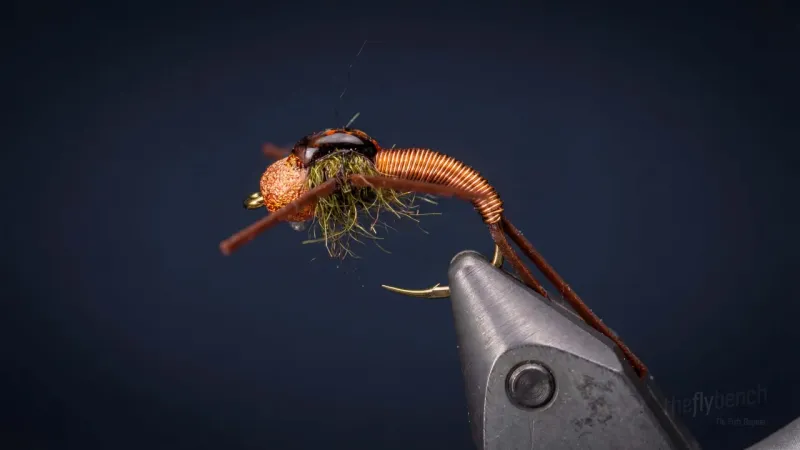
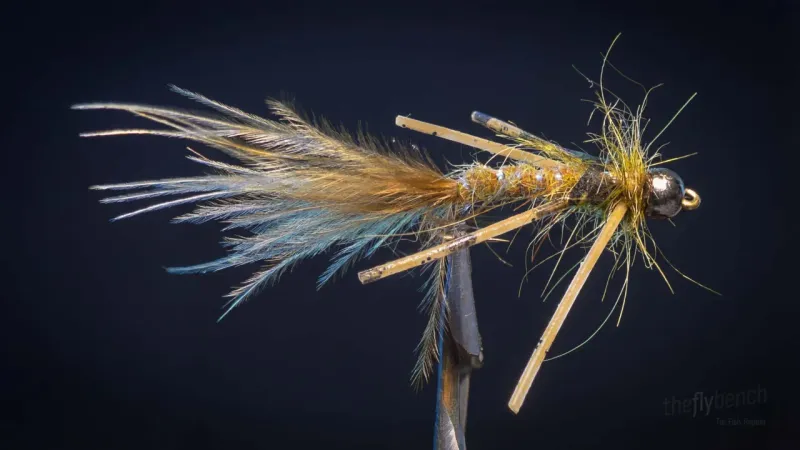
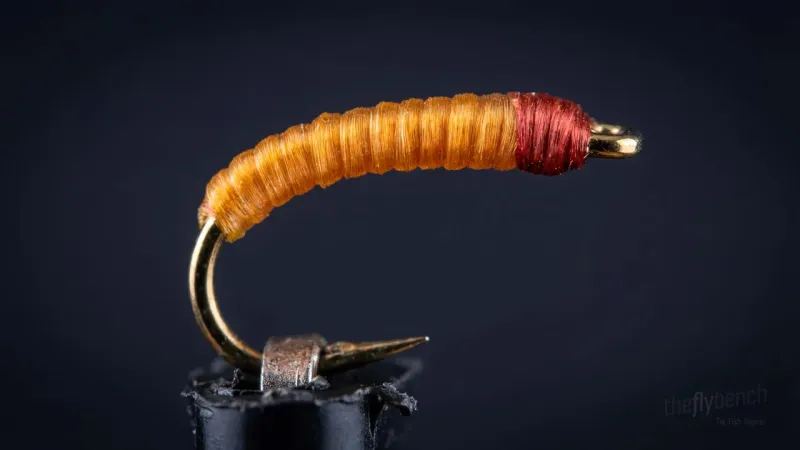
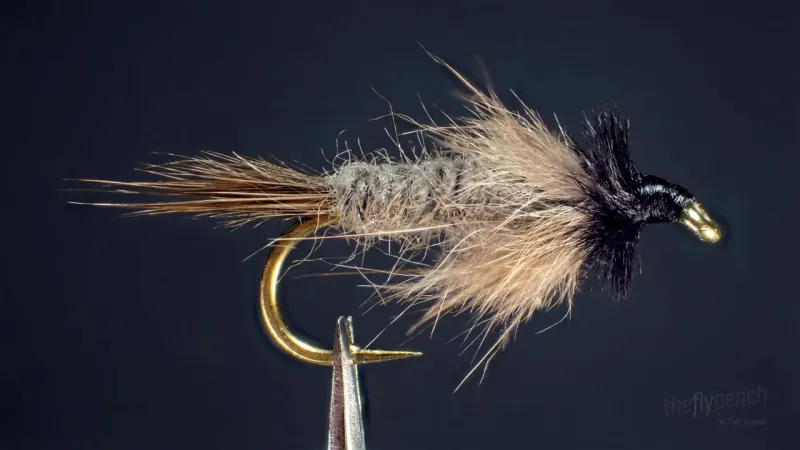
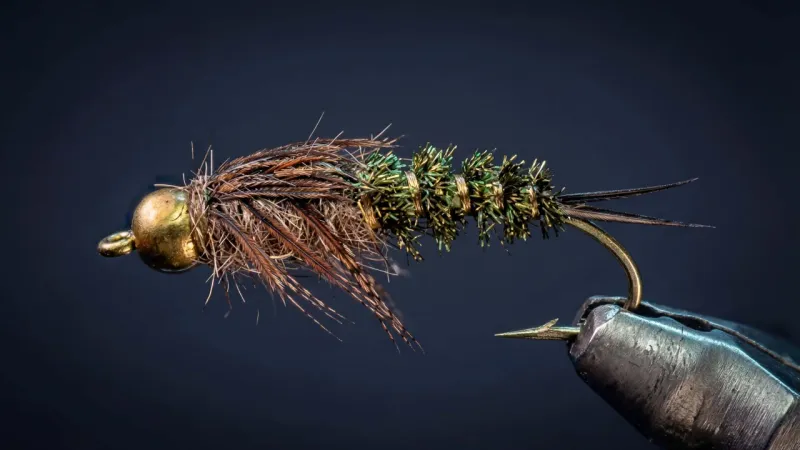
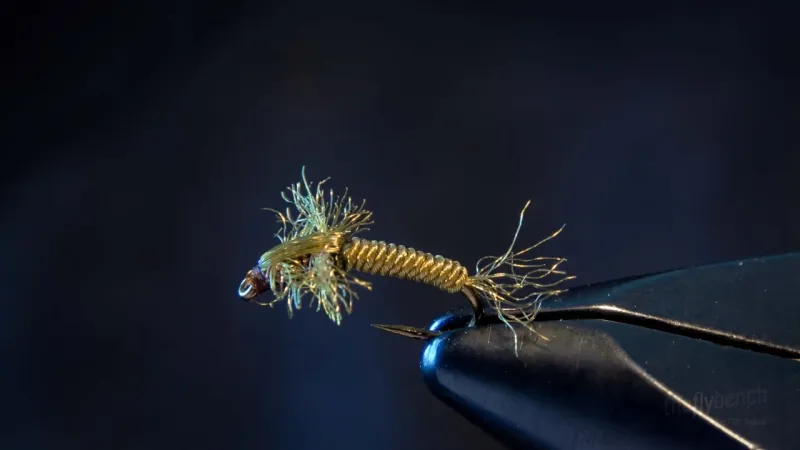
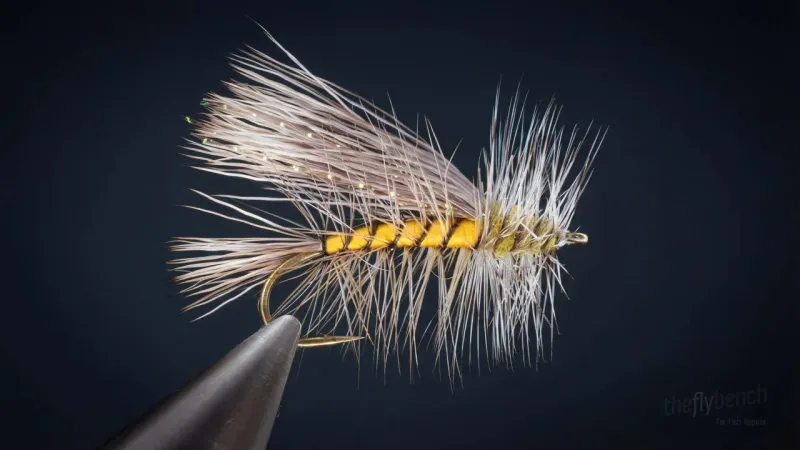
Anderson's UV Sally is a modern Yellow Sally stonefly imitation tied with goose biot over dubbing and an amber wire rib for segmentation. It uses a tungsten bead for weight and a UV dubbing collar to increase visibility and trigger strikes. It's a compact, high-contrast pattern ideal for fast water and tight-line nymphing setups.
Related patterns
Behavior & presentation
- Natural Behavior
- Yellow sally nymphs (Isoperla species) are smaller, more active stoneflies that inhabit riffle edges and shallow runs, frequently crawling across exposed rocks during daylight emergence migrations. Unlike their larger Pteronarcys cousins, they release into moderate-flow drift more readily, wiggling their abdomens as they tumble through 1-3 foot depths toward emergence habitat.
- Where Trout Eat It
- Trout key on this bright yellow pattern in 3-5 foot mid-depth runs during Yellow Sally activity, particularly in clear water where UV properties create high visibility. Fish target it along cobble substrates in moderate flows.
- How to Fish It
- Fish tight-line or under subtle indicator with jig hook riding point-up to minimize snags. High-stick through likely water or mend often for natural drift. The compact profile requires less weight than larger stonefly patterns.
- Best Water
- Most effective in moderate-flow riffle edges and shallow runs with exposed rocks where yellow sally nymphs crawl before emergence. The UV materials shine in overcast conditions and gin-clear water.
- Strike Type
- Sighter pauses, rod tip bounces, or solid weight indicate strikes. React instantly to drift anomalies.
Fishing strategy
- Rigging Suggestions
- Use the UV Sally as the anchor in a nymphing rig, with a smaller nymph pattern as a dropper.
- Seasonal Timing
- Most productive from late May through August when Yellow Sally nymphs migrate to shore to emerge.
- Pro Tips
- The UV Sally is a sinking pattern, designed to be fished along the bottom. The UV properties of the fly make it highly visible in a variety of light conditions.
Entomology
Yellow Sally nymphs (Isoperla) are small, active stoneflies of riffles and shallow runs that crawl among cobble and often release into the drift. In early summer they migrate to shore to emerge, and trout pick them off along riffle edges and banks during these movements.
- Order
- Plecoptera
- Family
- Perlodidae
- Common name
- Yellow Sally
- Organism
- insect
- Life stage
- nymph
Pattern details
- Moving Water
- Rocky Mountain
- dead-drift
- indicator-nymph
- stonefly-hatch
- modern