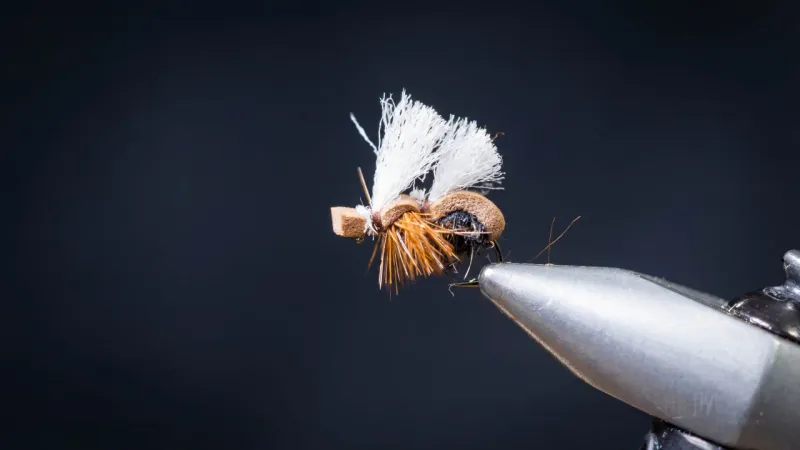
Dry FliesDrymerger Variant
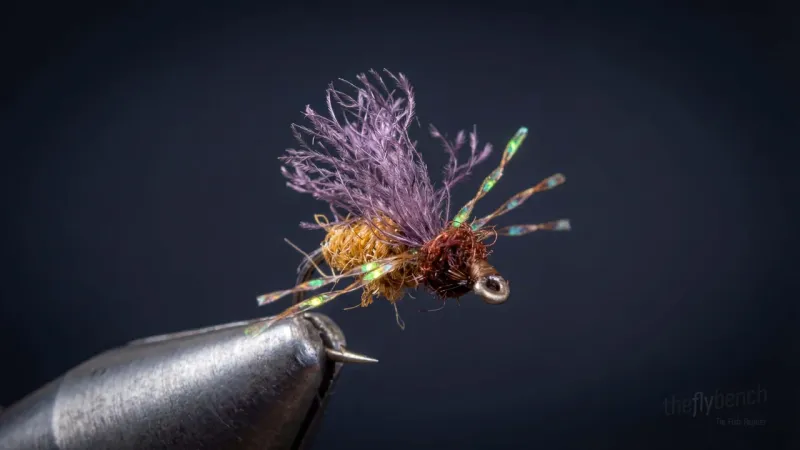
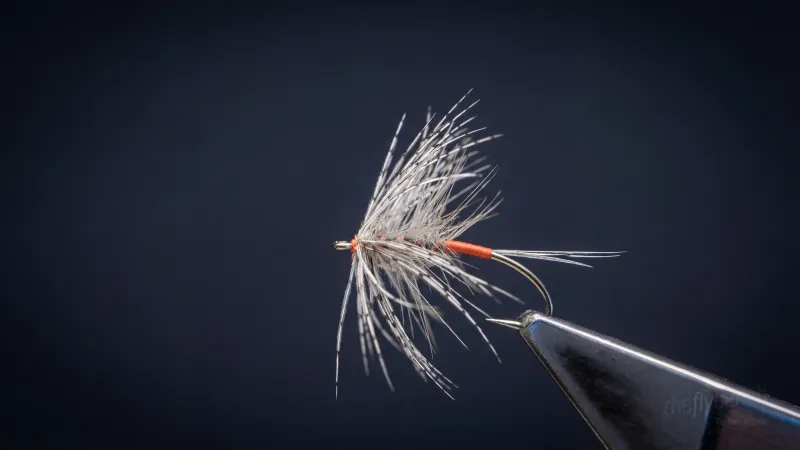
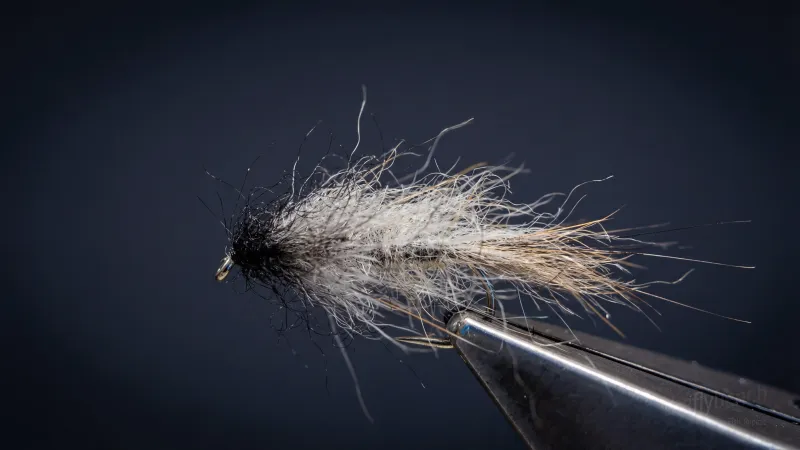
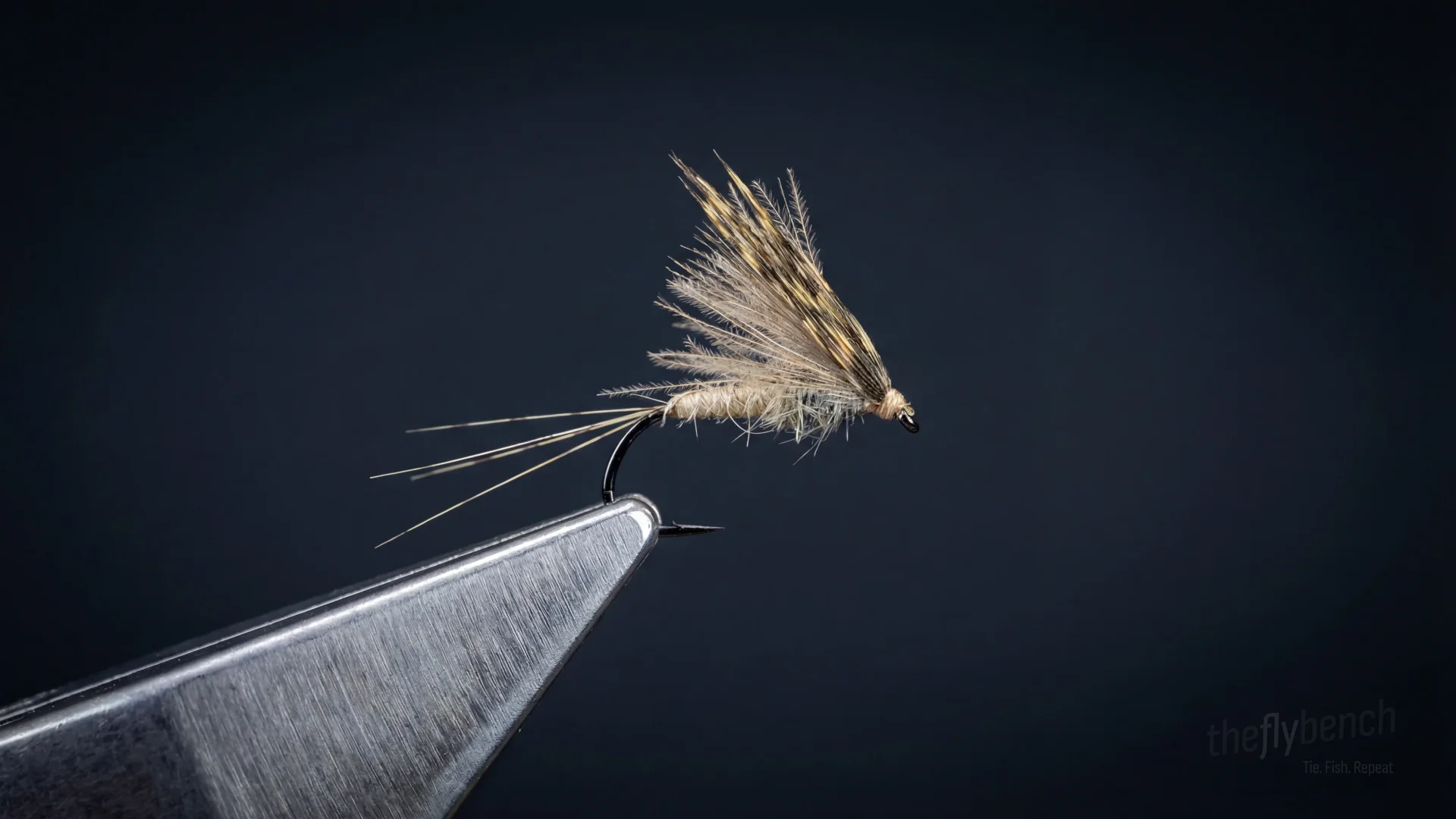
A minor adaptation of Brian Schmidt's Drymerger, tied to hang in the surface film like a mayfly emerger fighting free of its shuck. A cream hare underfur abdomen and grey rabbit thorax are split by a natural CDC wing case, with dark olive Whiting Brahma saddle barbs forming a low, half-emerged wing.
Spring, Summer, Fall
Intermediate
Trout
Feb 2026
Overview
A rib of nothing but the tying thread keeps the cream hare underfur abdomen slim, while a natural CDC wing case separates it from a grey rabbit thorax, giving the fly a two-part profile that sits low in the film. Dark olive Whiting Brahma saddle barbs stand in for a mayfly's partly unfurled wings, and split Coq de Leon tail barbs suggest trailing shuck material. It represents a mayfly struggling to break free of its nymphal shuck at the surface, a stage trout target because the insect cannot yet fly. Fish it dead drift during a hatch on moving water or stillwater where duns are emerging.
Where to Buy This Fly
We only link to fly shops we trust. Some links are referral links, which may earn us a commission at no extra cost to you.
Materials
- Hook:
- Tiemco 102Y #15
- Thread:
- Benecchi 12/0, tan
- Rib:
- Tying thread
- Tail:
- Coq de Leon Medium Pardo barbs - split
- Abdomen:
- Hare underfur, cream
- Wing case/underwing:
- CDC, natural
- Thorax:
- Rabbit, grey
- Wing:
- Whiting Brahma saddle barbs, dyed dark olive
Behavior & Presentation
Natural Behavior: The CDC underwing traps air and holds the fly low in the film, mimicking a mayfly still tethered to its shuck, while the dark olive saddle wing stands upright like a partially emerged dun.
Where Trout Eat It: Fish sip these transitional insects from just under the surface along current seams and slicks where emergers drift in numbers.
How to Fish It: Dead drift it drag-free with the body riding low and the CDC underwing awash, matching the half-hatched profile of a natural.
Best Water: Focus on current seams, back eddies, slick water, and tail-outs where emerging mayflies concentrate.
Strike Type: Expect deliberate, unhurried sips as fish target an insect that cannot escape the surface.
Fishing Strategy
Rigging Suggestions: Use a 9-12 foot leader tapered to 5X or 6X depending on water clarity, and treat only the wing sparingly to keep the body low.
Seasonal Timing: Most productive during spring and fall mayfly emergences, particularly on overcast days when hatches linger on the surface.
Pro Tips: Fish it just ahead of a rise form rather than directly on top of a feeding fish, since emergers drift lower and slower than fully hatched duns.
Entomology
Mayfly emergers struggle to break free of their nymphal shuck at the surface, hanging half in and half out of the film with wings partly unfurled. Trout target this vulnerable, slow-moving stage because the insect cannot yet fly away.
- Order
- Ephemeroptera
- Common Name
- Mayfly
- Organism Type
- insect
- Life Stage
- emerger