



Overview
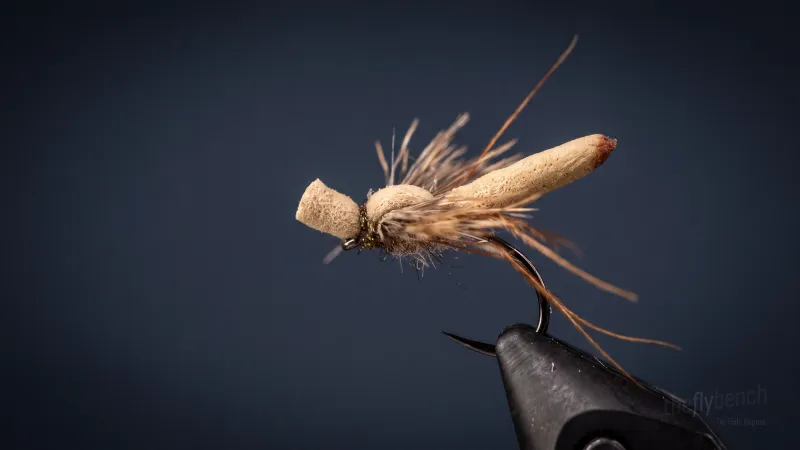
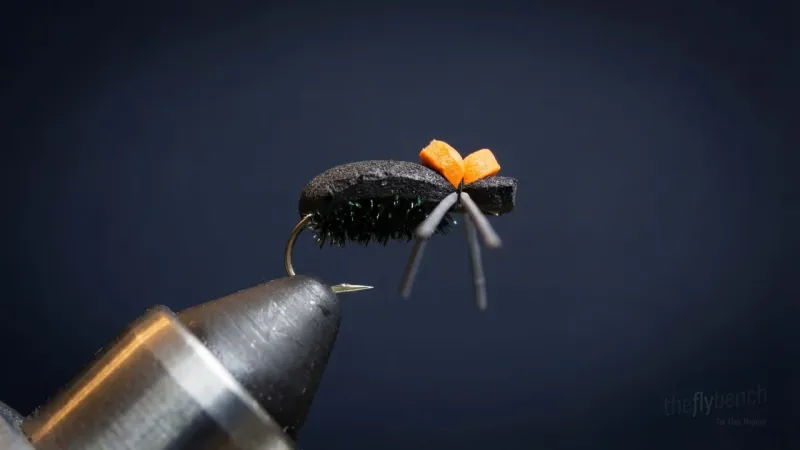
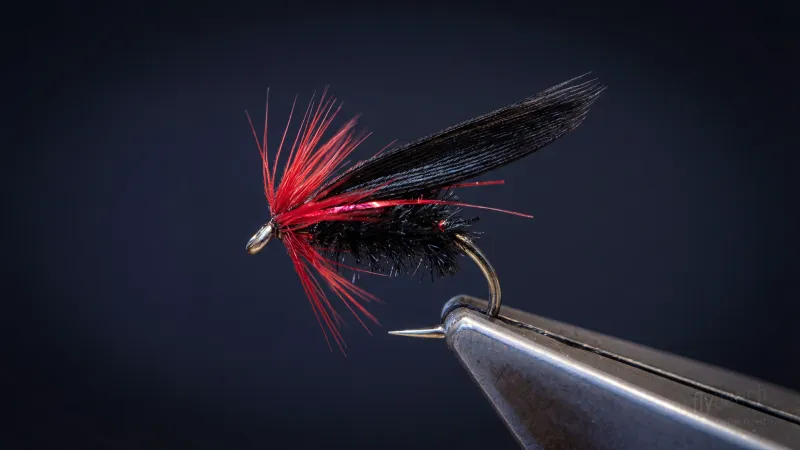
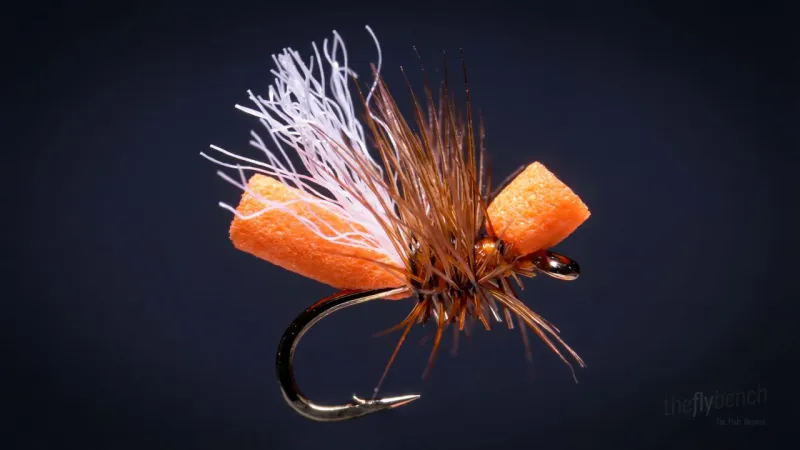
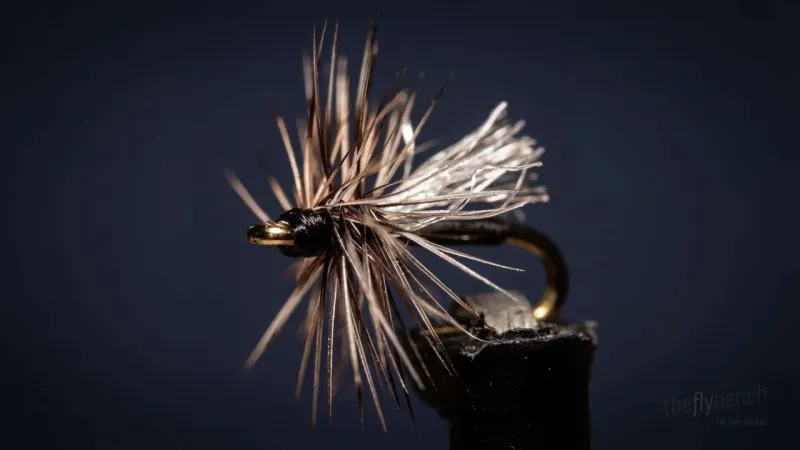
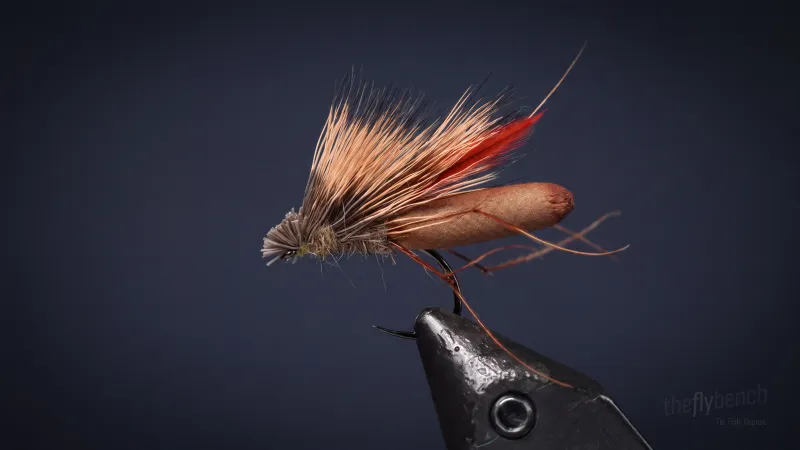
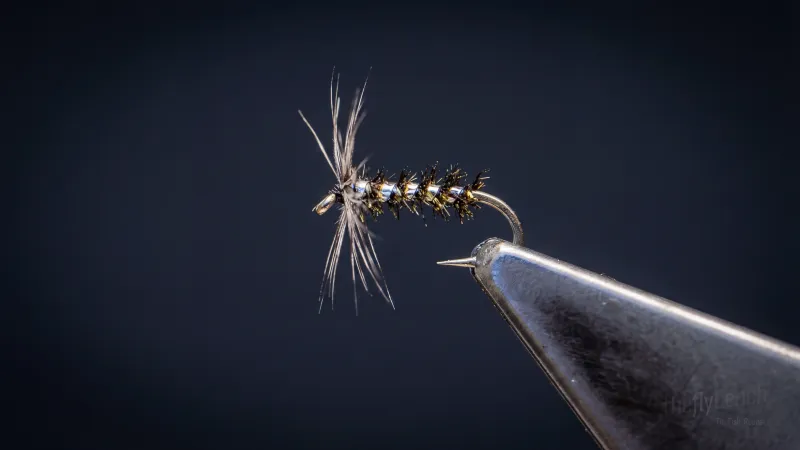
Weilenmann split the body into two seal's fur sections, an all-black abdomen and an orange-and-black thorax, echoing the segmented, two-toned look of many natural insects rather than a single flat color. Knotted magpie tail barbs form jointed legs that kick during the drift, and a black foam strip over the thorax adds durability. The pearl Holoshimmer wing catches light without adding bulk on the size 14 hook, useful when repeated surface disturbance keeps trout keyed on small, flashy targets.
Related patterns

Behavior & presentation
- Natural Behavior
- St Mark's flies are clumsy black terrestrials that hatch on land in spring and are blown onto the water. Once down they sit trapped in the film with legs trailing.
- Where Trout Eat It
- Trout cruise downwind banks and the edges of lakes and rivers where wind pushes the fallen flies.
- How to Fish It
- Dead drift it in the film, or cast to cruising or rising fish and let it sit. A small twitch can draw attention.
- Best Water
- Downwind shorelines, foam lines, bank edges below trees and hedges, and wind lanes on lakes.
- Strike Type
- Expect confident head-and-tail rises or quiet sips as fish take the trapped fly.
Fishing strategy
- Rigging Suggestions
- Use a 9-12 foot leader with 5X tippet. Apply floatant to the foam and legs so it sits in the film.
- Seasonal Timing
- Late April and May, when St Mark's flies and hawthorn flies are blown onto the water on warm, windy days.
- Pro Tips
- Watch the wind; fish the bank or shore the wind blows toward. The knotted legs mimic the natural's dangling hind legs.
Entomology
St Mark's flies are black, long-legged flies that hatch on land in late April and May and fly clumsily with legs dangling. Wind blows them onto rivers and lakes, where they sit trapped in the film and trout take them readily.
- Order
- Diptera
- Family
- Bibionidae
- Common name
- St Mark's Fly
- Organism
- terrestrial
- Life stage
- adult
Pattern details
- Moving Water
- Stillwater
- Europe
- dead-drift
- modern
- sight-fishing