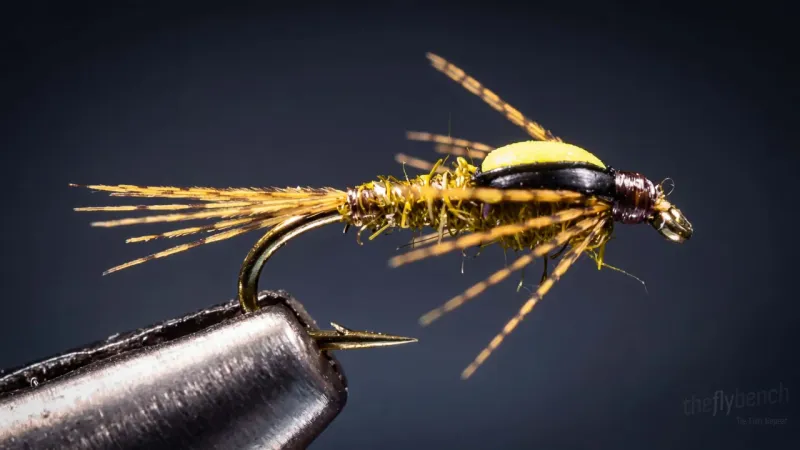
Dry FliesAntonio's Mayfly Adult
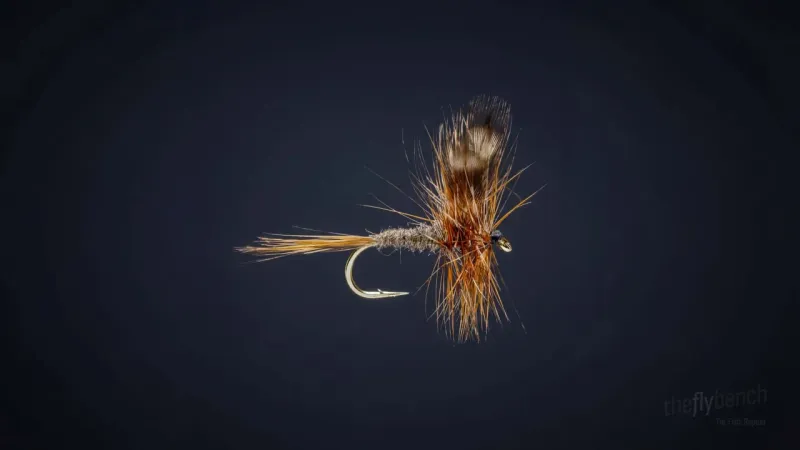
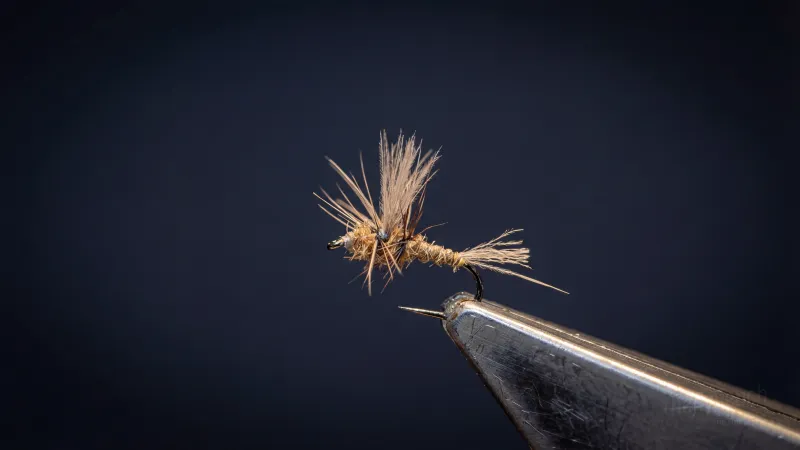
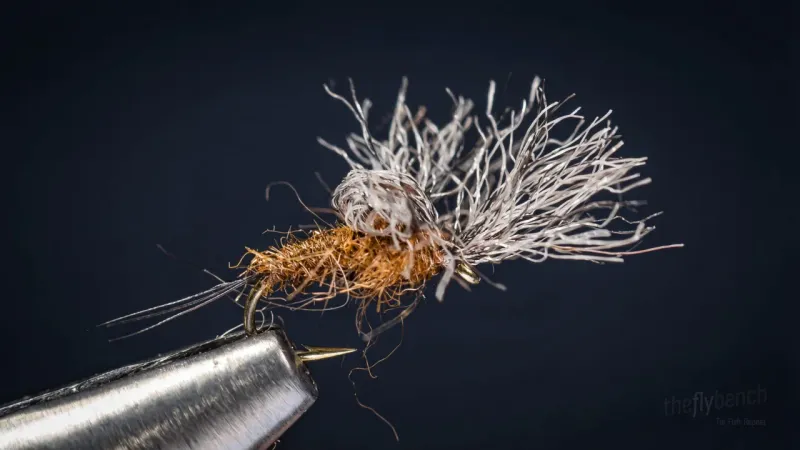
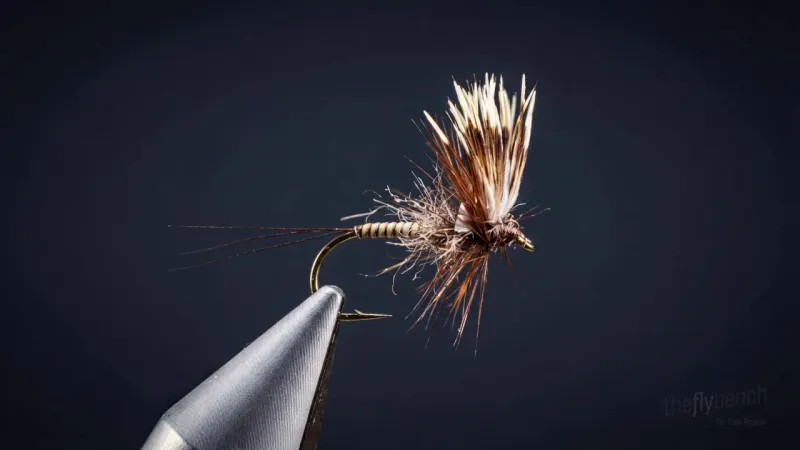
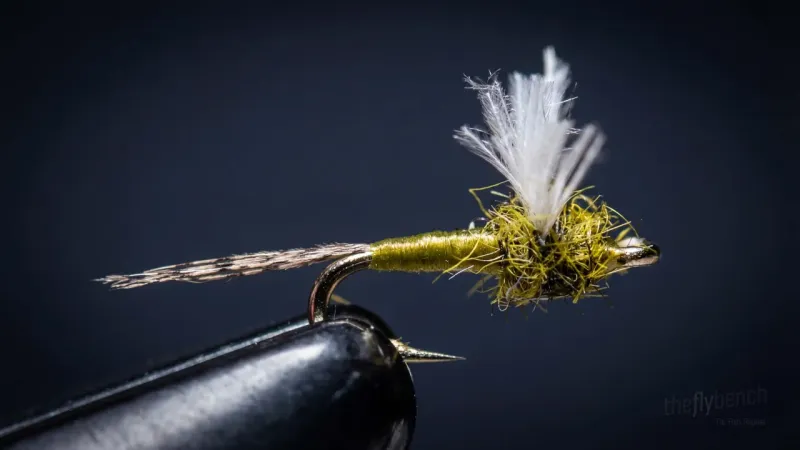
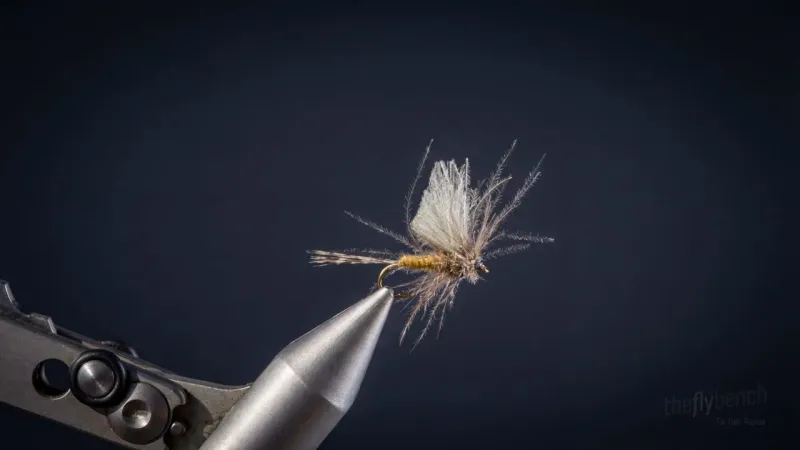
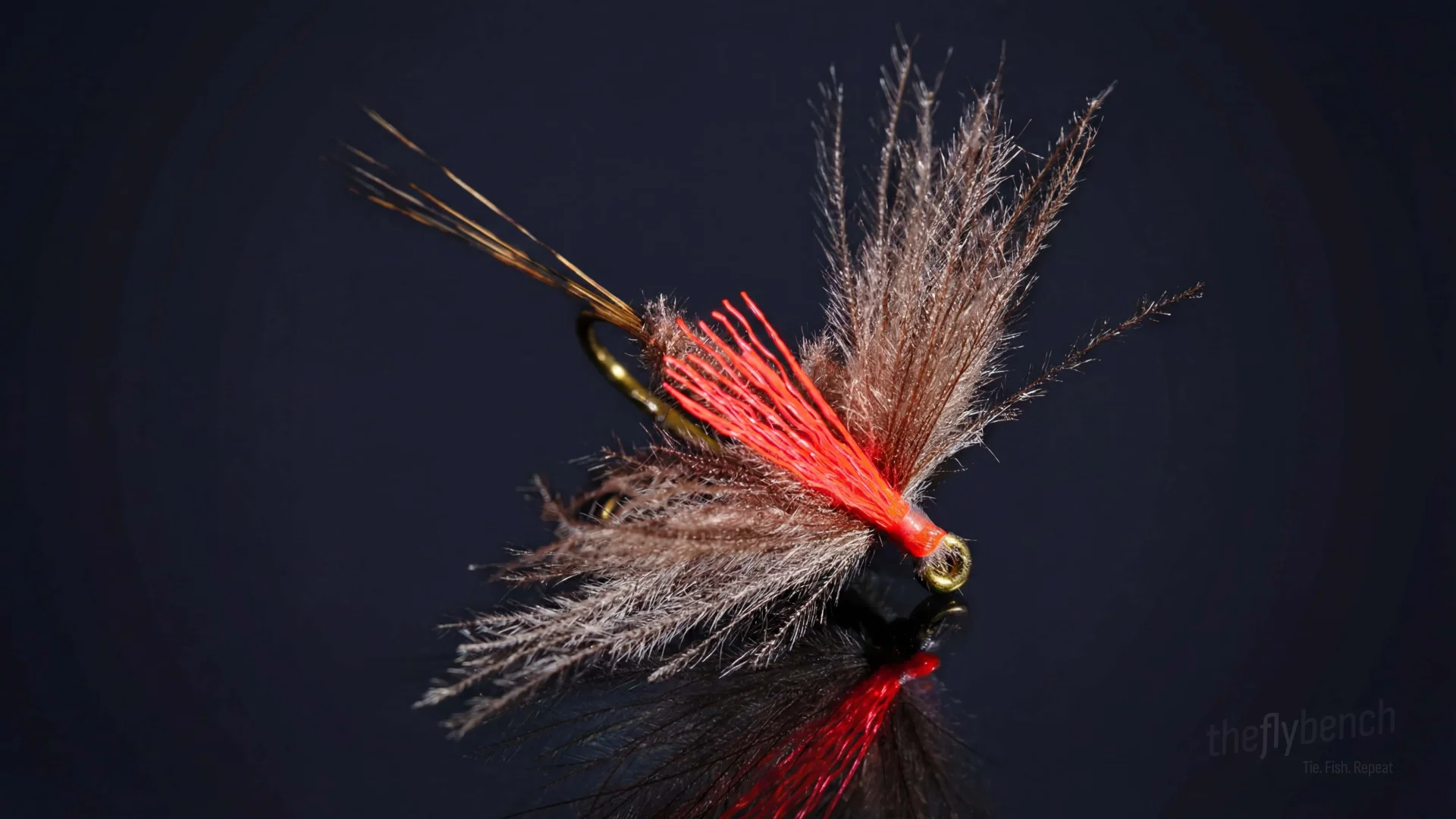
Antonio's Mayfly Adult is a sparse, low-riding dry built almost entirely from CDC. A dubbed CDC abdomen ribbed with fine copper wire gives it segmentation, Coq de Leon fibers splay as tails, and a fire orange Fluoro Fibre post keeps it trackable on flat water where the natural gray CDC wing disappears from view.
Spring, Summer, Fall
Beginner
Trout
Apr 2025
Overview
Tied on a light-wire hook in sizes 12 through 18, the fly leans on CDC fiber dubbing for both abdomen and thorax, so it sits flush in the film rather than perched up on hackle tips. Extra-small copper wire, or a single strand of copper Krystal Flash, counter-ribs the abdomen for durability and a hint of segmentation.
The natural gray CDC wing is nearly invisible against glare, which is why the fire orange Fluoro Fibre sighter matters. It lets you track the drift on spring creeks and flat tailwater without adding bulk. Fish it on a long, fine tippet during a mayfly hatch when trout are refusing anything with a heavier silhouette.
Where to Buy This Fly
We only link to fly shops we trust. Some links are referral links, which may earn us a commission at no extra cost to you.
Materials
- Hook:
- #12-18 Tiemco 900-BL or 100SP-BL
- Thread:
- Gray 18/0 Semperfli Nano Silk
- Tail:
- Coq de León rooster saddle fibers
- Rib:
- Extra-small copper wire or copper Krystal Flash
- Abdomen & Thorax:
- CDC fiber dubbing
- Sighter:
- Fire orange Fluoro Fibre
- Wing:
- Natural gray CDC fibers
Behavior & Presentation
Natural Behavior: Egg-laden females skate across smooth water, periodically touching down to release egg masses while maintaining flight. These repeated surface contacts create rhythmic disturbances that draw aggressive strikes from trout tracking reproducing adults.
Where Trout Eat It: Selective fish rise in smooth glides, spring creek tail-outs, and calm lake surfaces at depths of 2-4 feet where inspection time is maximized.
How to Fish It: Achieve drag-free drifts with slack casts and careful line management on smooth water where the low-floating profile demands precision.
Best Water: Target tail-outs, smooth glides, and calm pools in technical spring creeks where slower current (0.5-2 mph) allows detailed inspection.
Strike Type: Expect subtle sips or gentle rises as selective trout confidently take adults after careful inspection.
Fishing Strategy
Rigging Suggestions: Use 12-15ft 6X-7X fluorocarbon tippet (3-4 lb test) for ultra-delicate presentations. Longer leaders help achieve natural drifts in slow water. Single fly presentations work best.
Seasonal Timing: Most productive May through October during sustained mayfly activity, with peak effectiveness June through August when major hatches like Pale Morning Duns, Blue-Winged Olives, and various Baetis species emerge because this is peak mayfly season. Water temperatures 52-64°F trigger optimal feeding. Target morning and evening emergence periods when trout are keyed on adult mayflies. Exceptionally effective during spinner falls and when fish refuse higher-riding patterns. Best during calm conditions with minimal surface disturbance.
Pro Tips: The CDC and hackle provide subtle flotation while the resin head adds durability without compromising the delicate silhouette. This pattern excels when fish are highly selective and refusing traditional mayfly patterns.
Entomology
Egg-laden female mayflies skate across riffles and runs, periodically touching down to release egg masses while maintaining flight capability. The repeated surface contact during this ovipositing behavior creates rhythmic disturbances that draw aggressive strikes from trout tracking these reproducing adults through productive water.
- Order
- Ephemeroptera
- Common Name
- Mayfly
- Organism Type
- insect
- Life Stage
- adult