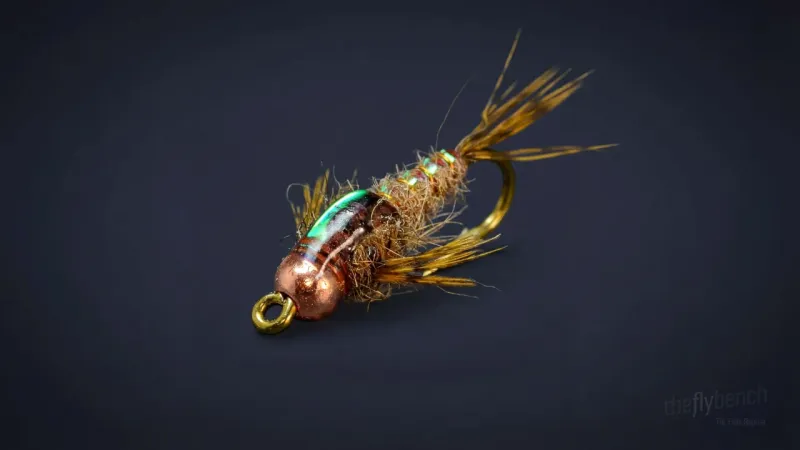
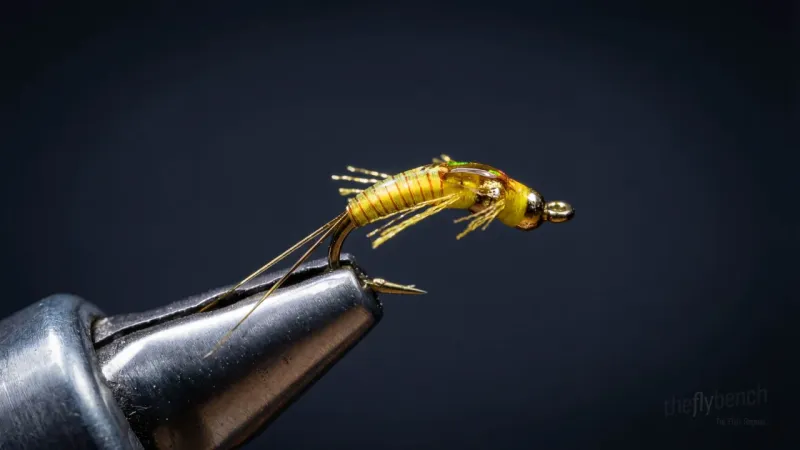
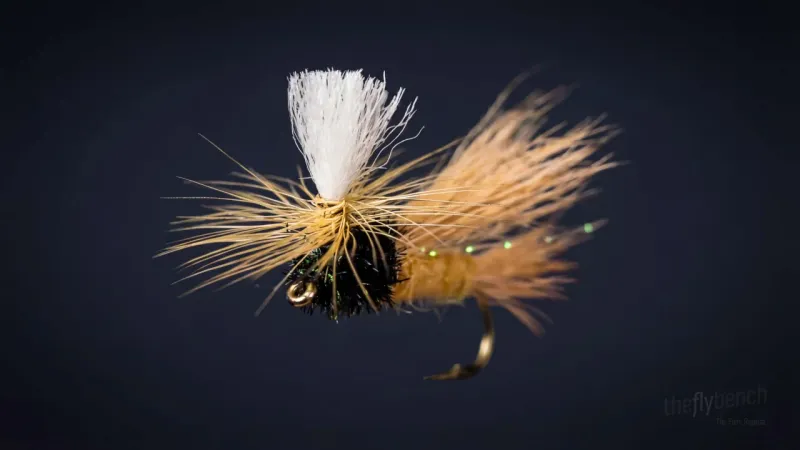
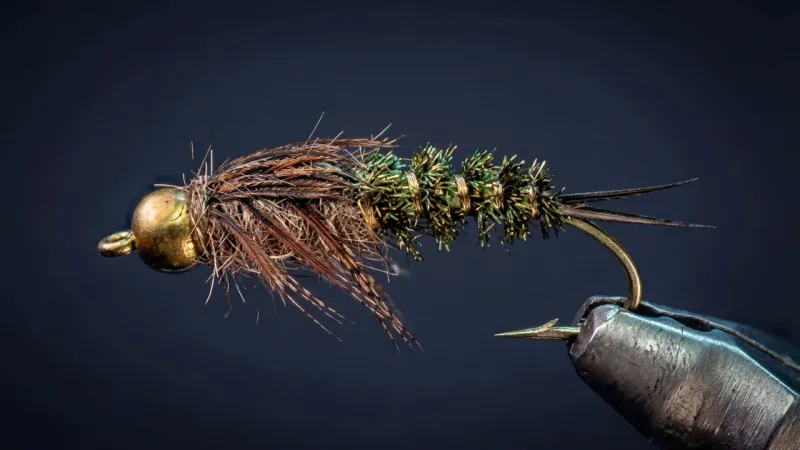
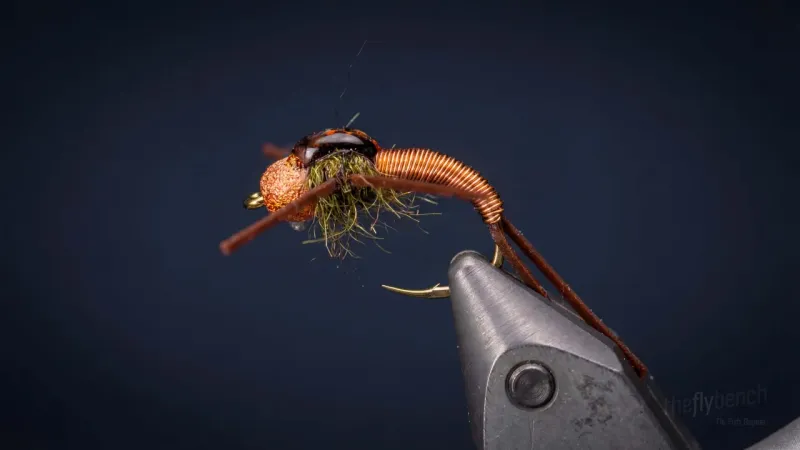
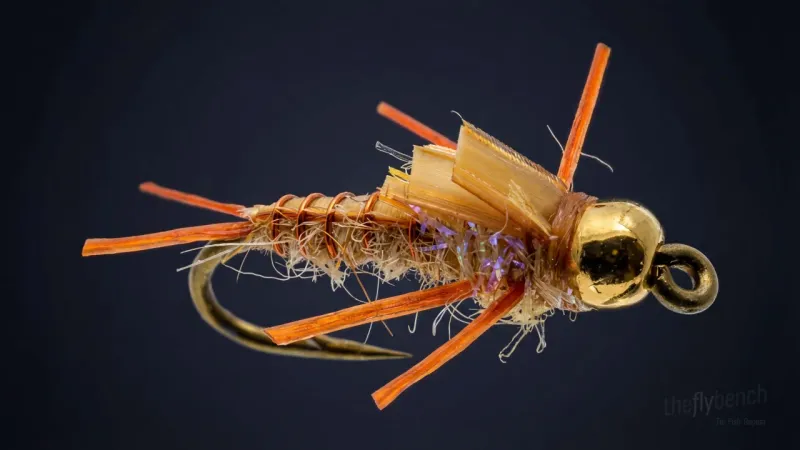
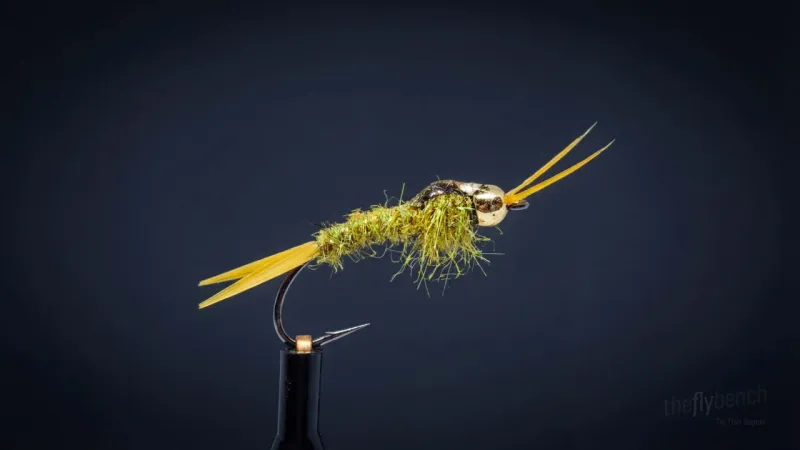
NymphWired Stonefly Nymph
An effective stonefly nymph pattern that uses wire to add weight and create a realistic segmented appearance. It's a great choice for fishing deep runs and fast water.
Spring, Summer
Intermediate
Trout
Apr 2025
Overview
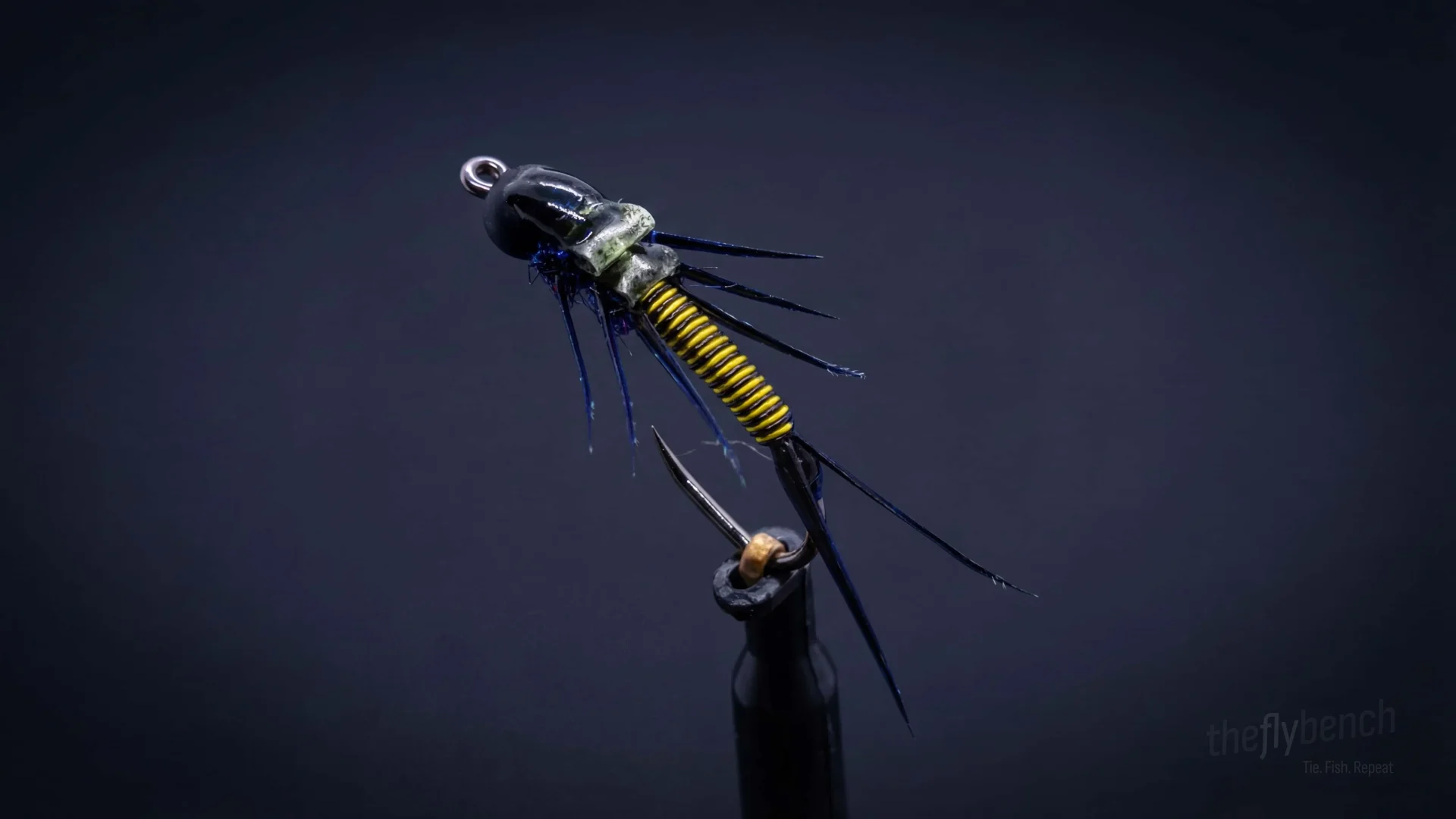
A durable nymph pattern with a wire abdomen over a dubbed underbody, rubber legs, wingcase, and a tungsten bead. Mimics golden or brown stoneflies and is often tied with black, copper, or gold wire for flash and weight.
Where to Buy This Fly
We only link to fly shops we trust. Some links are referral links, which may earn us a commission at no extra cost to you.
Materials
- Hook:
- #08-16 Tiemco 200R
- Bead:
- Gold Cyclops Bead
- Weight:
- .015-.025 Lead Wire
- Thread:
- Black UTC 70
- Tail:
- Black Goose Biots
- Body:
- Black and Copper Brassie Wire
- Thorax:
- Stonefly Nymph Brown SLF Dubbing
- Casing:
- Black FINO Skin
- Legs:
- Black Goose Biots
Behavior & Presentation
Natural Behavior: Stonefly nymphs crawl deliberately across river bottoms with powerful clawed legs, but become vulnerable when swept into drift. Their substantial size and clumsy swimming when dislodged make them high-value targets during pre-emergence migrations toward shore.
Where Trout Eat It: Fish intercept tumbling nymphs in deep runs and fast water where stoneflies are commonly found, feeding near bottom.
How to Fish It: Dead drift along the bottom in deep runs and fast water where the wire body helps sink quickly and stay in the feeding zone.
Best Water: Focus on runs, pockets, and channel swings where current delivers drifting nymphs through deep, fast-moving sections.
Strike Type: Indicator hesitates or pulls down firmly as fish grab the weighted nymph near bottom; strikes are often confident.
Fishing Strategy
Rigging Suggestions: The Wired Stonefly Nymph can be fished alone, or as part of a multi-fly setup. It is heavy enough to be used as the lead fly in a Euro-nymphing setup.
Seasonal Timing: Most productive during emergence periods from March through June. Fish morning and evening when stoneflies are most active.
Pro Tips: The wire body of this fly helps it to sink quickly and stay in the feeding zone. However, its dark color can make it difficult to see in some conditions. In clear water, the segmented appearance created by the wire can be very attractive to fish.
Entomology
Stonefly nymphs crawl deliberately across river bottoms, gripping rocks with powerful clawed legs as they forage in high-oxygen riffles and runs. Their substantial size and clumsy swimming when dislodged make them high-value targets that trout will aggressively pursue, especially during pre-emergence migrations toward shore.
- Order
- Plecoptera
- Common Name
- Stonefly
- Organism Type
- insect
- Life Stage
- general