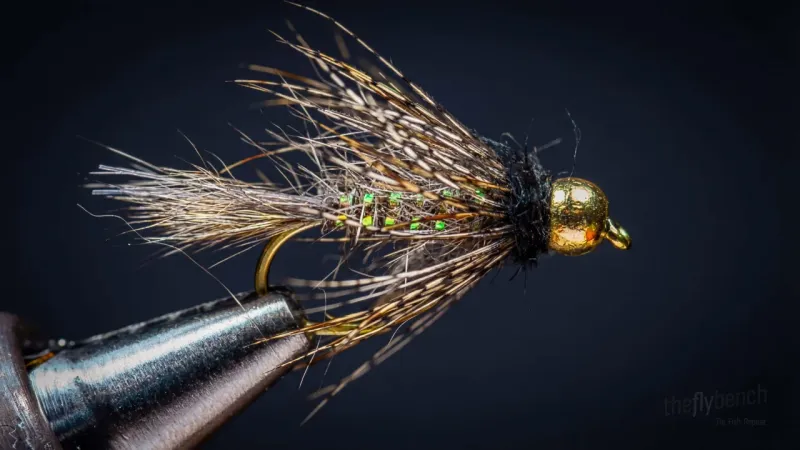
NymphSimple Golden Stone
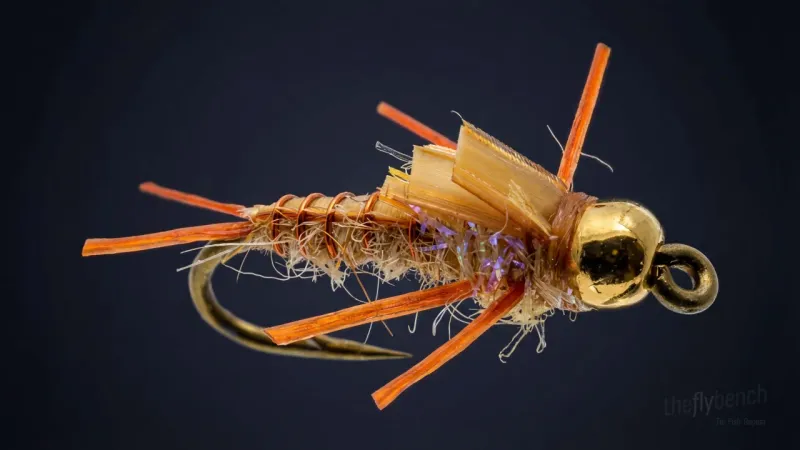
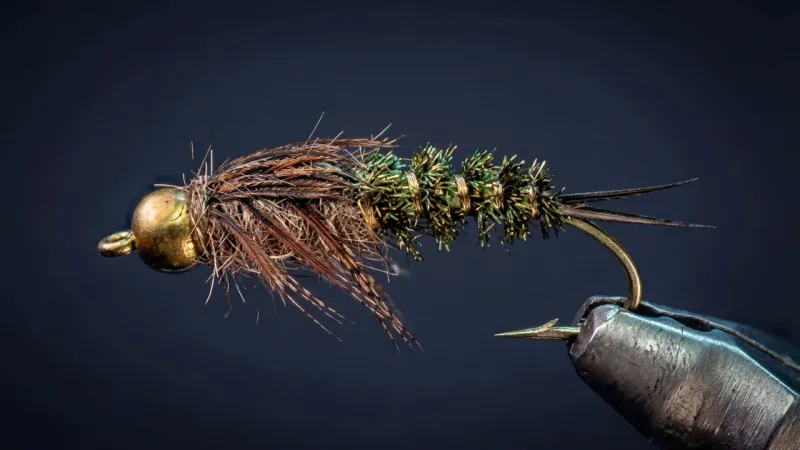
A reliable and easy-to-tie stonefly imitation, the Simple Golden Stone is a great fly for targeting trout in rivers and streams. Its realistic profile and enticing movement mimic the natural stonefly nymphs that trout feed on.
Spring, Summer
Intermediate
Trout
Apr 2025
Overview
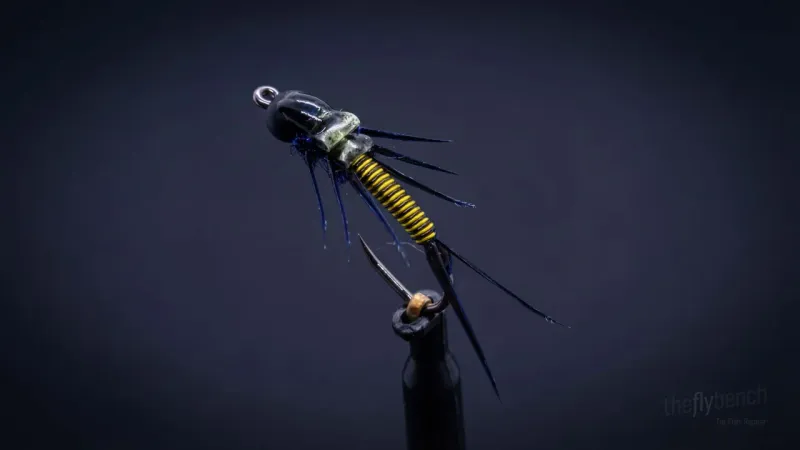
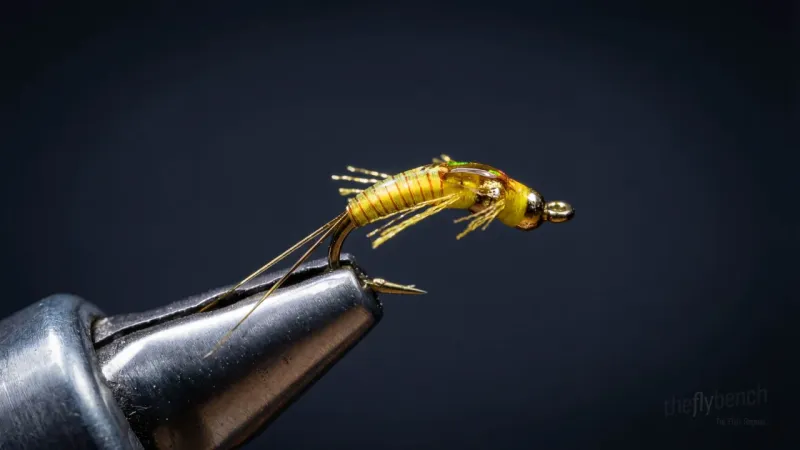
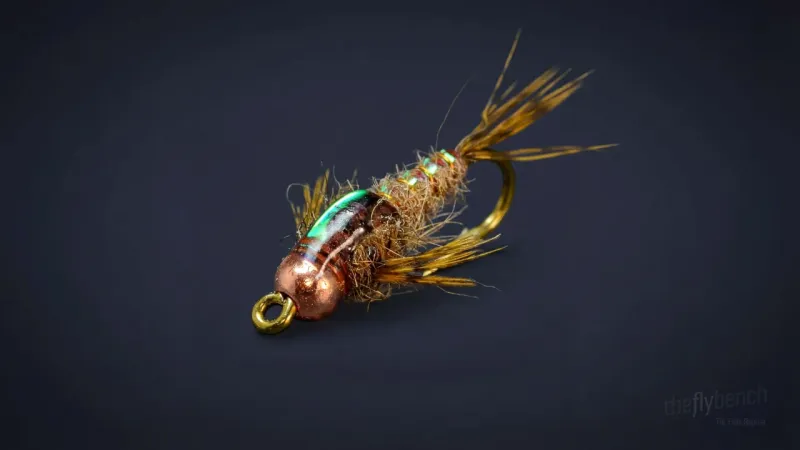
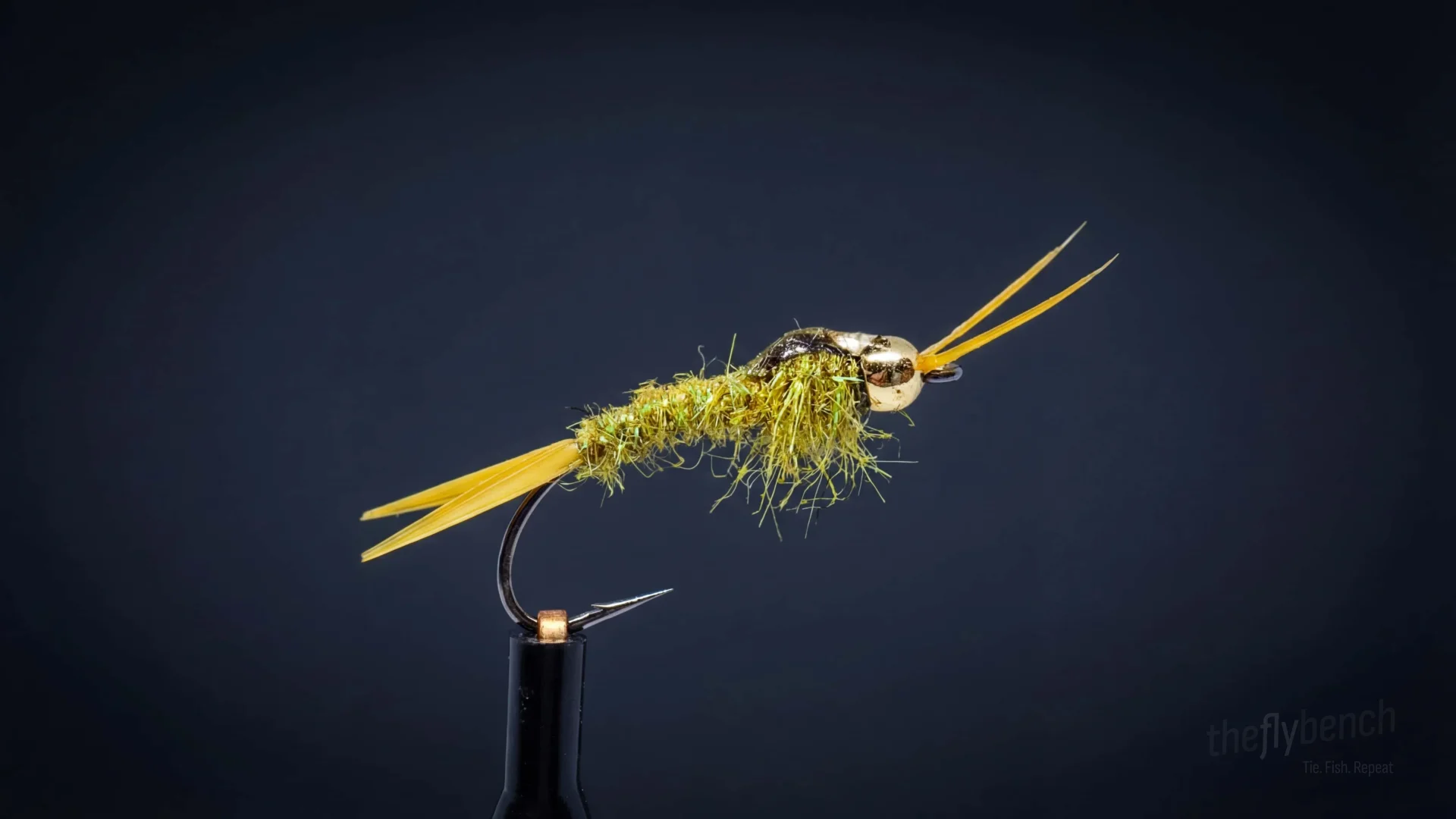
A streamlined stonefly nymph made with golden-brown dubbing, ribbing, and rubber legs. Usually includes a beadhead and may be reinforced with UV resin over the wingcase. It's quick to tie and effective during golden stonefly activity.
Where to Buy This Fly
We only link to fly shops we trust. Some links are referral links, which may earn us a commission at no extra cost to you.
Materials
- Hook:
- 3X-long nymph hook (here a Dai-Riki 285), sizes 8-16
- Bead:
- 7/64-inch, black
- Weight:
- Lead-free round wire, .020
- Thread:
- 8/0 or 70 Denier, yellow
- Dubbing ball:
- Australian possum, golden stone
- Rib:
- Ultra Wire, brassie size, gold
- Tails:
- Amber goose biots
- Back/Wingpads:
- pheasant tail fibers, dyed yellow
- Body:
- Australian possum, golden stone
Behavior & Presentation
Natural Behavior: Golden stonefly nymphs crawl along rocky bottoms in fast currents, occasionally tumbling into the drift when dislodged. Their heavy, segmented bodies sink quickly but drift deep in strong currents before regaining the substrate.
Where Trout Eat It: Trout feed on these large golden stonefly nymphs clinging to the undersides of rocks in fast current, intercepting them when they lose grip and tumble downstream.
How to Fish It: Cast directly upstream for drag-free drift along bottom. High-stick through short drifts to maintain contact. Pick out dubbing on thorax to add motion.
Best Water: Fast-water runs with boulder substrate. Swing the fly out of fast water along banks where golden stones migrate toward shore.
Strike Type: Heavy golden stone takes feel like solid resistance followed by powerful runs. Indicator shows deliberate drops as fish grab the large profile and turn downward.
Fishing Strategy
Rigging Suggestions: 9-foot 3X leader with strike indicator positioned 1.5X water depth above fly. Add split shot 8-12 inches above fly to reach bottom quickly.
Seasonal Timing: Late May through August, with peak effectiveness during June-July golden stonefly hatches when nymphs migrate toward shore.
Pro Tips: The golden color and tungsten bead head provide both attraction and visibility in fast, broken water. Use a tandem rig with smaller mayfly nymph dropper. Fish it year-round as stonefly nymphs are always present, not just during emergence periods.
Entomology
Large golden stonefly nymphs inhabit fast-water environments where they cling tenaciously to the undersides of rocks, occasionally losing their grip and drifting downstream with legs splayed wide. Fish eagerly consume these robust nymphs because they deliver exceptional nutritional value per capture, appearing most frequently during pre-emergence migrations when nymphs move toward shore to transform into adults.
- Order
- Plecoptera
- Common Name
- Stonefly
- Organism Type
- insect
- Life Stage
- general