


Overview
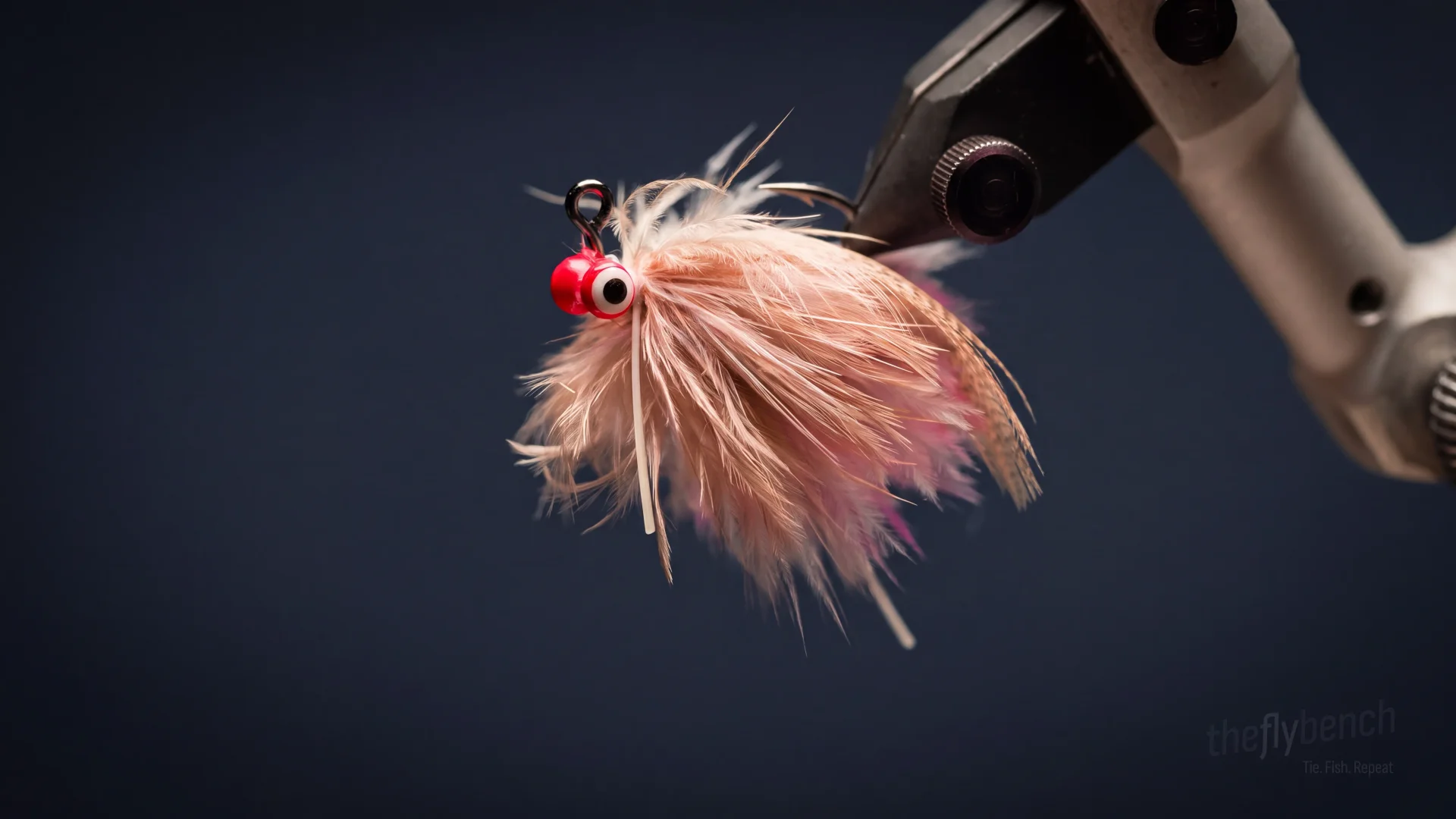
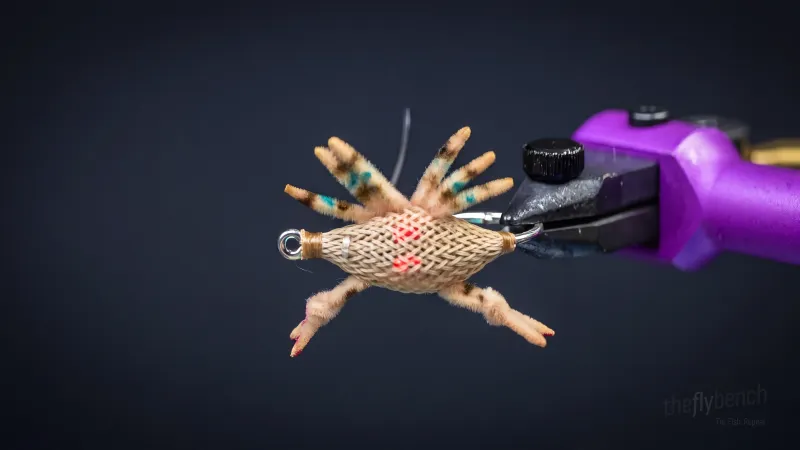
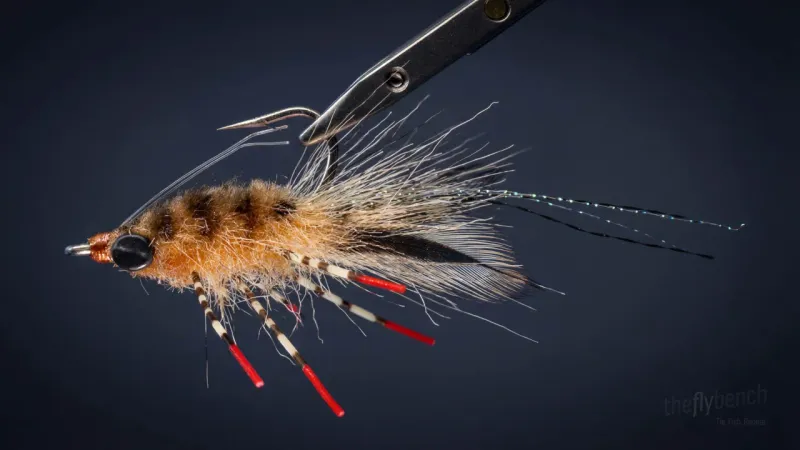
New Jersey surf angler Bob Popovics designed this fly to match the mole crabs that live in the wash of sandy beaches. Three shades of saddle hackle in pink, peach and tan are stripped, stacked and palmered to form the oval body, with silicone legs tied in three sets. Trident's version caps the back with a mallard flank shell. The brass eyes ride the hook point up, so it fishes cleanly over sand.
Related patterns

Behavior & presentation
- Natural Behavior
- Sand fleas ride each wave up the beach, then dig in tail-first as the water drains back, often getting knocked loose and tumbled in the backwash before they can bury again.
- Where Trout Eat It
- Stripers, corbina and pompano cruise the first trough and the wash itself, sometimes in less than a foot of water, picking off fleas exposed by the retreating surf.
- How to Fish It
- Cast into or just beyond the wash, let the eyes sink it to the sand, and work it back with short strips and pauses so it hops and settles like a flea that lost its footing.
- Best Water
- Inside troughs, cuts through the outer bar, the edge of the wash where waves break on the beach, and soft-sand stretches where flea beds show as V-shaped ripples in the backwash.
- Strike Type
- Usually a short, heavy stop as the fish pins the fly to the bottom; keep slack out between waves and strip-set as soon as the line goes tight.
Fishing strategy
- Rigging Suggestions
- An 8 or 9 weight with an intermediate or sinking-tip line handles surf and wind. Use a short 6-8 foot leader to 15-20 lb fluorocarbon for stripers; drop to 10-12 lb for corbina and pompano in clear wash.
- Seasonal Timing
- Best from late spring through early fall when mole crab beds are thick on sandy beaches; Atlantic stripers key on them in summer, corbina from spring into summer on Pacific beaches.
- Pro Tips
- A stripping basket keeps line out of the surf. Fish the falling and rising tide when waves churn flea beds, and match fly color to the local fleas, which run from gray-tan to orange-tinted when carrying eggs.
Entomology
Mole crabs live in the swash zone of sandy beaches, migrating up and down with the tide and burrowing backward into wet sand to filter food from receding waves. Breaking surf constantly exposes them, and surf predators such as striped bass, corbina and pompano feed heavily on them along the beach.
- Order
- Decapoda
- Family
- Hippidae
- Common name
- Sand Flea (Mole Crab)
- Organism
- crustacean
- Life stage
- adult
Pattern details
- Saltwater
- Northeast
- Southeast
- strip-retrieve
- sight-fishing
- jigging
- modern