Euro NymphsMop Sculpin
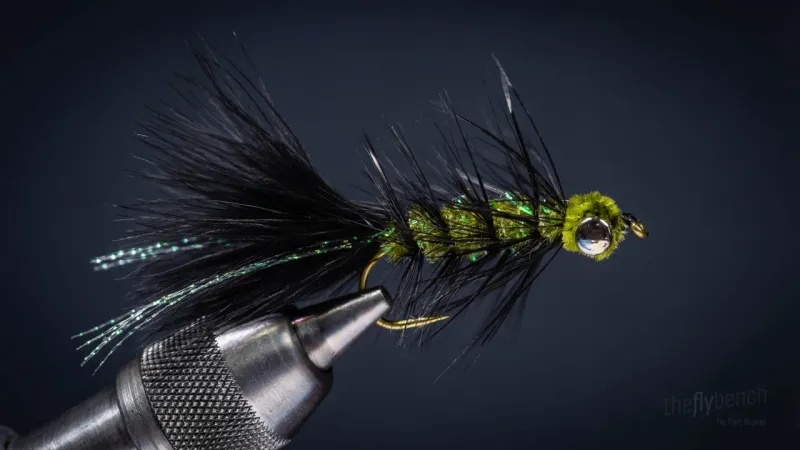
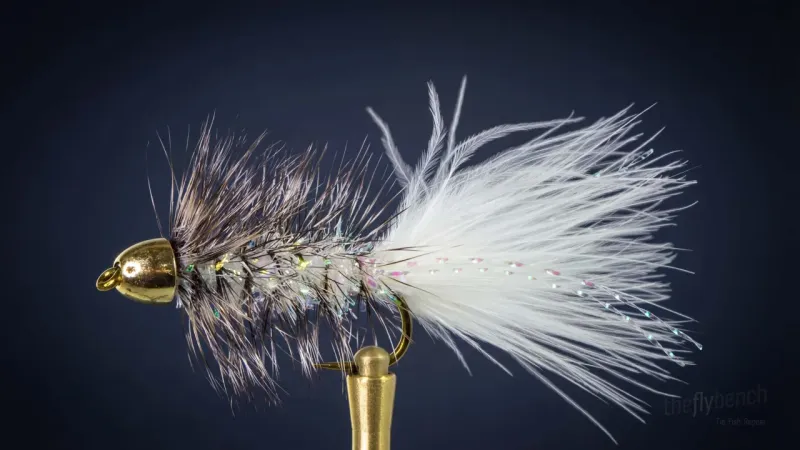
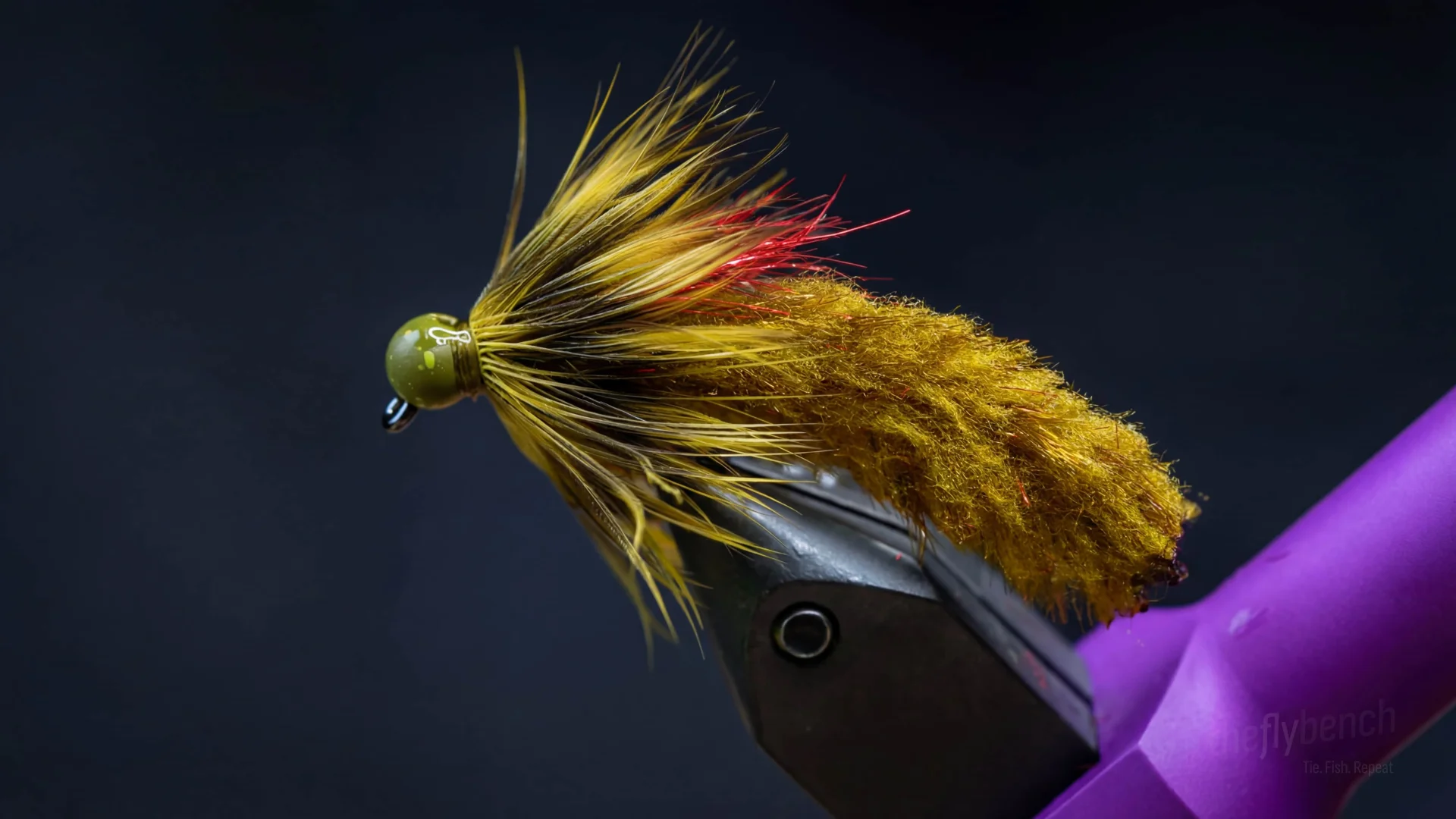
The Mop Sculpin, designed by Cheech from Fly Fish Food, combines a mop fly's fish-attracting bulk with a baitfish profile, using FNF Slush Jelly Fritz in pellet form for both the body and tail instead of standard chenille. A red Ice Dub flash and a grizzly-dyed golden olive Whiting Bugger Hackle collar add movement and color, while an olive drab tungsten bead on a jig hook keeps it riding hook-point-up near the bottom.
Year Round
Beginner
Trout
Dec 2025
Overview
Built on a Fulling Mill jig hook with a slotted olive drab tungsten bead for a hook-up riding posture, the Mop Sculpin uses FNF Slush Jelly Fritz pellets for both body and tail, giving it the same undulating, water-absorbing bulk that makes mop flies effective without relying on standard chenille. A few strands of red Ice Dub add flash through the body, and a grizzly dyed golden olive Whiting Bugger Hackle collar flares at the head to suggest gills and pectoral fins. Simple to tie with only a handful of materials, it is fished on a dead drift or short strips along the bottom where trout expect a sculpin or baitfish, and the jig-style hook helps it track point-up through rocky runs without snagging.
Where to Buy This Fly
We only link to fly shops we trust. Some links are referral links, which may earn us a commission at no extra cost to you.
Materials
- Hook:
- Fulling Mill 5125 Jig Force Short Barbless Hook, size #10
- Bead:
- Firehole Stones Speckled Slotted Tungsten Beads, 4.5mm (3/16"), olive drab
- Thread:
- Semperfli Classic Waxed Thread, 6/0, medium olive
- Body/Tail:
- FNF Slush Jelly Fritz, pellet
- Flash:
- Ice Dub, red
- Collar:
- Whiting Bugger Hackle Patch, grizzly dyed golden olive
Behavior & Presentation
Natural Behavior: Sculpins dart between rocks in explosive bursts then freeze motionless on gravel, using camouflage and stillness between feeding strikes.
Where Trout Eat It: Large predatory fish patrol boulder fields and deep structure, ambushing sculpins in 3-6 feet of water near bottom.
How to Fish It: Jig the fly along bottom with short hops to mimic wounded sculpin. Dead drift also works when swung through deeper structure.
Best Water: Focus on undercut banks hiding ambush predators, channel swings with depth, and boulder gardens where sculpins shelter between rocks.
Strike Type: Violent grab often hooks itself. Fish hit fleeing sculpins with commitment, creating jarring strikes.
Fishing Strategy
Rigging Suggestions: Fish on a 9-12 foot leader with 3X-4X tippet to handle larger fish; works well as the point fly in a Euro nymphing setup or as a single fly on a tight-line rig; the tungsten bead provides sufficient weight in most conditions, but add split shot if needed to reach deeper water.
Seasonal Timing: as sculpins and baitfish are always present in trout streams and serve as a primary food source for larger fish throughout all seasons Ideal when targeting larger, predatory trout that actively feed on sculpins and baitfish; particularly effective in high water conditions or when smaller nymphs aren't producing; the jig hook design reduces snags on rocky bottoms where sculpins naturally live.
Pro Tips: Sinks quickly due to the jig hook design and heavy tungsten bead; the chenille body creates a bulky profile that's highly visible to fish; the jigging action when bounced along the bottom mimics a sculpin's natural darting movements; speckled bead adds realism.
Entomology
Sculpins dart between rocks in short explosive bursts before settling motionless on gravel bottoms, using pectoral fins to anchor against current while ambushing smaller prey. Large trout hunt sculpins despite their bottom-dwelling habits because these baitfish provide exceptional caloric density, with their broad heads and thick bodies offering substantially more meat than slender minnows of similar length.
- Organism Type
- baitfish
- Life Stage
- general