





Overview
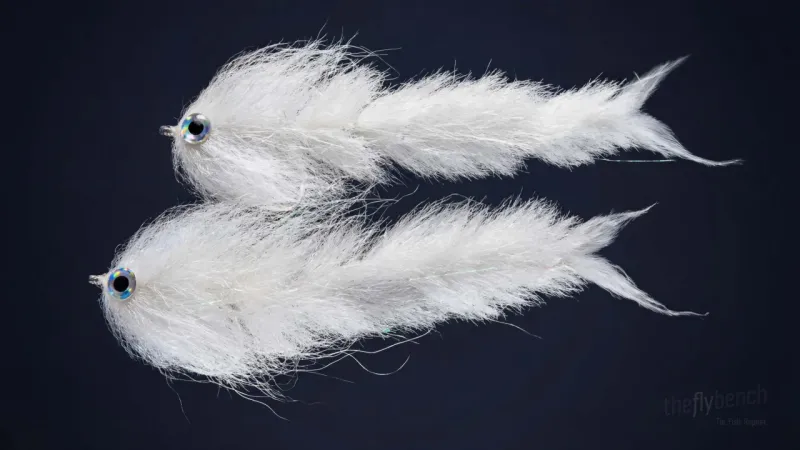
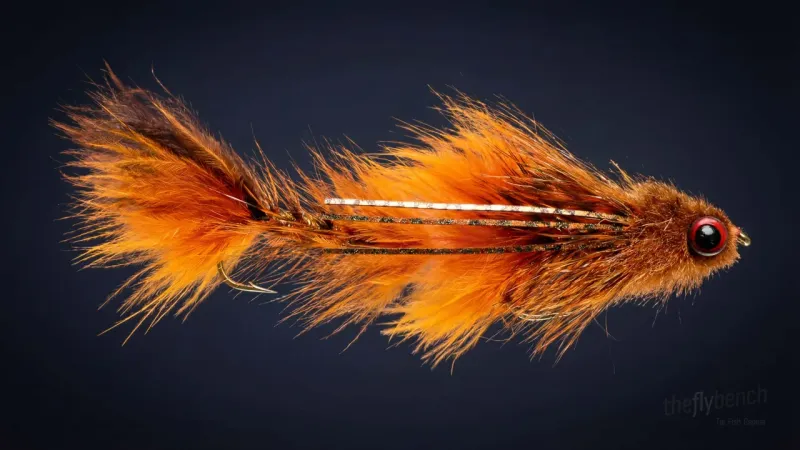
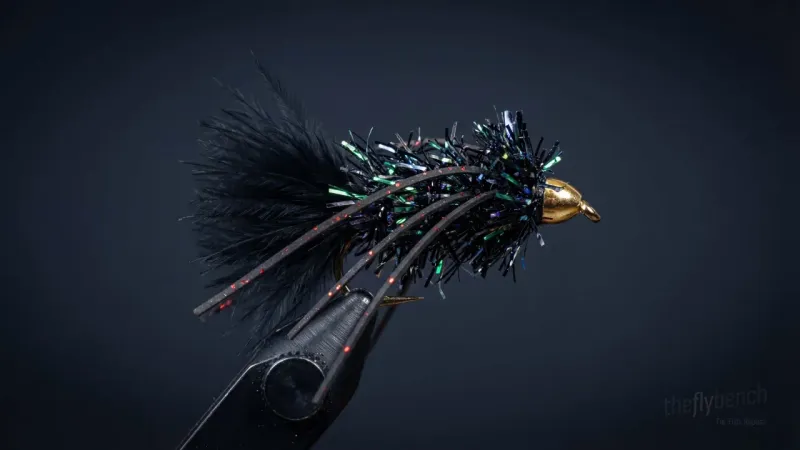
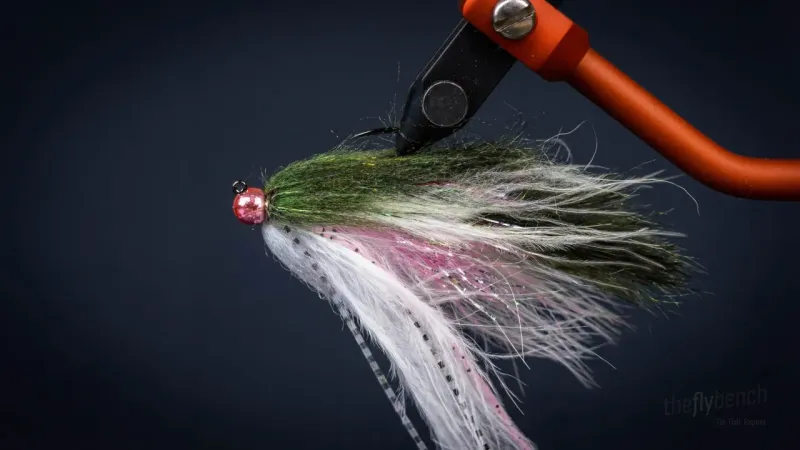
Built on a Tiemco 8089 hook, the Hood Rat forms its tail from brown or tan Ultra Chenille and its body, belly, and back from tan 2mm foam, giving the fly a wide, buoyant profile that pushes a lot of water on the strip. Chinchilla or grizzly zonker rabbit strips tied along the sides and as legs add pulsing movement and a mottled, baitfish-like flank, while black UTC 140 thread and ZapAGap hold the foam segments together through repeated strikes from toothy fish. The foam construction keeps the fly riding high and easy to work as a slow-sinking or surface baitfish imitation, making it a solid choice for bass and pike in both stillwater and moving water year-round.
Related patterns

Behavior & presentation
- Natural Behavior
- Baitfish form tight schools for protection, but individuals separate during feeding frenzies or when chased. These isolated fish swim with rapid fin movements and directional changes near structure. Predators focus on stragglers because solitary fish are easier to isolate.
- Where Trout Eat It
- Drop-offs, weed edges, structure including docks, weedbeds, laydowns in lakes and rivers where predators ambush.
- How to Fish It
- Vary retrieve—aggressive strips with pauses for active fish, slow crawls along bottom for lethargic fish because this matches baitfish energy levels. Add twitches and pauses mimicking erratic movements.
- Best Water
- Drop-offs, weed edges, structure including docks, weedbeds, laydowns where baitfish concentrate and predators ambush.
- Strike Type
- Explosive jarring grab when predators commit, line goes tight suddenly. Strip-set firmly to drive hook past articulated design.
Fishing strategy
- Rigging Suggestions
- Stout 0X-2X leaders and tippet for aggressive strikes. 6-8wt rods with sinking or intermediate lines for depth. Articulated design creates realistic swimming action.
- Seasonal Timing
- Year-round for warmwater species, peak spring (April-May) and fall (September-October) when bass and pike feed aggressively. Summer offers topwater action, winter requires slower presentations. Early morning and late evening best when predators ambush baitfish in shallows.
- Pro Tips
- Large profile pushes water creating vibration predators detect from distance. Strip fast near surface for explosive strikes, or crawl bottom structure for pressured fish. Deer hair head creates jigging action on pauses.
Entomology
Baitfish form tight schools in open water for protection, but individuals become separated during feeding frenzies or when chased by predators. These isolated fish swim with rapid fin movements and directional changes, often near structure or vegetation edges. Predators focus on stragglers because solitary baitfish are easier to isolate and consume than those protected within the tight formations of larger schools.
- Organism
- baitfish
- Life stage
- general
Pattern details
- Stillwater
- Moving Water
- Great Lakes
- Midwest
- active-retrieve
- strip-retrieve
- hopper-season
