Overview
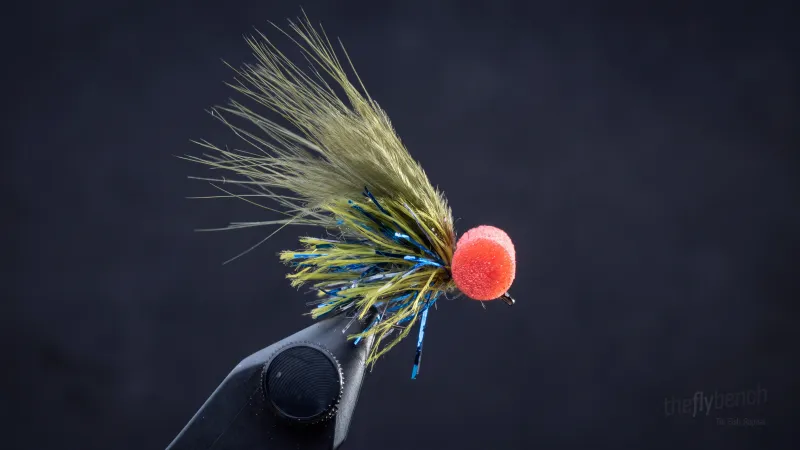
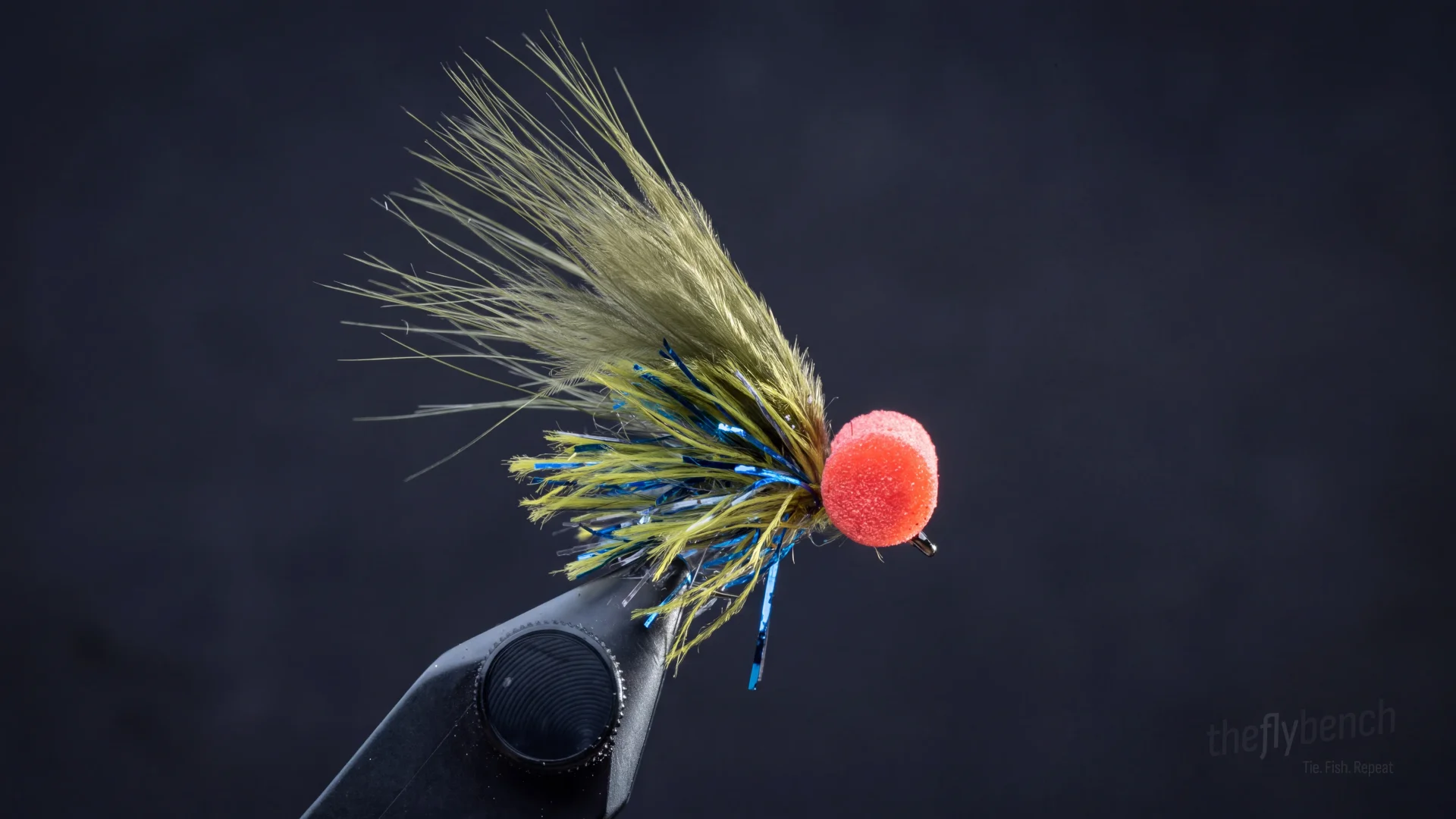
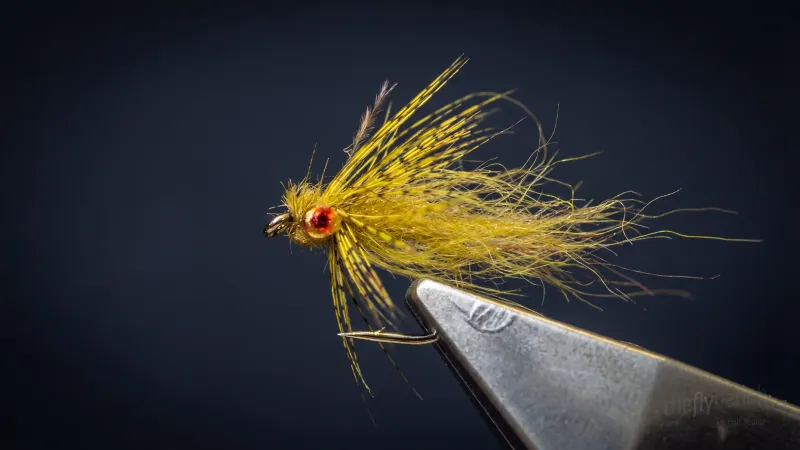
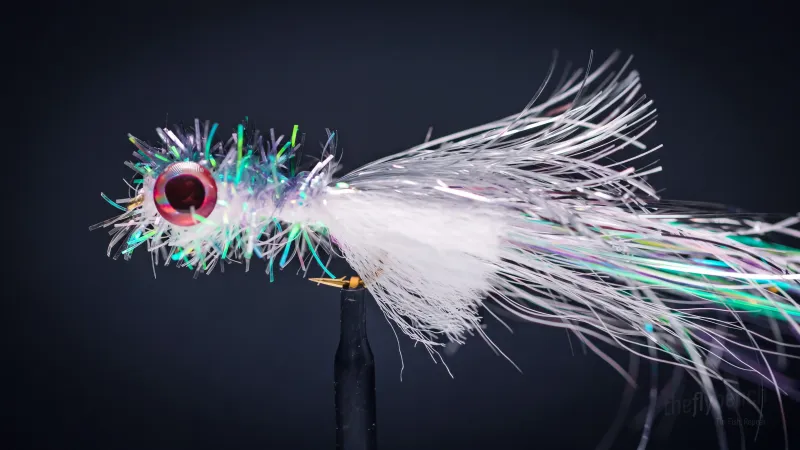
The Booby is credited to Gordon Fraser, who described it in his 1987 book Mastering the Nymph after fishing it on English reservoirs such as Eyebrook and Rutland. His first versions were small buzzer imitations; the foam eyes later went onto lures of every color. Some UK fisheries banned it after anglers left it static on the bottom like bait. Tie the foam cylinder in with firm figure-eight wraps so the eyes can't spin.
Related patterns
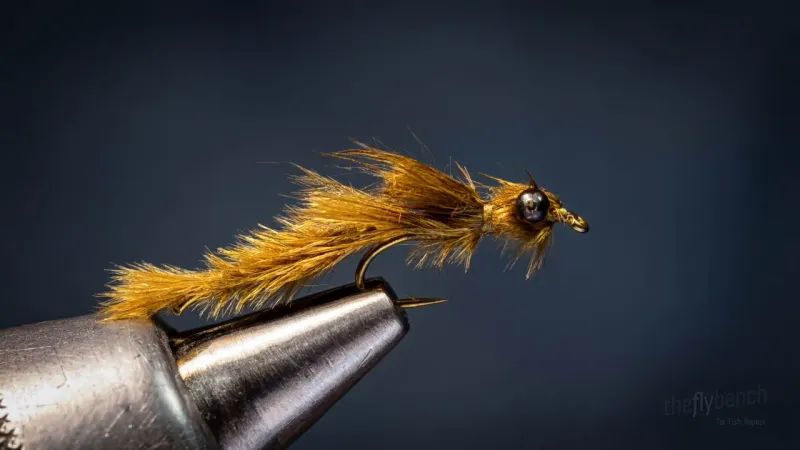
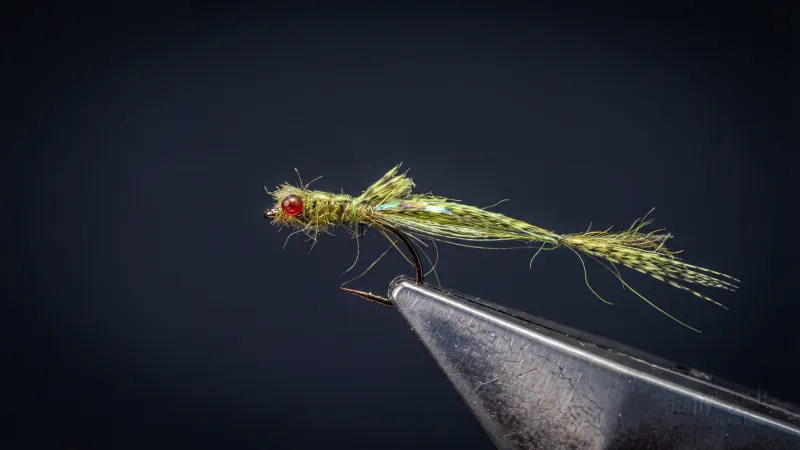
Behavior & presentation
- Natural Behavior
- Olive damselfly nymphs crawl through weed beds and swim in slow, side-to-side wiggles a few inches above the lake floor, especially as they head for the shore to hatch.
- Where Trout Eat It
- Trout working the bottom of a reservoir pick nymphs off the weed tops and the bare ground between beds, often holding deep through cold spells or bright sun.
- How to Fish It
- Let a fast-sinking line settle on the bottom while the foam eyes hold the fly just above it, then bring it back with slow figure-eight pulls so it dives on each pull and lifts again when you pause.
- Best Water
- Weed-bed edges, the drop-off below a shallow margin, and the flat floor of a deep basin where a sunk fly would otherwise snag.
- Strike Type
- Often a slow tightening as the fly rises during a pause; trout also hit it hard on the dive, so keep the rod low and strip-set.
Fishing strategy
- Rigging Suggestions
- Fast-sinking or Di-5 to Di-7 line with a short leader of 3 to 4 feet of 6- to 8-pound fluorocarbon, so the fly floats only that far off the bottom. A buzzer or small nymph on a dropper above it is a common setup.
- Seasonal Timing
- Strongest in early spring and late fall, and on mild winter days, when reservoir trout hold deep and won't rise to a fly near the surface. In summer, fish it over the deeper weed edges during the damsel migration.
- Pro Tips
- Check local fishery rules before tying one on, since some UK waters still ban foam-eyed flies. Never leave it sitting static; a slow, steady retrieve with short pauses is what makes the eyes work. Bigger eyes lift the fly faster, and smaller ones let it hang lower.
Entomology
Damselfly nymphs live among submerged weeds in lakes and ponds, hunting smaller insects. When they are ready to hatch they swim toward shore with a wiggling motion, which exposes them to cruising trout.
- Order
- Odonata
- Family
- Coenagrionidae
- Common name
- Damselfly
- Organism
- insect
- Life stage
- nymph
Pattern details
- Stillwater
- United Kingdom
- strip-retrieve
- active-retrieve
- cold-water
- attractor
- searching-pattern