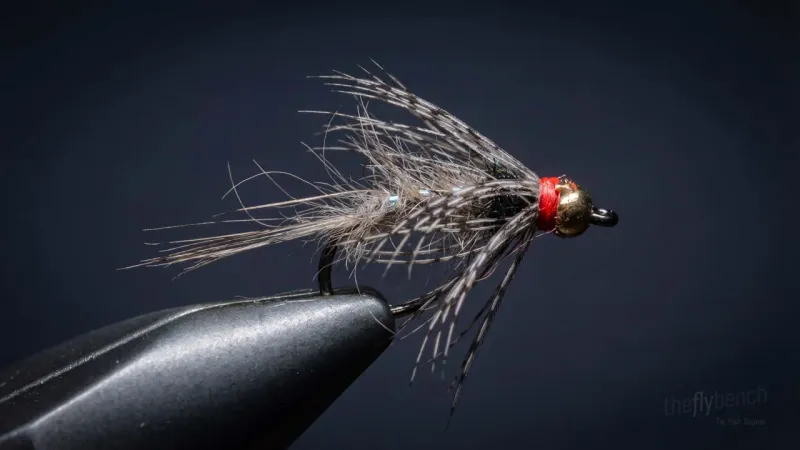
NymphLlama Dragonfly Nymph
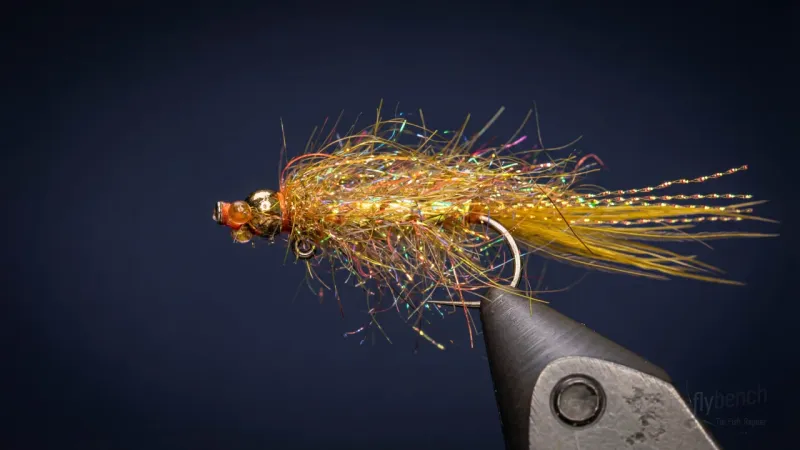
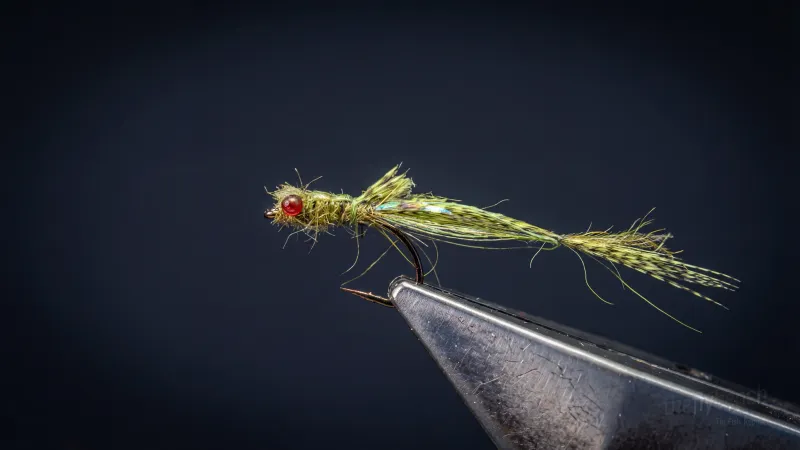
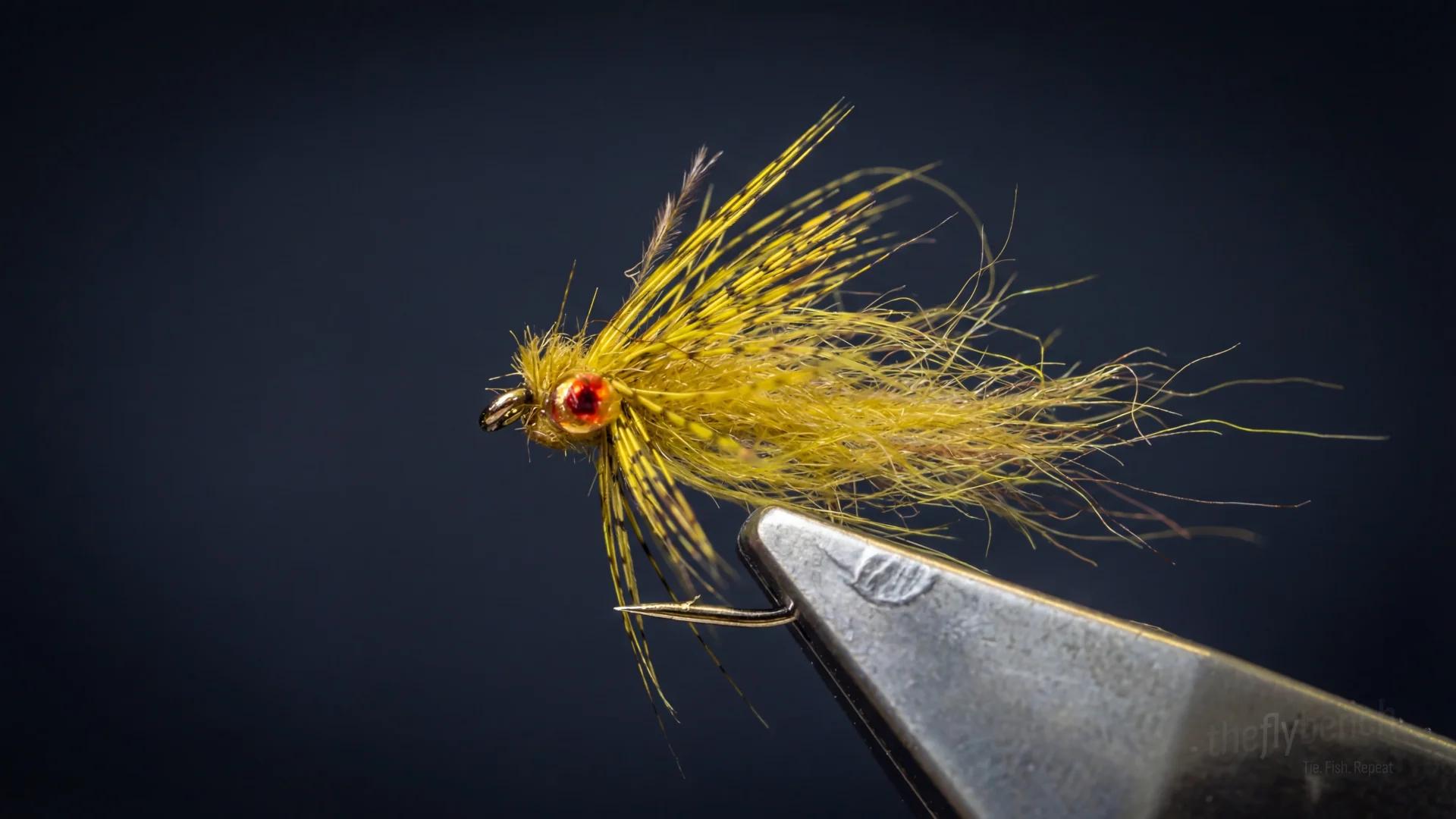
This dragonfly nymph builds its body from Veniard's llama dubbing mix in olive, spun in a chartreuse waxed nylon loop for a buggy, translucent silhouette. Brass bead eyes strung on red mono and an olive dyed partridge hackle add weight and leg movement, while a dark olive Argentinean hare head finishes the profile. Hans Weilenmann's pattern is built to sink and crawl along bottom structure where naturals hunt.
Spring, Summer, Fall
Intermediate
Trout
Feb 2026
Overview
Olive Veniard llama mix is spun into a chartreuse Gudebrod waxed nylon loop and brushed out into a dense, mobile body that suggests the bulk of a dragonfly nymph. Brass bead eyes threaded on red mono add weight to help the fly ride point-down and swim with a jigging action on the retrieve. A clear flash tail and an olive dyed partridge hackle give the fly movement at the tail and thorax, while a dark olive Argentinean hare head adds a final buggy touch. Hans Weilenmann's design is meant to be fished slow and deep along weed beds and bottom structure in stillwaters, where dragonfly nymphs actually live.
Where to Buy This Fly
We only link to fly shops we trust. Some links are referral links, which may earn us a commission at no extra cost to you.
Materials
- Hook:
- Partridge BMN (Big Mouth Nymph) #14
- Thread:
- Benecchi 12/0, olive
- Eyes:
- Brass beads, strung on red mono
- 'Tail':
- Flash, clear
- Body:
- Veniard Llama mix, olive - in Gudebrod waxed nylon, chartreuse, loop
- Hackle:
- Partridge, dyed olive
- Head:
- Argentinean hare, dark olive
Behavior & Presentation
Natural Behavior: Dragonfly nymphs crawl deliberately along bottom structure, then suddenly jet-propel themselves through the water using rectal respiration when hunting or escaping. These erratic bursts make them highly visible despite their normally cryptic behavior.
Where Trout Eat It: Near bottom structure where nymphs prowl, and mid-column when they dart erratically to escape predators.
How to Fish It: Slow retrieves with sudden strips to imitate jet-propulsion bursts, or dead drift along the bottom with occasional twitches.
Best Water: Focus on weed edges where nymphs hunt, rocky structure and drop-offs where they ambush prey, and shoals with vegetation that provides cover.
Strike Type: Aggressive strikes as fish react to sudden movement, often hitting during the burst phase of the retrieve.
Fishing Strategy
Rigging Suggestions: Use a 9-10 foot leader with 4X-5X tippet. Add split shot 8-12 inches above the fly and a strike indicator.
Seasonal Timing: Most effective during peak feeding periods at dawn and dusk. Water temperatures between 45-65°F typically produce best results.
Pro Tips: Fish this pattern early in the season before dragonfly emergence to capitalize on pre-hatch activity when nymphs migrate toward emergent vegetation.
Entomology
Dragonfly nymphs prowl along the bottom structure using slow, deliberate crawling movements before suddenly jet-propelling themselves through the water using rectal respiration when threatened or hunting. Fish prey on these large nymphs opportunistically because they represent substantial meals, and their sporadic bursts of movement make them highly visible to predators despite their normally cryptic bottom-dwelling behavior.
- Order
- Odonata
- Family
- Aeshnidae
- Common Name
- Dragonfly
- Organism Type
- insect
- Life Stage
- nymph