

Overview
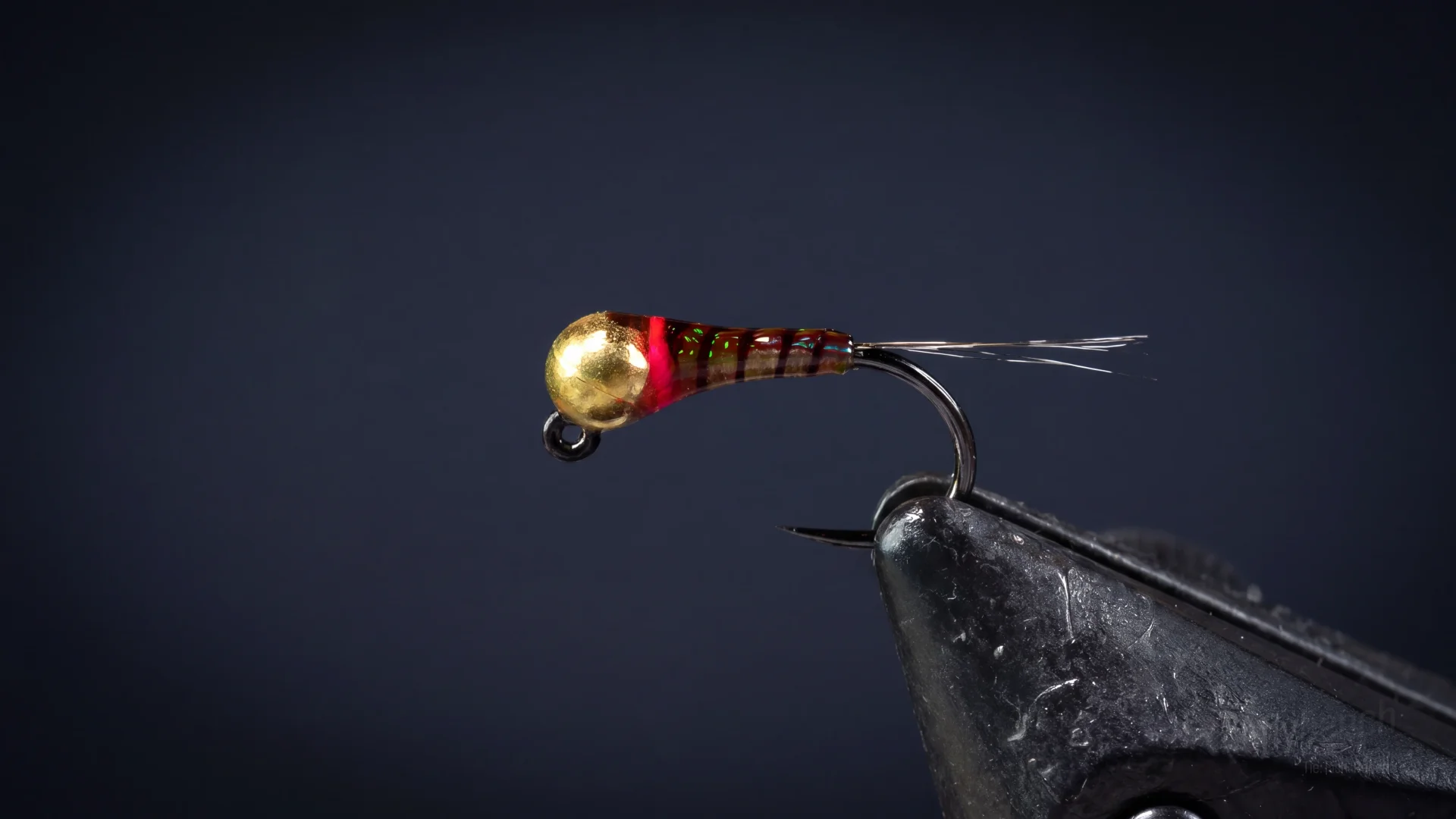
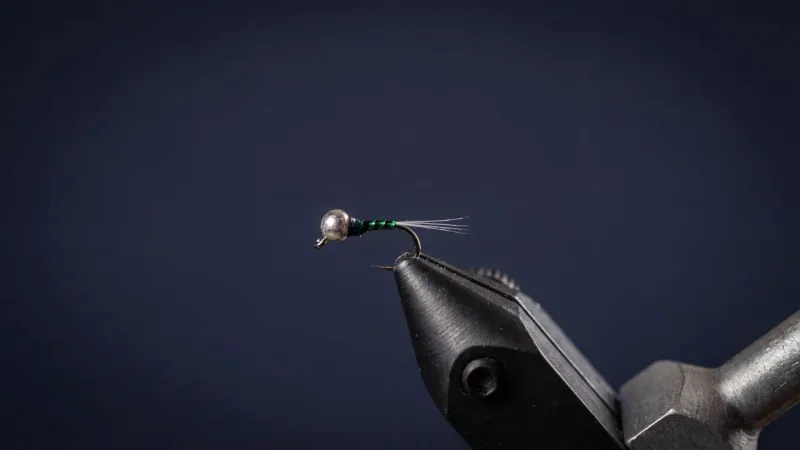
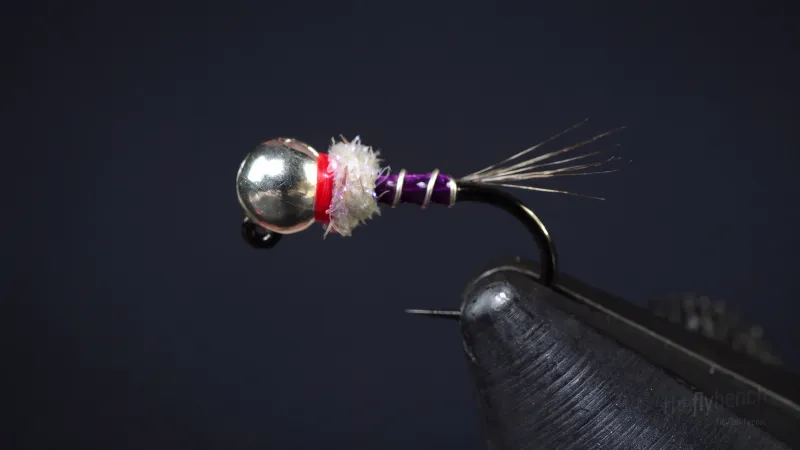
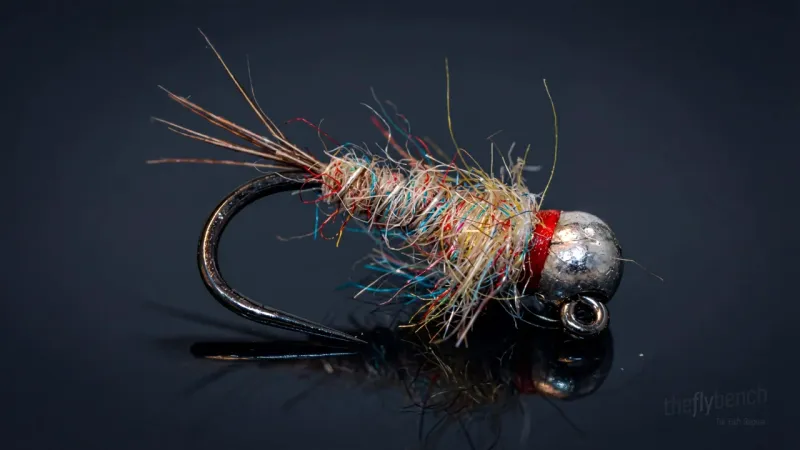
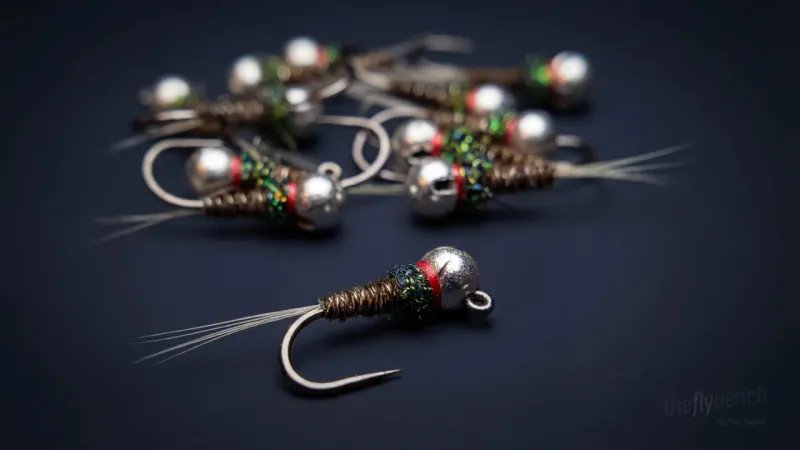
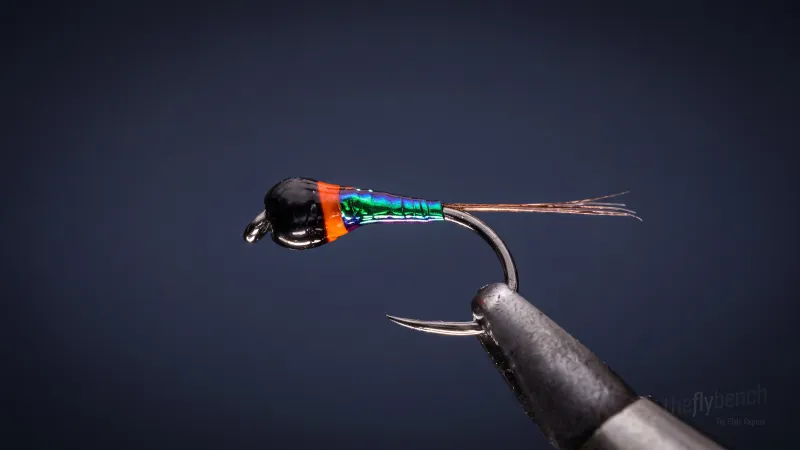
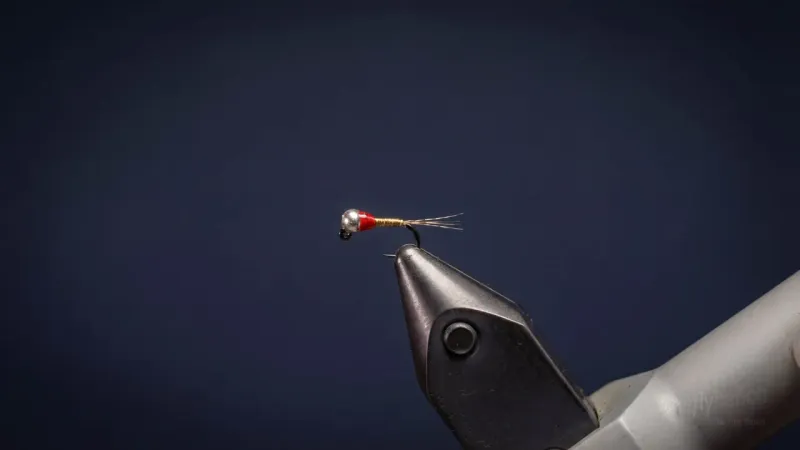
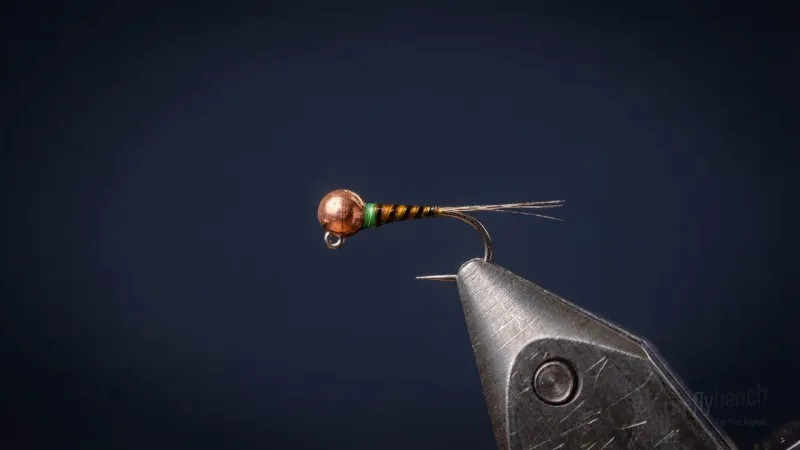
Cheech of Fly Fish Food designed this minimalist perdigon in 2026 around a simple observation: many aquatic insects are darker on top than on the belly. Thin 140 denier thread forms a tan underside, and brown Flashyback pulled over the back adds the dark top and a little shine. A short band of fluorescent pink behind the gold bead acts as a trigger, and a thin coat of resin locks it all down. Swap the thread and flash colors to match local nymphs.
Related patterns

Behavior & presentation
- Natural Behavior
- Dislodged mayfly nymphs tumble along the streambed with their dark backs up and pale bellies down, a two-tone look that blends in from above but shows clearly to a trout holding below.
- Where Trout Eat It
- Trout sit close to the bottom in faster lanes and pick off small nymphs swept from the cobble, often in water two to four feet deep.
- How to Fish It
- Tight-line it on a Euro rig and lead the fly through the lane just ahead of the sighter, letting the tungsten bead and slick resin body get it down in a hurry.
- Best Water
- Fast riffle drop-offs, the soft seam beside a heavy chute, deep pockets behind boulders, and the head of a run where current spills into deeper water.
- Strike Type
- A short tick or a stall in the sighter as the fly stops ticking bottom; set on anything that looks off.
Fishing strategy
- Rigging Suggestions
- Fish it as the point fly on a long Euro leader with 5X-6X fluorocarbon tippet and a lighter nymph or soft hackle on a tag 18-20 inches above. It also works under a buoyant dry when you need a dropper that sinks fast.
- Seasonal Timing
- Useful year round as a searching nymph; tan and brown match many spring and fall mayfly nymphs, and the slim profile sinks quickly in cold winter flows when trout hold deep.
- Pro Tips
- Tie a few in olive or black thread with matching flash to cover different hatches. Keep the thread body thin and the resin coat light so the fly stays slim and drops fast.
Entomology
Mayfly nymphs live among rocks and gravel on the streambed and regularly lose their grip or let go to drift downstream, especially around dawn, dusk, and before a hatch. Like many aquatic insects they are often darker on the back than the belly, which helps them hide from predators looking down. Drifting nymphs are an easy, steady meal for trout holding near the bottom.
- Order
- Ephemeroptera
- Common name
- Mayfly
- Organism
- insect
- Life stage
- nymph
Pattern details
- Moving Water
- Rocky Mountain
- Europe
- tight-line-nymph
- dead-drift
- modern
- competition
- searching-pattern
- high-water
- freestone
- dry-dropper