StreamersThe Undertaker
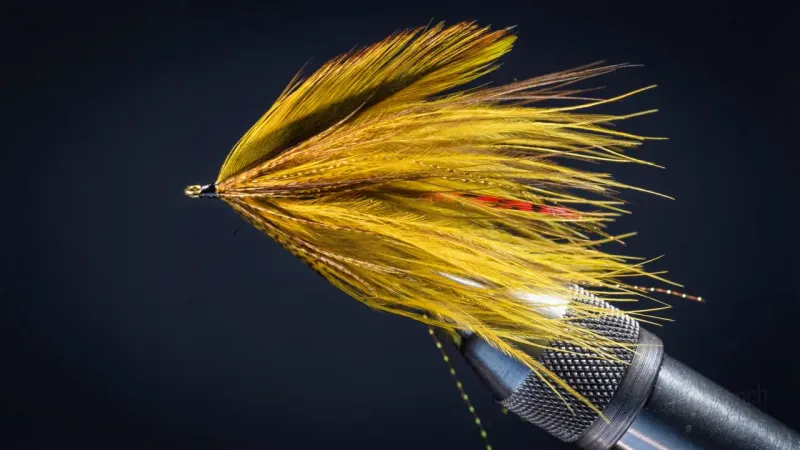
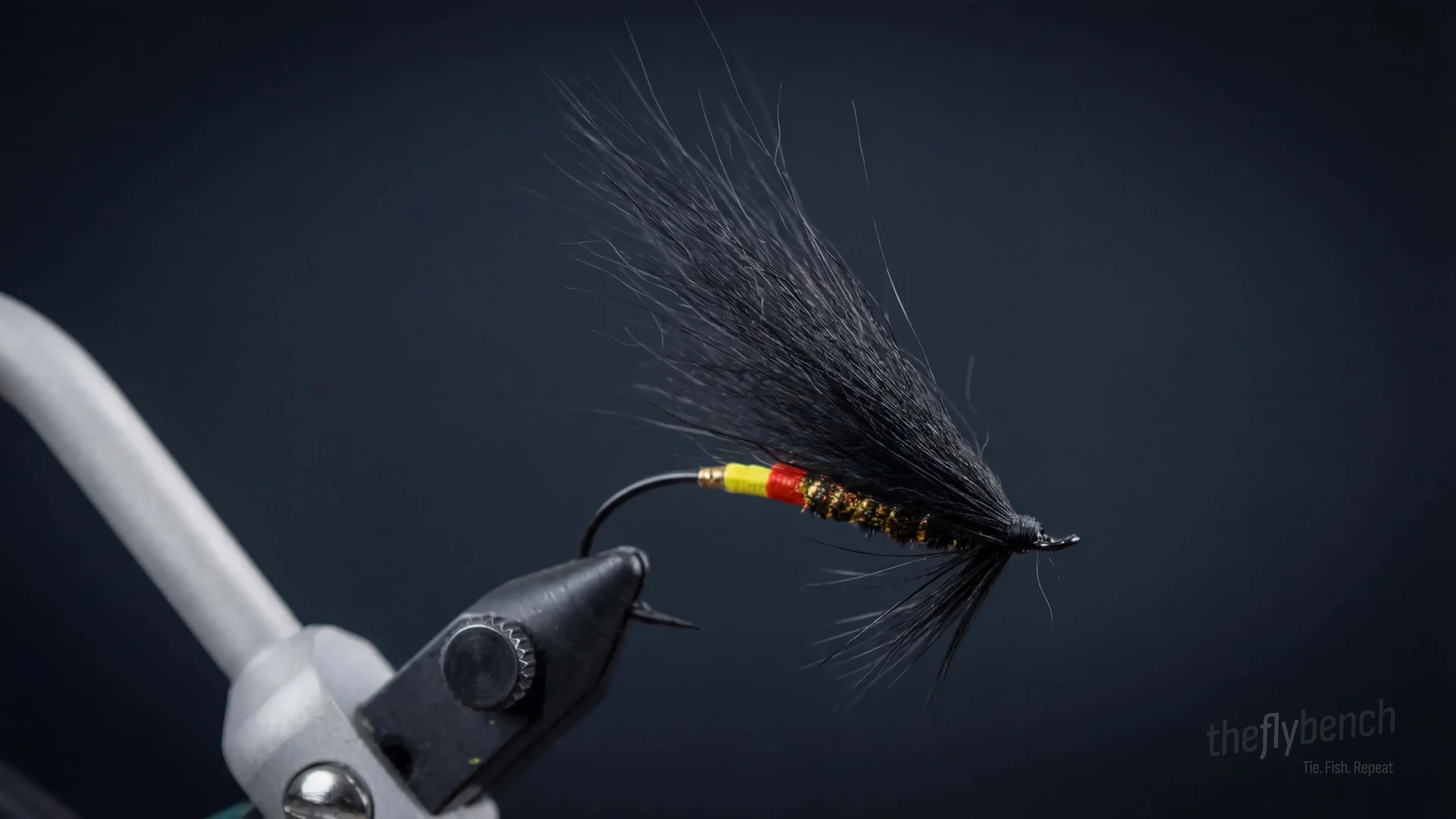
The Undertaker is a classic Atlantic salmon wet fly created by Warren Duncan in 1979 at Dunc's Fly Shop in Saint John, New Brunswick. Its striking contrast between the dark peacock body and vibrant fluorescent butt creates an irresistible silhouette in salmon rivers. The pattern has become a staple in fly boxes throughout the Atlantic salmon and steelhead world.
Spring, Summer, Fall
Intermediate
Atlantic Salmon, Steelhead
Dec 2025
Overview
Warren Duncan developed the Undertaker in 1979 while experimenting with modifications to an older pattern he found in his collection. He replaced the original black wool body with peacock herl, which added iridescence and lifelike movement. The pattern has been particularly effective on rivers throughout New Brunswick and Quebec, and has since found success with steelhead anglers in the Pacific Northwest. It can be tied on tube flies for increased versatility and hook options.
Where to Buy This Fly
We only link to fly shops we trust. Some links are referral links, which may earn us a commission at no extra cost to you.
Materials
- Hook:
- Atlantic salmon hook, up-eye single or double, #2–#6
- Thread:
- White Veevus 10/0 (tag), Black Veevus 10/0 (body and head)
- Tag:
- Fine flat gold tinsel
- Butt (Tag 1):
- Green Glo-Brite fluorescent floss
- Butt (Tag 2):
- Red Glo-Brite fluorescent floss
- Rib:
- Oval gold tinsel
- Body:
- Peacock herl
- Hackle:
- Black hen neck
- Wing:
- Fox squirrel tail dyed black (or black bear hair)
- Cheeks:
- Jungle cock eyes (optional)
Behavior & Presentation
Natural Behavior: Atlantic salmon strike attractor patterns as territorial responses rather than feeding behavior, reacting to color contrast and movement triggers. The dark peacock body with bright fluorescent butt creates visual triggers that provoke instinctive strikes from non-feeding migrants.
Where Trout Eat It: Salmon hold in mid-water columns, staging in tail-outs and pools during upstream migration.
How to Fish It: Swing the fly across and downstream with controlled pace, maintaining broadside presentation through holding water.
Best Water: Fish tail-outs and channel swings in classic salmon pools, targeting structure breaks in 3-8 feet of depth.
Strike Type: Expect aggressive grabs as salmon strike the swinging fly instinctively.
Fishing Strategy
Rigging Suggestions: Fish on a 9-12 foot leader with 8-12 lb tippet. Use a floating line with a wet-tip or full sinking line depending on water depth. In deeper pools, a sink-tip helps get the fly into the strike zone.
Seasonal Timing: Most effective from late through , corresponding to Atlantic salmon runs (June through October in most Maritime rivers). Also productive during steelhead runs in and on Pacific Northwest rivers.
Pro Tips: The fly sinks slowly and maintains good silhouette in the water column. The peacock herl body creates subtle iridescence that attracts fish, while the fluorescent butt provides a trigger point.