


Overview
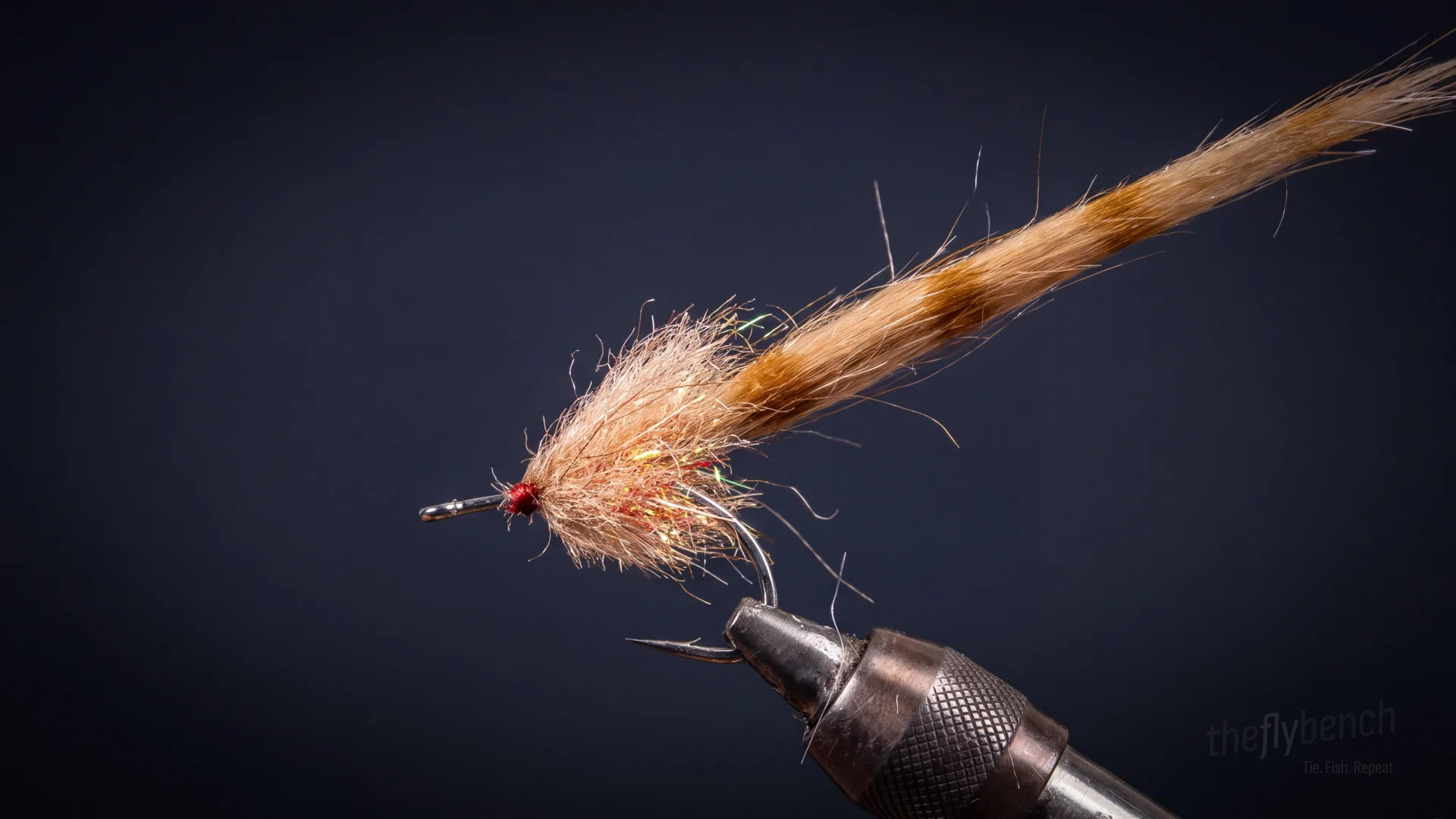
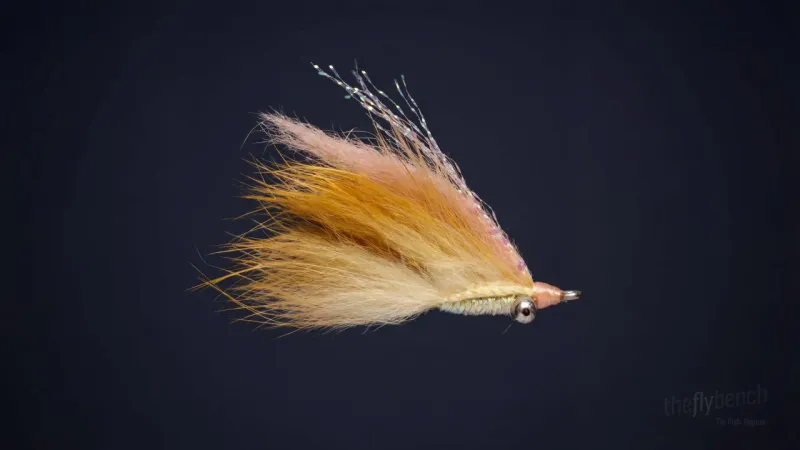
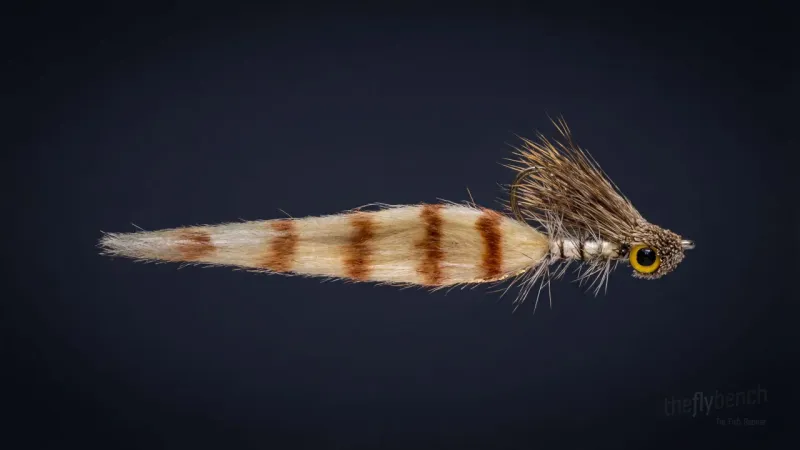
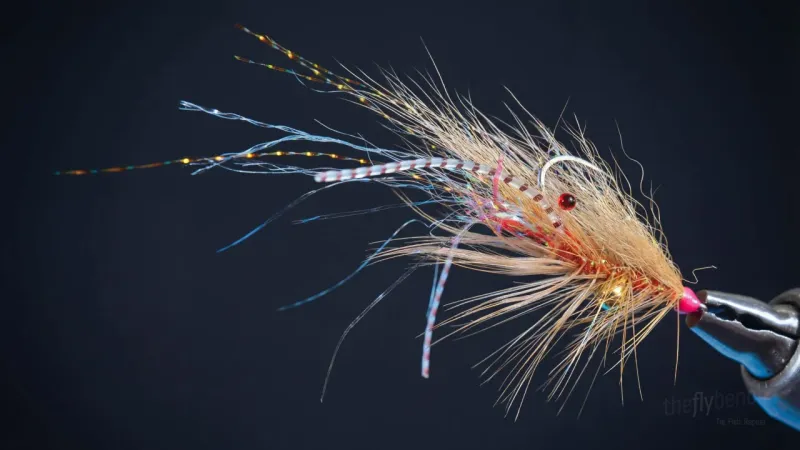
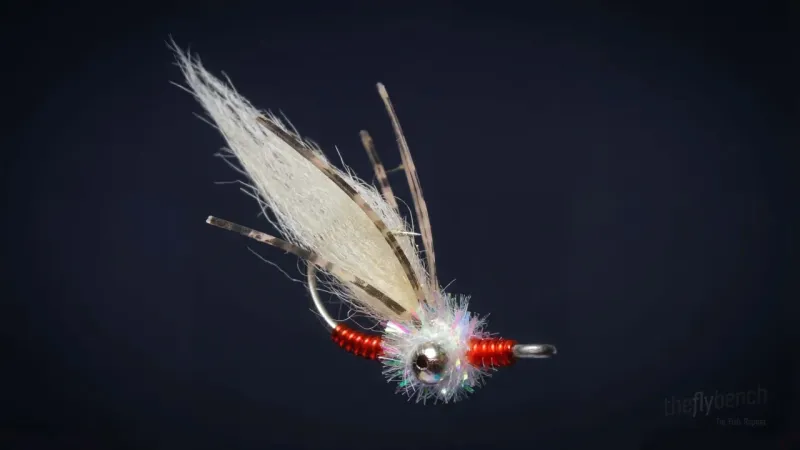
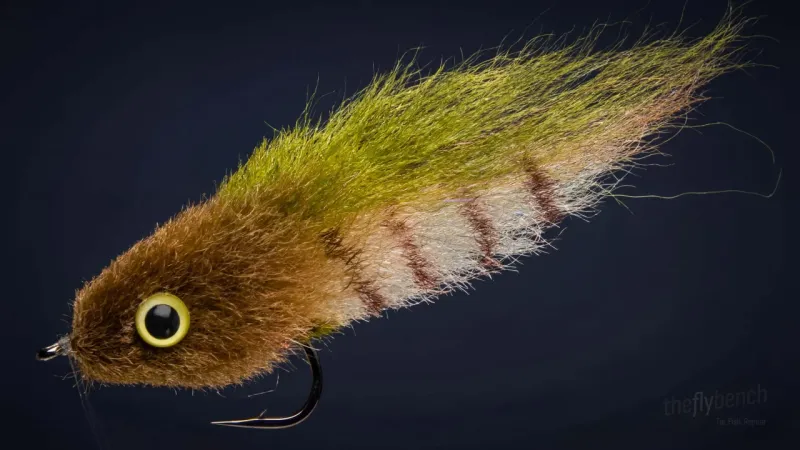
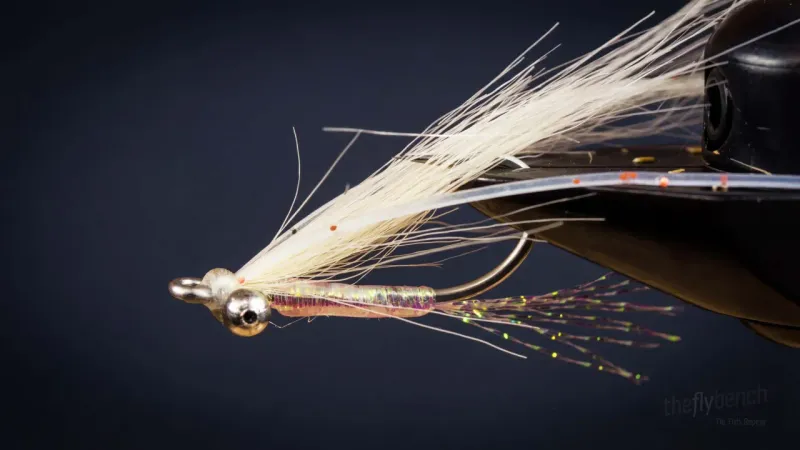
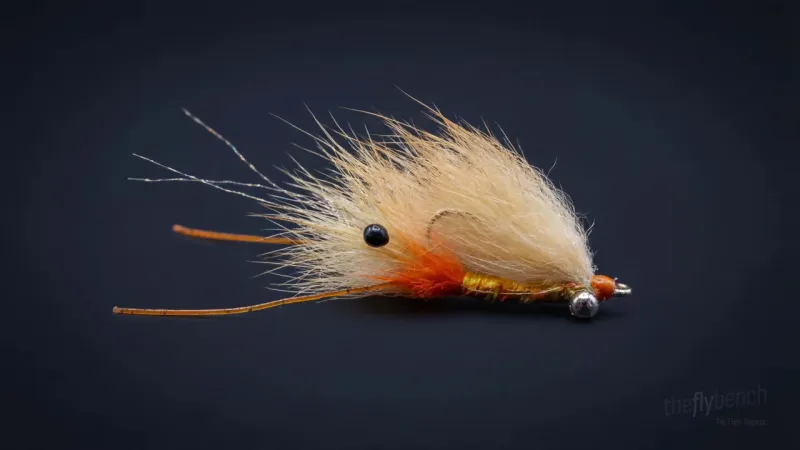
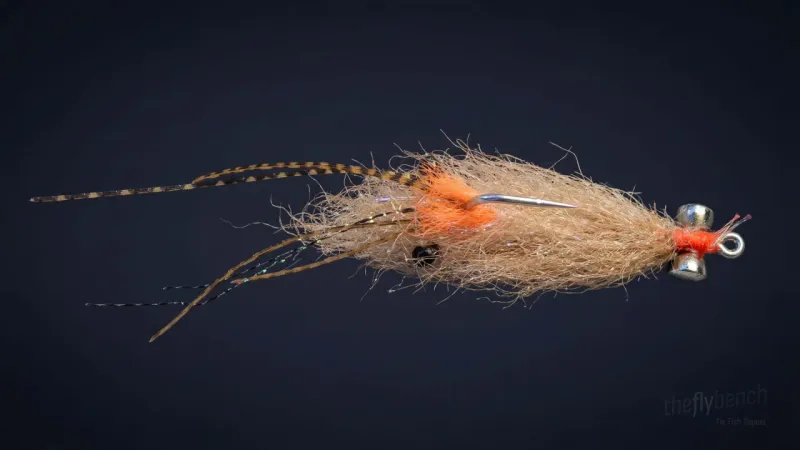
The Tapas was built for finicky tarpon, but neither Trident nor Florida Sportsman names a designer. Ryan at Trident ties one clump of craft fur about two and a half shank lengths long and wraps thread around its base so the tail kicks up and won't foul. The Estaz egg sac also props the tail up. Gold marker bars borrow a trick from Tim Borski's slider. Tie it on a size 1 or 2 hook for snook and stripers.
Related patterns
Behavior & presentation
- Natural Behavior
- Shrimp let the tide carry them through open water off the Keys, drifting near the surface and kicking backward in short bursts when a fish closes in.
- Where Trout Eat It
- Migrating tarpon swim along oceanside banks and channel edges in 4-10 feet of clear water, picking off shrimp the current brings past them.
- How to Fish It
- Lead a cruising fish by several feet so the fly reaches its level as it arrives, then move it with slow, short strips. Where current runs, let the tide sweep the fly across the fish's path so the tail moves with little help.
- Best Water
- Oceanside sand flats, basin edges, channel mouths and bridge shadows. For snook, try dock lights at night and troughs along the surf.
- Strike Type
- A tarpon often eats from behind, with a flare of its gills and a white flash of mouth. Keep the rod low, strip-set hard two or three times, then bow to the fish when it jumps.
Fishing strategy
- Rigging Suggestions
- Use an 11- or 12-weight rod, a floating or clear intermediate line and a 10-foot leader with a 60-80 lb fluorocarbon bite tippet. For snook and juvenile tarpon, drop to a 9-weight and a 30-40 lb bite tippet. Tie the fly on with a loop knot.
- Seasonal Timing
- In the Keys, migrating tarpon move along the oceanside from about April into July, with the heaviest push in May and June. Snook take the same fly through the warm months.
- Pro Tips
- When tarpon turn away from a toad or bunny fly, switch to this one instead of casting again. Trim a small window in the brush under the hook so the orange egg sac shows from below. Squeeze the barb down to help the hook get into a hard mouth.
Entomology
Penaeid shrimp spend the day buried in sand and grass and move at night and on the tides, often drifting in the current toward open water. Tarpon and snook feed on these shrimp runs, picking off small, slow targets near the surface.
- Order
- Decapoda
- Family
- Penaeidae
- Common name
- Shrimp
- Organism
- crustacean
- Life stage
- adult
Pattern details
- Saltwater
- Southeast
- Gulf Coast
- sight-fishing
- strip-retrieve
- flats
- modern
- low-clear-water