Dry FliesRogue Stone Salmonfly
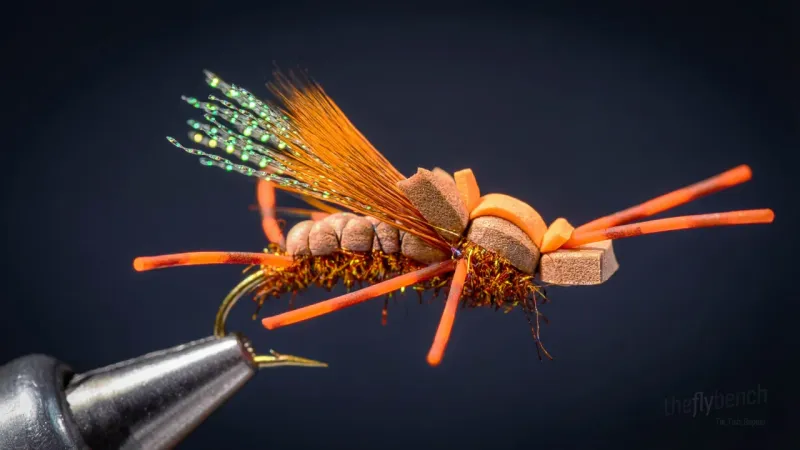
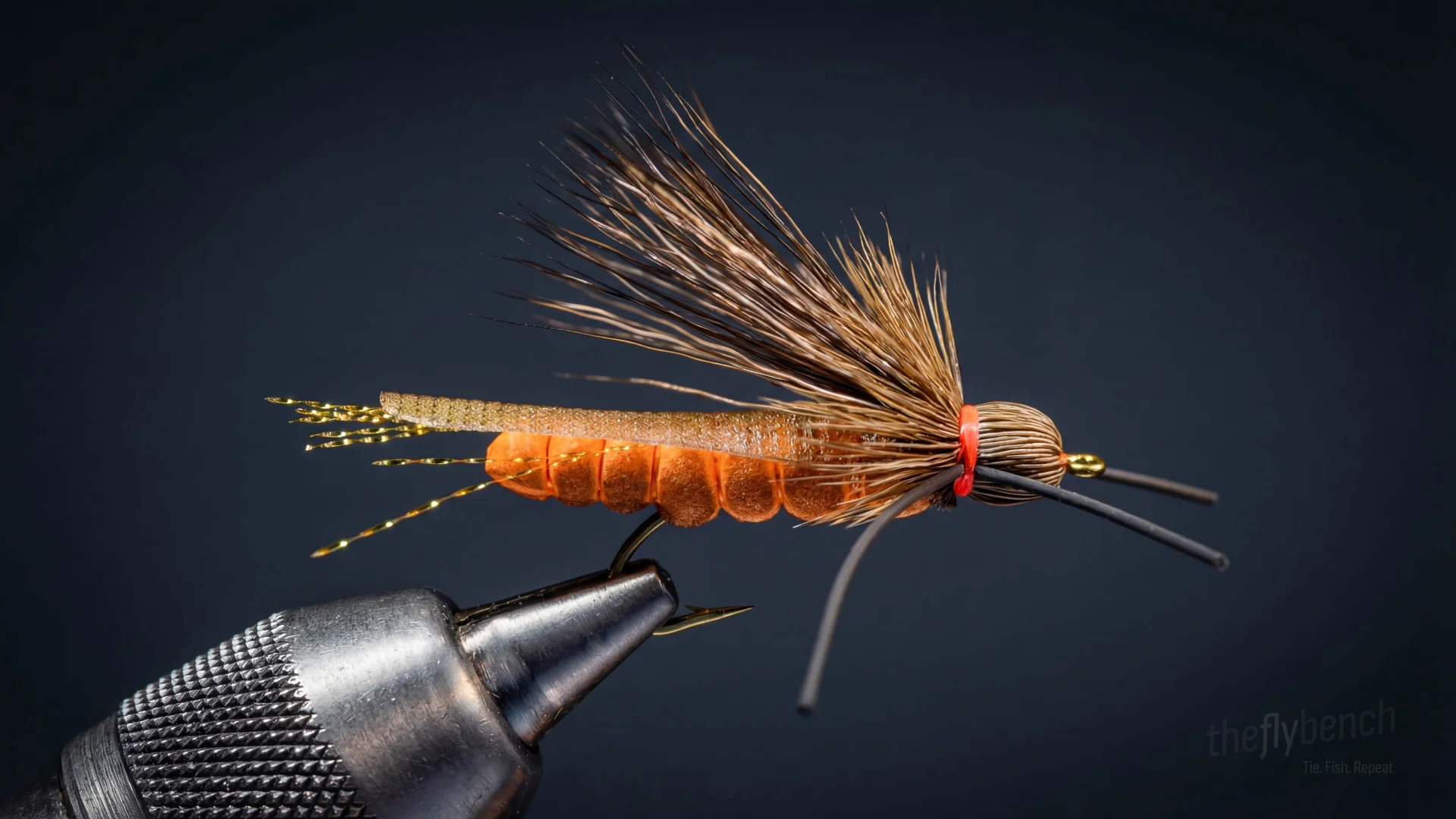
The Rogue Stone Salmonfly is a foam-bodied stonefly imitation designed for the legendary salmonfly hatches of Western rivers. This pattern features an orange foam body for unsinkable buoyancy, krystal flash for subtle attraction, innovative 3M Transpore surgical tape wings with moose body hair overwings, a spun deer hair head using Varner Big Bug Hair, and brown/black rubber legs for lifelike movement. The construction creates a durable, highly visible pattern that floats high even in the roughest water.
Spring, Summer
Advanced
Trout
Dec 2025
Overview
This Charlie Craven pattern from Charlie's Fly Box represents a modern approach to salmonfly imitation that prioritizes durability and flotation. The pattern uses multiple threads for different purposes - the UTC 70 for general tying, the Nanosilk for fine work, and the heavier Monocord for spinning deer hair. The 3M Transpore surgical tape creates a unique wing material that mimics the veined, translucent wings of natural stoneflies while being extremely durable and water-resistant. The moose body hair overwing adds a natural profile and helps the wings lay properly. The Varner Big Bug Hair is specifically designed for spinning large deer hair heads - it has the hollow structure needed for flaring while maintaining the stiffness to hold shape after trimming. The orange foam body provides the buoyancy needed to keep this large fly floating in fast water.
Materials
Hook: Tiemco 200R, #4-6
Thread: UTC 70D, fluorescent fire orange
Thread 2: Nanosilk 30D (Semperfli), burnt orange
Thread 3: Monocord 3/0 (Danville), burnt orange
Body: Thin Fly Foam (3mm), orange
Flash: Krystal Flash, orange
Wing: 3M Transpore Surgical Tape
Overwing: Moose Body Hair
Head: Big Bug Deer Hair (Varner), natural
Legs: Rubber Legs (round), brown/black
Behavior & Presentation
Natural Behavior: Adult salmonflies crawl awkwardly along streamside vegetation before taking clumsy, heavy flights that often end with splashy landings on the water. Trout attack these massive stoneflies aggressively because they represent the largest available food items during their brief annual hatches, warranting explosive takes.
Where Trout Eat It: Designed for rivers, particularly larger freestone rivers with strong currents and rocky bottoms where salmonflies thrive. The foam construction handles rough water that would sink other dry flies.
How to Fish It: Fish with a dead drift along foam lines, seams, and near banks where stoneflies fall into the water. Add occasional twitches to simulate struggling insects - salmonflies are notoriously clumsy and trout expect movement. Dead drift matches the helpless floating behavior that triggers surface feeds.
Best Water: Focus on seams, foam lines where trout hold and actively feed.
Strike Type: Expect violent surface explosions as fish attack the large profile. Trout often miss on first strike, creating dramatic refusals before committing on subsequent casts.
Fishing Strategy
Rigging Suggestions: Fish on a 9-foot leader tapering to 2X-3X tippet - you need the strength to turn over this large, wind-resistant fly and to handle the aggressive strikes it often produces. Can be fished alone or as the dry fly in a hopper-dropper rig.
Seasonal Timing: Most effective during early salmonfly hatches, typically May through July depending on location. Time your fishing to coincide with peak emergence for best results.
Pro Tips: The orange foam body provides excellent visibility for the angler while the spun deer hair head adds additional flotation. This pattern is designed to float high and remain visible even in fast, choppy water.
Entomology
Adult salmonflies crawl awkwardly along streamside vegetation before taking clumsy, heavy flights that often end with splashy landings on the water. Trout attack these massive stoneflies aggressively because they represent the largest available food items during their brief annual hatches, warranting explosive takes.
- Order
- Plecoptera
- Common Name
- Stonefly
- Organism Type
- insect
- Life Stage
- adult