
Overview
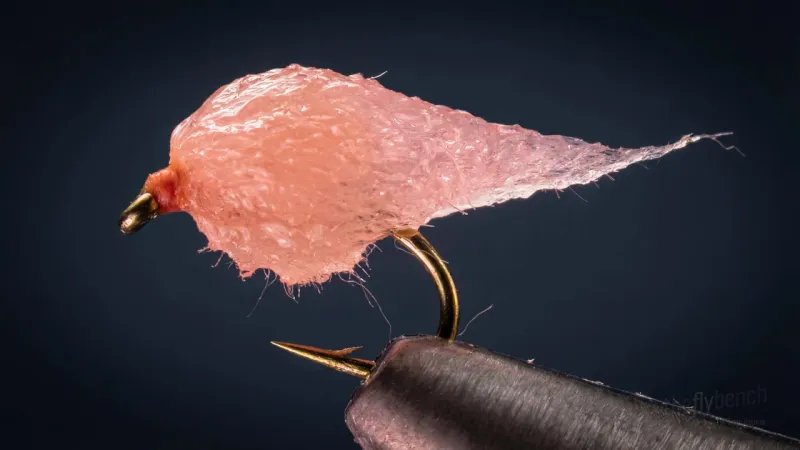
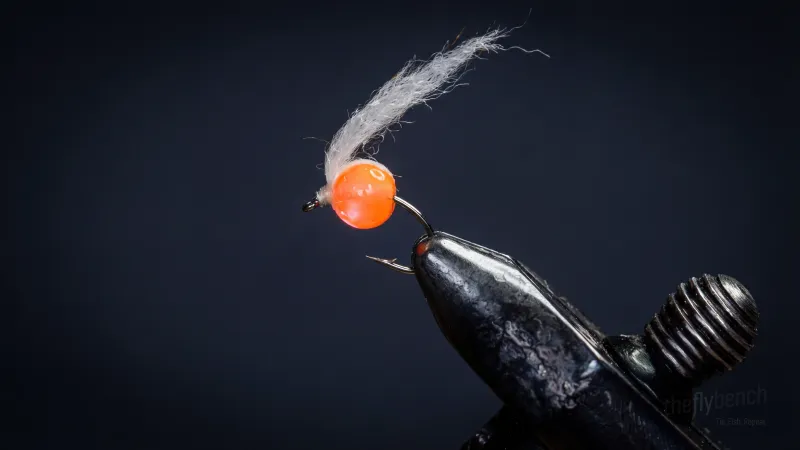
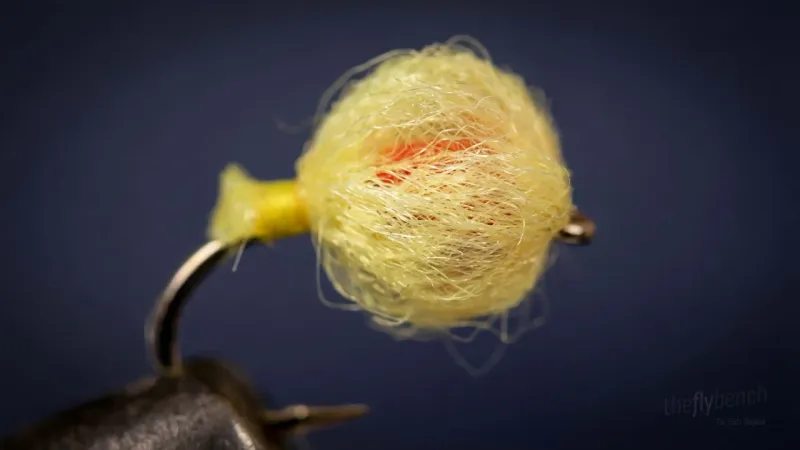
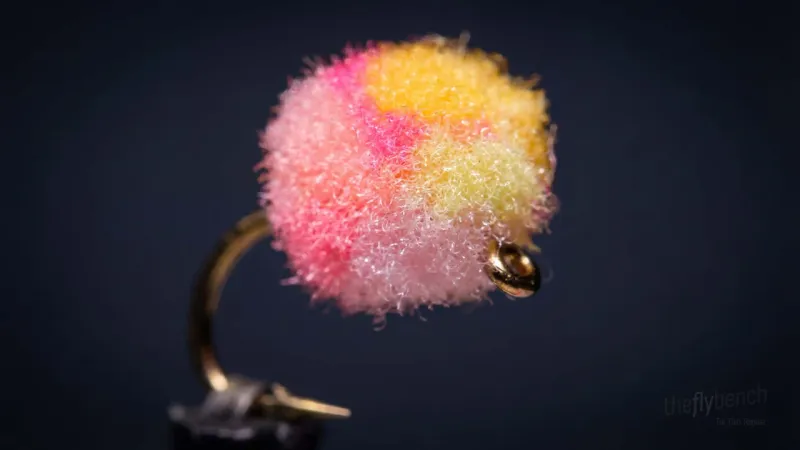
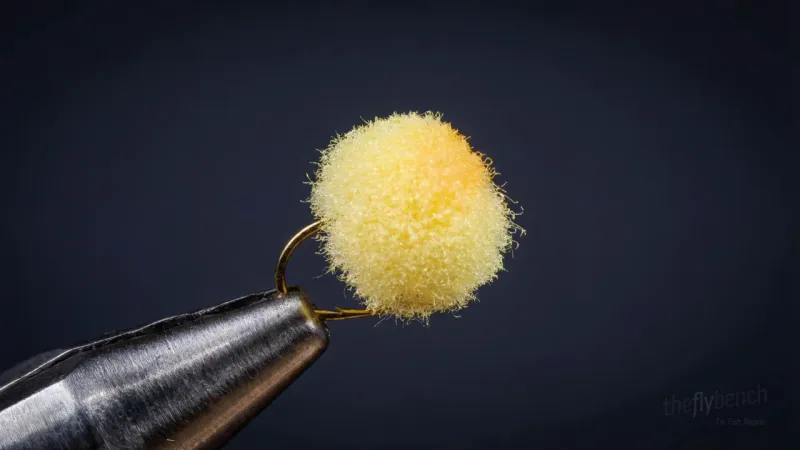
This Nuke Egg uses an orange McFly Foam core wrapped in a thin white egg veil. The veil softens the outline and lets light through, like the membrane of a real egg. It is quick to tie and fished dead drift near the bottom.
Related patterns
Behavior & presentation
- Natural Behavior
- Dislodged eggs tumble through spawning gravels with translucent spheres bouncing along substrate, glowing distinctively in sunlight as they drift downstream. These defenseless high-protein packages require no chase effort, triggering aggressive opportunistic feeding.
- Where Trout Eat It
- Fish position downstream of spawning areas in runs, pockets, and seams at depths of 2-5 feet to intercept drifting eggs.
- How to Fish It
- Dead drift this pattern under an indicator or as part of a nymphing setup through spawning gravels and pocket water.
- Best Water
- Target runs, riffle edges, pockets, seams, and tail-outs downstream of spawning areas where current delivers eggs.
- Strike Type
- Indicators often pause briefly or move slightly upstream as fish sip the drifting egg. Strikes can be surprisingly gentle—trout treat eggs as stationary food that requires careful mouthing rather than aggressive attacking.
Fishing strategy
- Rigging Suggestions
- Fish under an indicator or on a tight line with split shot or a heavier fly to keep it near the bottom. Use 4X-5X tippet for trout and 2X-3X for steelhead.
- Seasonal Timing
- Best below spawning fish: fall for brown trout, kokanee and salmon, and spring for rainbow trout and steelhead. It also works in winter on tailwaters and Great Lakes tributaries.
- Pro Tips
- Keep the egg drifting at the speed of the current along the bottom. Try smaller, paler eggs in clear water and brighter ones in stained water.
From River & Run
Open River & RunWhere to fish it
Rivers anglers pair with this fly, with local shops that stock it.
River details and fly shops from River & Run, our sister site.
Entomology
Freshly deposited trout and salmon eggs drift through spawning gravels and pocket water, their translucent spheres glowing in sunlight as they bounce along substrate before settling into crevices. Resident fish aggressively consume these eggs during and after spawning periods because they offer concentrated fats and proteins in a defenseless package that requires no pursuit or capture effort.
- Organism
- egg
- Life stage
- egg
Pattern details
- Stillwater
- Moving Water
- Pacific Northwest
- Great Lakes
- Alaska
- British Columbia
- Northeast
- Midwest
- dead-drift
- indicator-nymph
- beginner-friendly
- attractor
- searching-pattern