

Overview
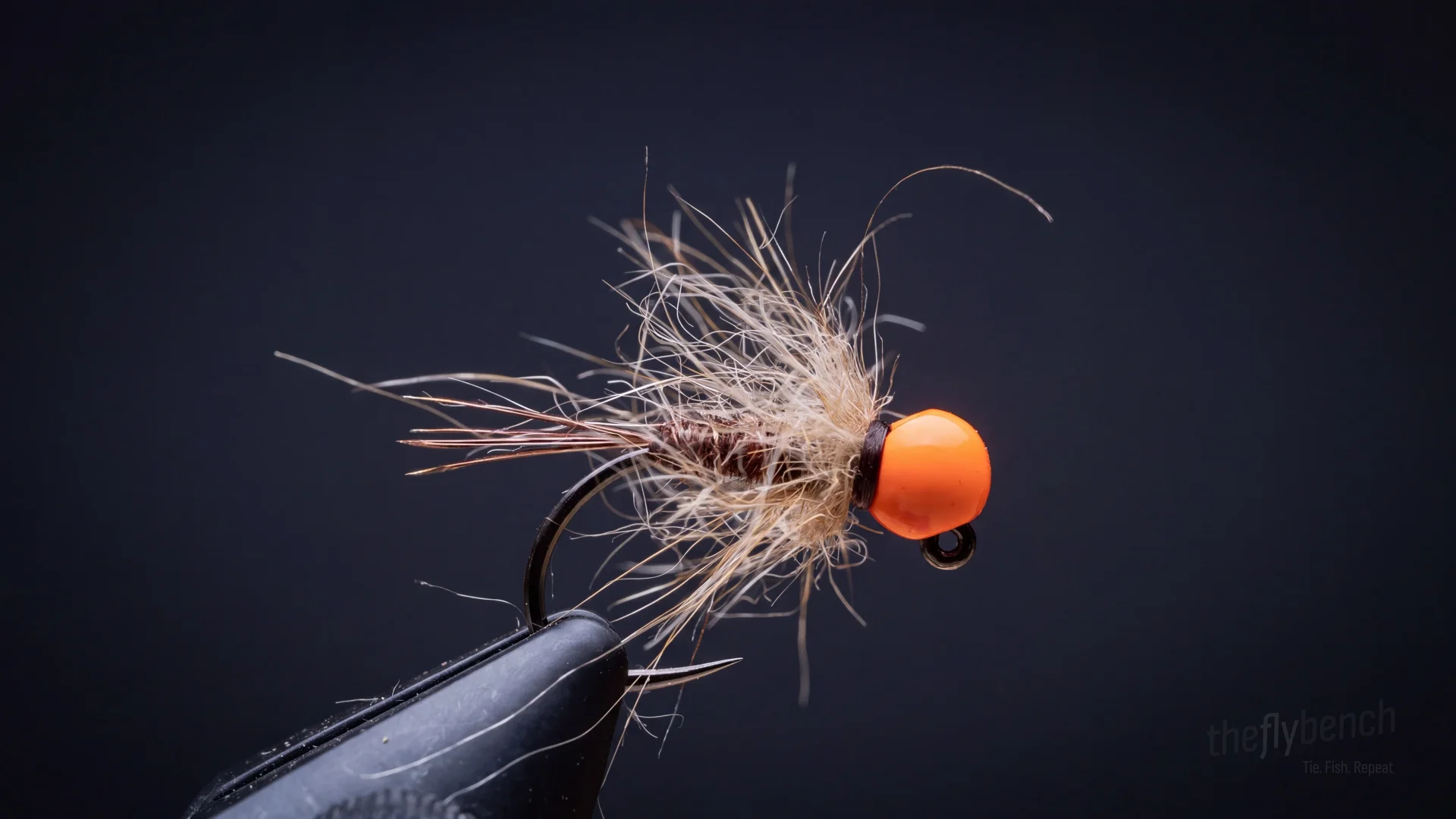
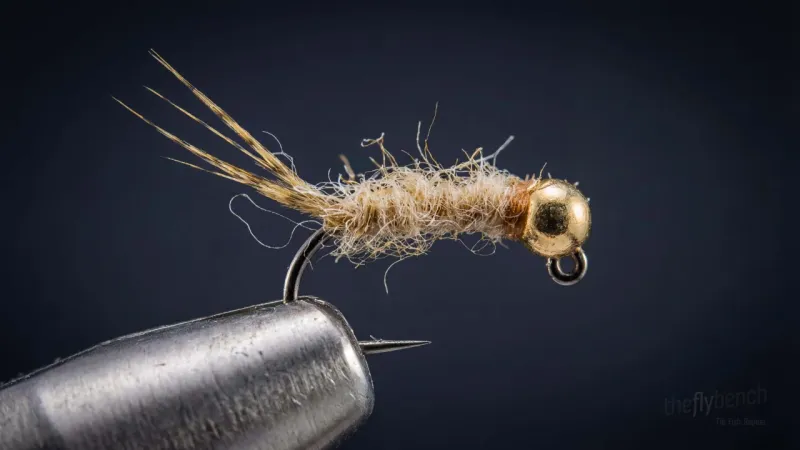
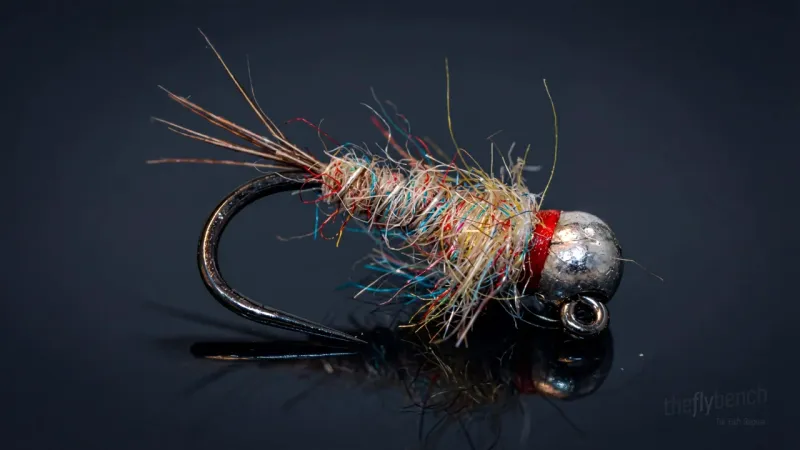
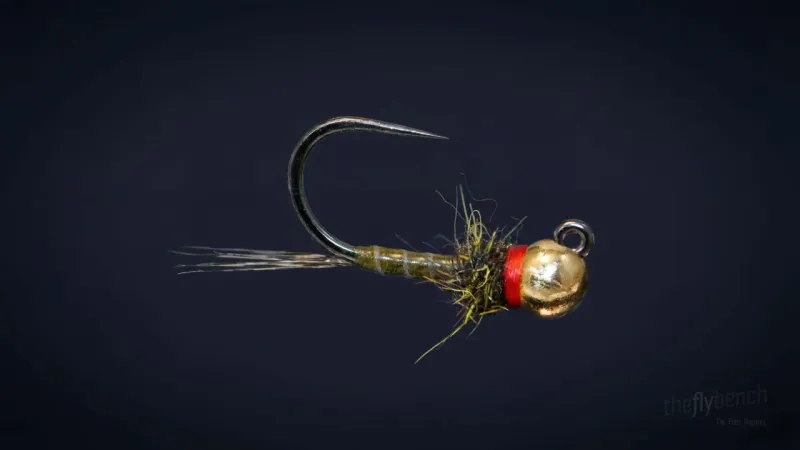
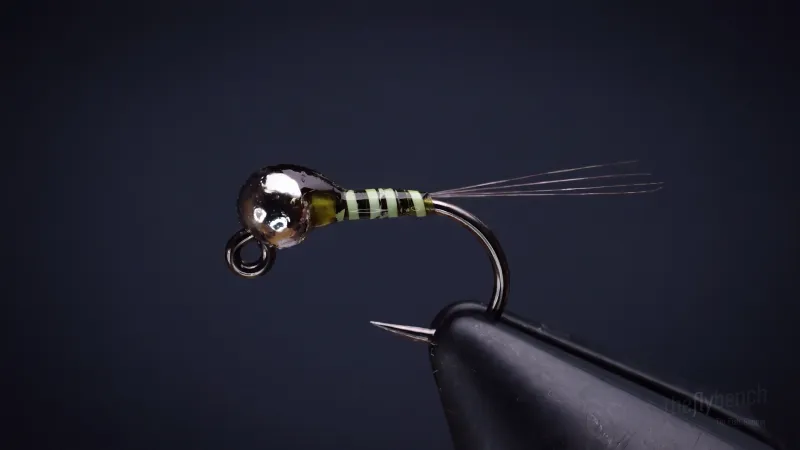
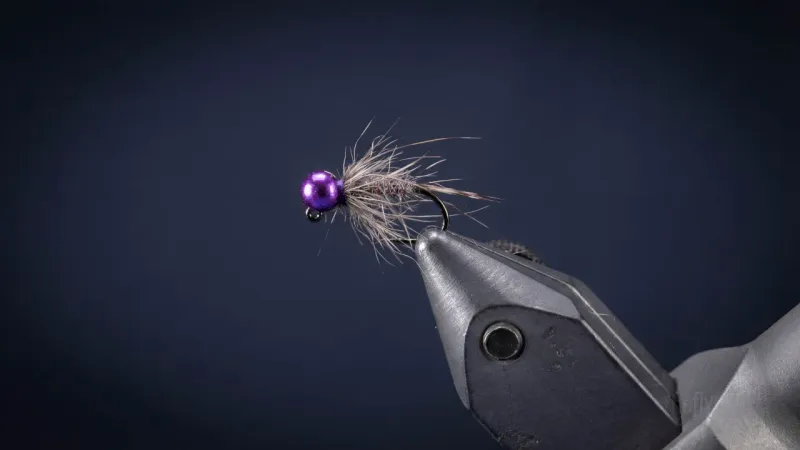
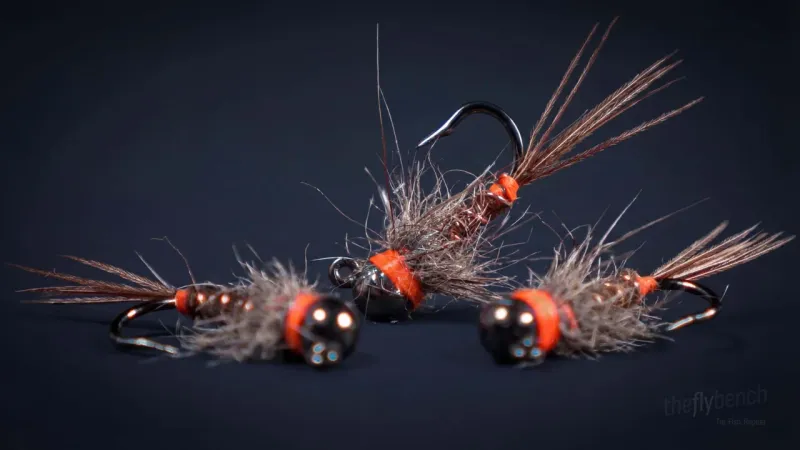
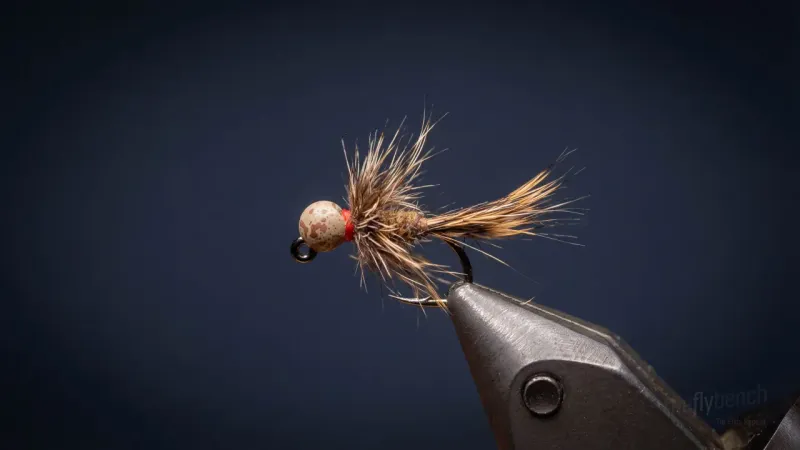
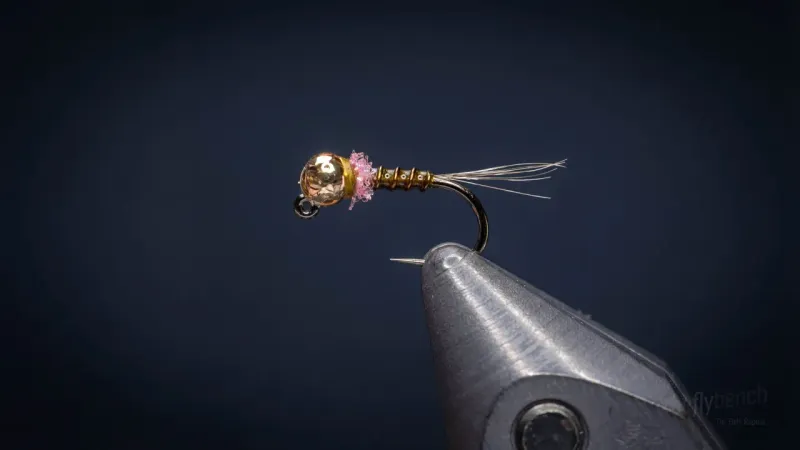
Smitty's Monthly Fly Box features the Hot Head Foxie in its quick-tie series and sells it as a tying bundle. The build is a Pheasant Tail turned Euro: copper wire ribs a pheasant tail abdomen, and a picked-out hare's mask squirrel collar stands in for the usual wingcase and thorax. Try pink or chartreuse beads to suit water color.
Related patterns
Behavior & presentation
- Natural Behavior
- Small clinging and crawling mayfly nymphs lose their grip on cobble and drift a few feet just off the streambed, legs splayed, before they settle again.
- Where Trout Eat It
- Trout hold in the slower cushion tight to the bottom of runs and pocket water, picking off nymphs that tumble through the lowest foot of current.
- How to Fish It
- Tight-line it as the point fly, leading the bead slightly ahead of the line so it ticks bottom; the jig hook rides point-up and slides over rocks instead of wedging in them.
- Best Water
- Deep seams below riffles, pockets behind boulders, and the drop-off where a riffle spills over a gravel ledge into a run. The orange bead earns its place when rivers run high or off-color.
- Strike Type
- The sighter stalls, jumps upstream, or straightens mid-drift. Takes on a tight line are brief, so set on anything that breaks the steady pace of the drift.
Fishing strategy
- Rigging Suggestions
- Fish on a Euro leader with a colored sighter and 5X or 6X fluorocarbon tippet. The 4mm tungsten bead on a size 12 hook makes it a solid anchor on the point, with a smaller natural nymph on a tag 18 to 20 inches above.
- Seasonal Timing
- Fishes year-round. Most useful along runoff edges in spring and on high or stained water in fall, and in winter when slow, deep drifts close to the bottom matter most.
- Pro Tips
- Brush out the dubbing collar so the guard hairs move in the current. Carry a few with pink or chartreuse beads and switch colors when trout stop responding to orange.
Entomology
Mayfly nymphs live among cobble and gravel in riffles and runs, grazing algae and fine detritus. They drift in numbers at dawn and dusk and whenever high flows knock them loose, and the drifting nymphs are an easy meal for trout holding near the bottom.
- Order
- Ephemeroptera
- Common name
- Mayfly
- Organism
- insect
- Life stage
- nymph
Pattern details
- Moving Water
- Worldwide
- tight-line-nymph
- dead-drift
- pheasant-tail-family
- attractor
- searching-pattern
- high-water
- modern
- freestone