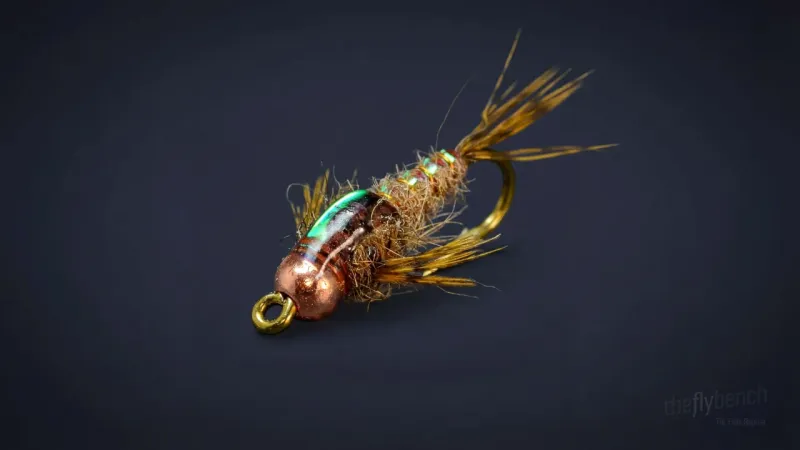
NymphGet It Down Pat's
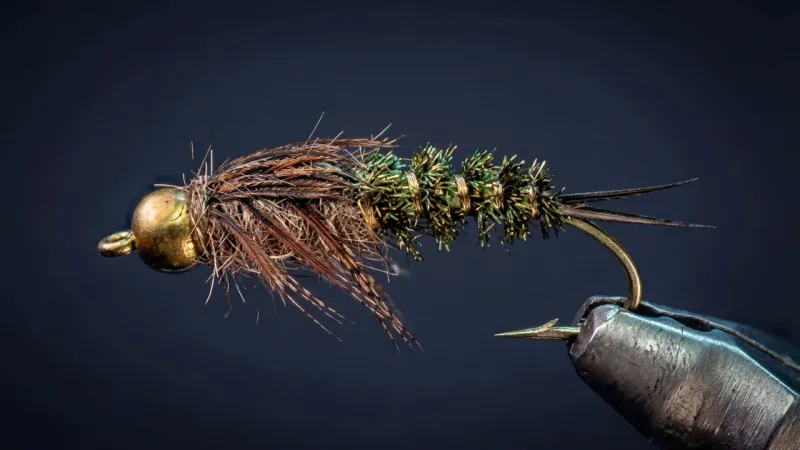
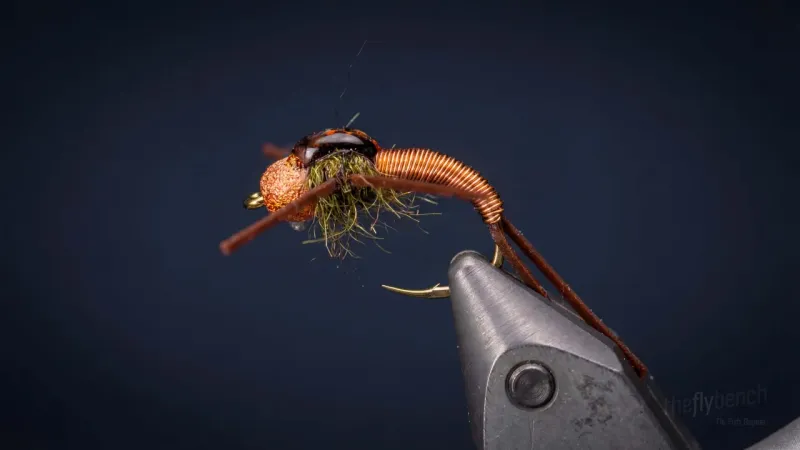
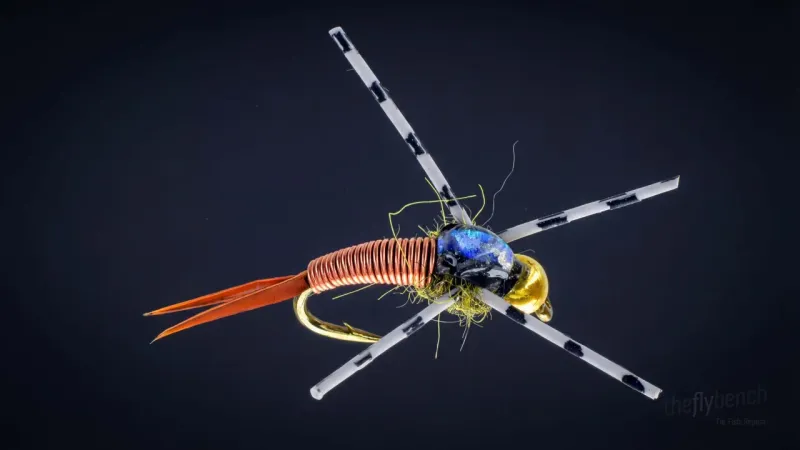
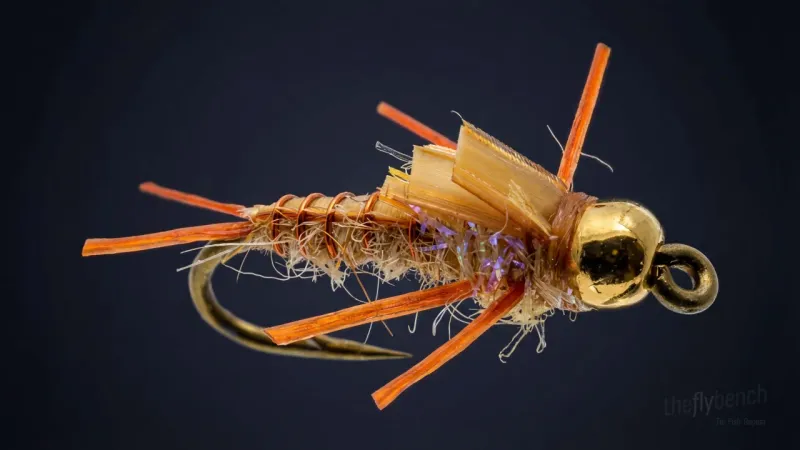
A heavy, sinking nymph designed to get down fast in deep or fast-moving waters. The rubber legs add movement and an enticing profile that fish find hard to resist.
Year Round
Intermediate
Trout, Steelhead
Apr 2025
Overview
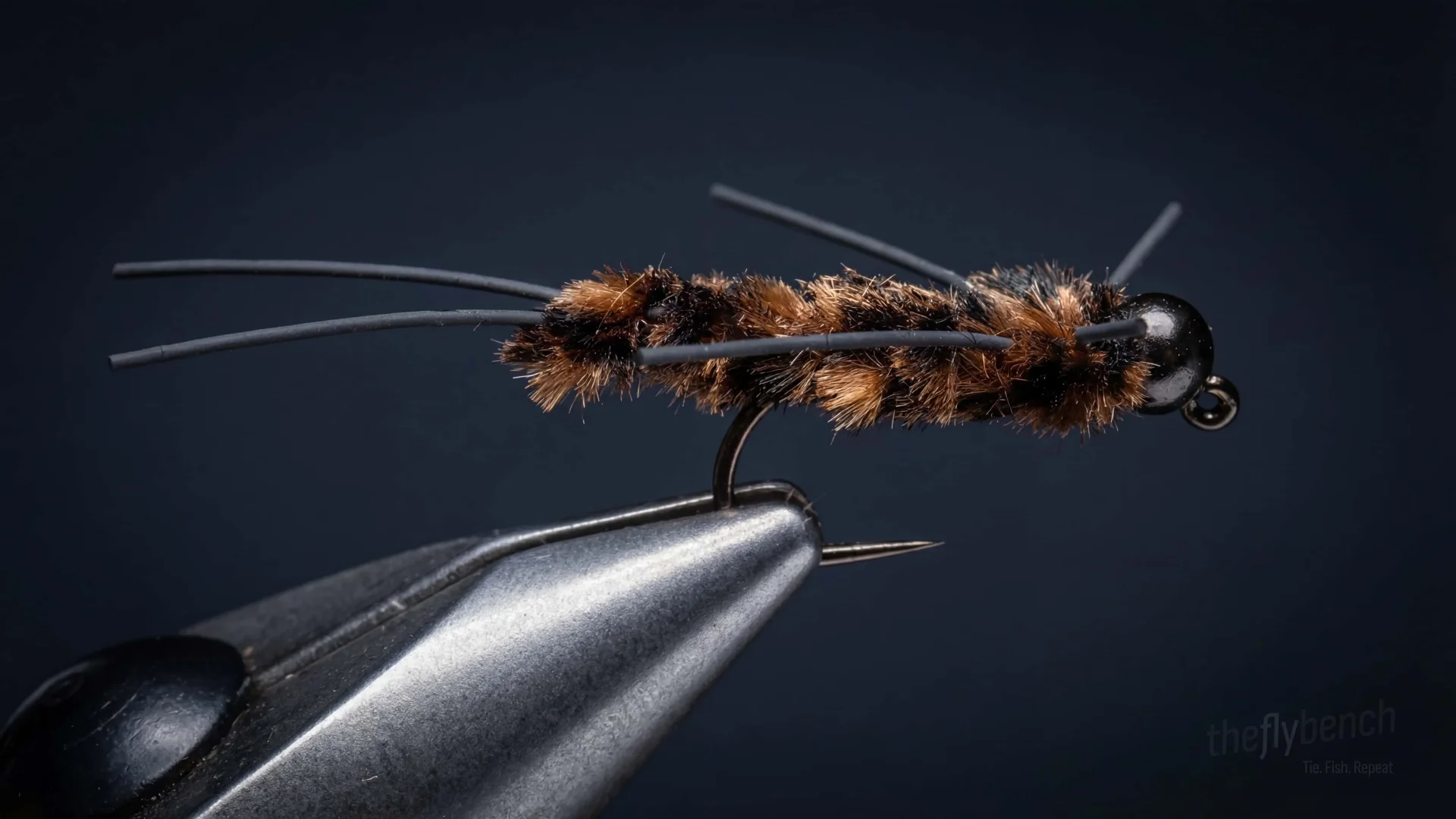
A variation of Pat's Rubber Legs, this fly uses heavy lead wire or a large tungsten bead to increase sink rate. The chenille body and rubber legs remain, but the focus is on getting deep fast—great for fast currents or deep pockets.
Where to Buy This Fly
We only link to fly shops we trust. Some links are referral links, which may earn us a commission at no extra cost to you.
Materials
- Hook:
- Barbless jig hook, size #6-#12.
- Bead:
- slotted tungsten bead, 5/32, black nickel.
- Weight:
- Lead-free round wire, .020.
- Thread:
- 6/0 or 140 Denier, black.
- Body:
- Variegated Chenille, med, black/coffee.
- Tails/Legs/Antennae:
- Round Rubber Legs, sm, black.
Behavior & Presentation
Natural Behavior: Large stonefly nymphs crawl actively along the bottom toward shore during emergence migrations, exposing themselves as they search for exit points. Their size and movement trigger aggressive feeding responses.
Where Trout Eat It: Bottom zone of fast riffles and runs where stoneflies migrate during emergence periods.
How to Fish It: Cast upstream and drift naturally along bottom, maintaining contact to detect strikes in heavy current.
Best Water: Pocket water, deep runs, channel swings, and riffle edges near banks where stoneflies stage for emergence crawls.
Strike Type: Indicator stops, darts upstream, or dips sharply as fish grab the heavy nymph from the bottom.
Fishing Strategy
Rigging Suggestions: Use a standard nymph rig with this fly as the point fly.
Seasonal Timing: This fly can be used year-round, but is especially effective during stonefly hatches, typically in late afternoon.
Pro Tips: This fly is designed to sink quickly. The black color and rubber legs make it highly visible in a variety of water conditions.
Entomology
Stonefly nymphs migrate actively toward shore during pre-emergence crawl-outs, exposing themselves in shallow riffles as they search for streamside rocks to climb. The heavily-weighted stonefly imitation sinks into the bottom zone where these migrations occur, getting eaten by trout that patrol the edges during spring emergence periods when protein-rich nymphs are most vulnerable during their shoreward journey.
- Order
- Plecoptera
- Common Name
- Stonefly
- Organism Type
- insect
- Life Stage
- general