Dry FliesFat Albert
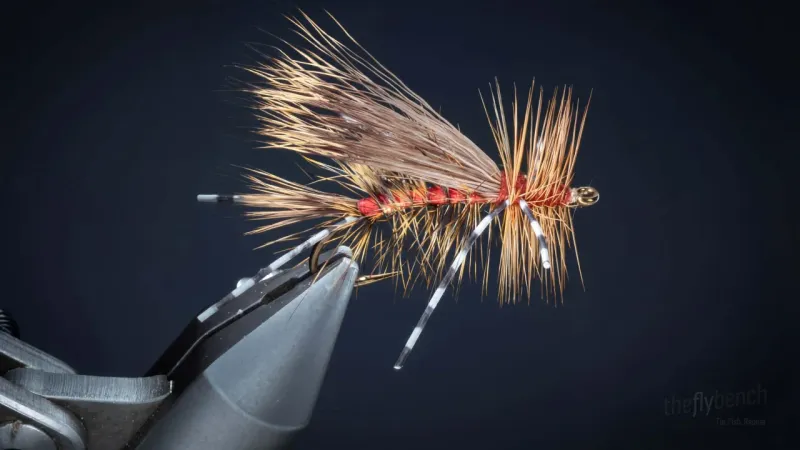
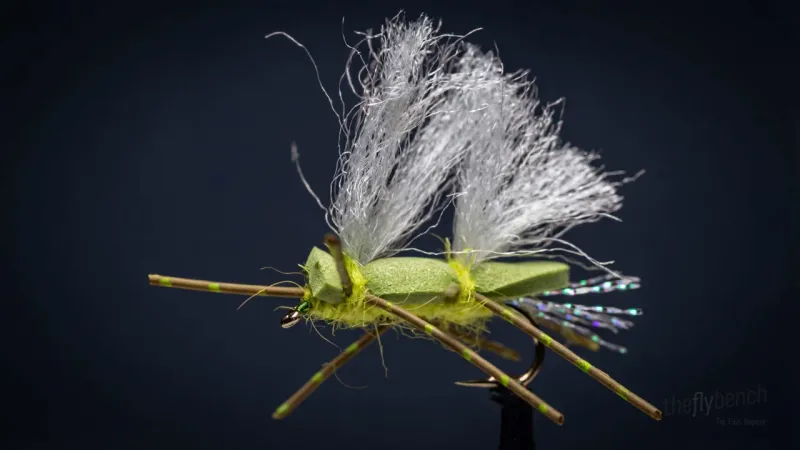
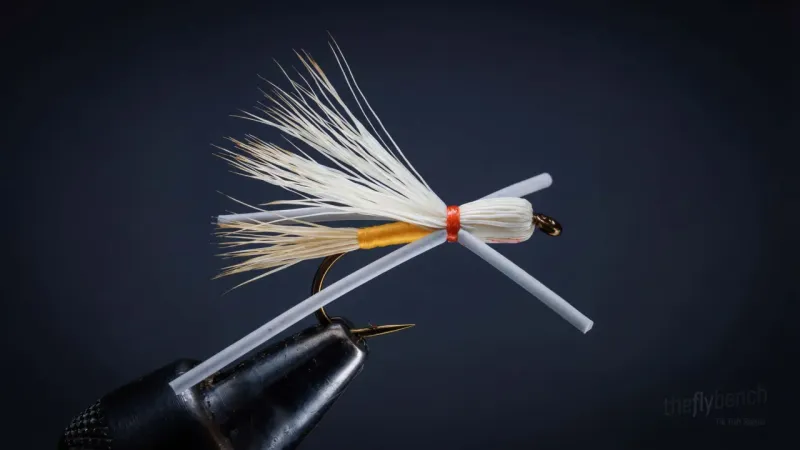
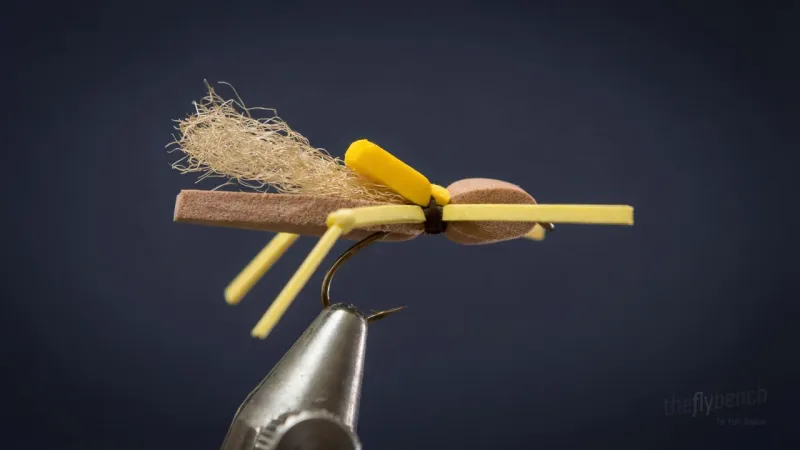
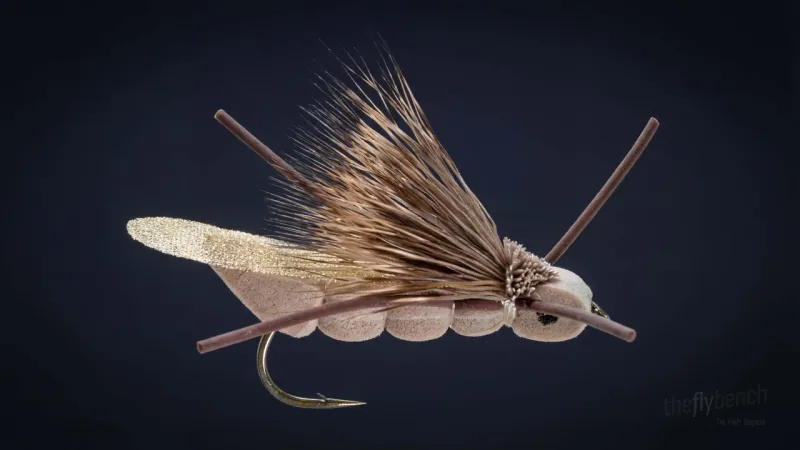
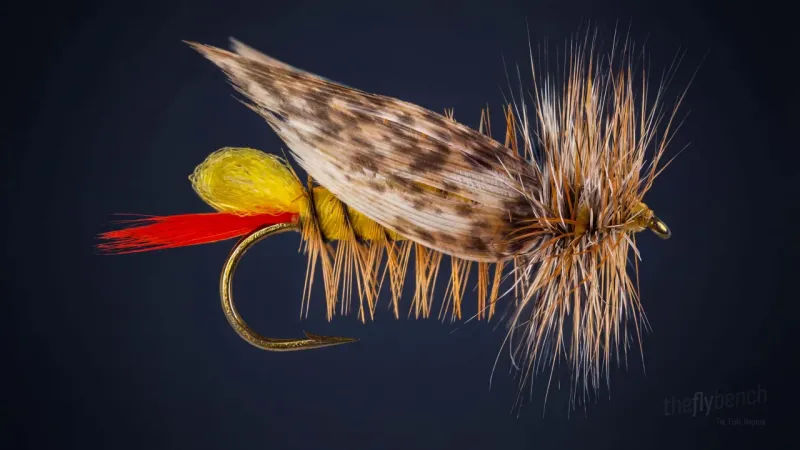
Popular hopper pattern developed by Brent Taylor. High floating, foam-bodied fly is perfect for fishing in the heat of the summer. Its large profile makes it an easy meal for hungry trout and its foam body makes it nearly unsinkable, perfect for fishing fast-moving water and as an indicator in hopper-dropper rigs.
Summer
Intermediate
Trout
Apr 2025
Overview
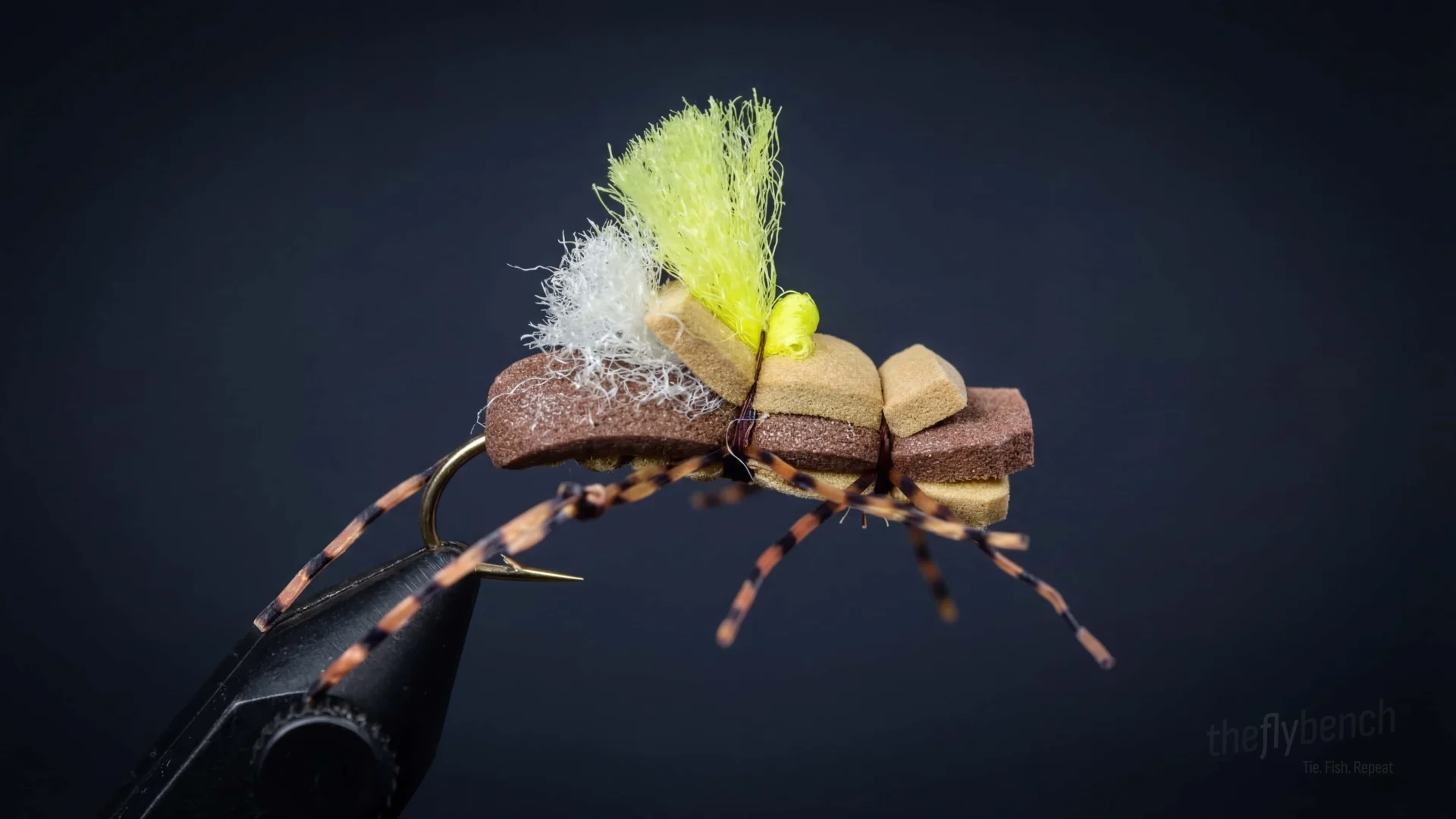
Developed by Brent Taylor in the early 2000s, this big foam-bodied terrestrial dry fly is tied with stacked foam segments, rubber legs, and sometimes wing or flash accents. Often used as a high-floating attractor in hopper-dropper rigs where it can support heavy nymphs. Easy to tie and floats like a cork, even in rough water. The large profile makes it highly visible to both fish and angler, making it excellent for pocket water and riffles.
Where to Buy This Fly
We only link to fly shops we trust. Some links are referral links, which may earn us a commission at no extra cost to you.
Materials
- Hook:
- Daiichi 1720, size #6-#10
- Thread:
- 3/0 monocord.
- Body:
- 2mm thick foam.
- Legs:
- barred silicon like the ones on Centipedes, by Montana Flies.
- Wing:
- Antron or Gator Hair, white.
Behavior & Presentation
Natural Behavior: Hoppers land with heavy splats after failed jumps, their powerful legs churning the surface film as they attempt to right themselves. This panicked surface activity during late afternoon warmth triggers explosive visual strikes from bank-hunting trout.
Where Trout Eat It: Fish grassy banks, meadow stream edges, and fast runs where hoppers blown from vegetation accumulate.
How to Fish It: Drift naturally along banks or add occasional twitches to simulate struggling insects. The foam body supports heavy dropper nymphs.
Best Water: Target bank edges, undercuts, seams, and riffles with overhanging grass where wind-blown hoppers concentrate.
Strike Type: Expect visible rises, explosive splashes, or aggressive surface boils as trout attack the large profile.
Fishing Strategy
Rigging Suggestions: Can be used as a single dry fly on 4X-5X tippet or as the lead fly in a hopper-dropper rig with a weighted nymph 18-36 inches below on 5X-6X tippet.
Seasonal Timing: Most effective June through September during with peak effectiveness during July and August when grasshoppers are most abundant. Water temperatures between 60-75°F and warm, sunny days between 70-85°F air temperature trigger best hopper activity.
Pro Tips: Highly visible due to its large size and foam body. The foam body makes it highly buoyant, allowing it to float in fast-moving water and support heavy droppers. Requires minimal floatant maintenance.
Entomology
Grasshoppers kick frantically with their powerful hind legs when they hit the water, creating splashy surface commotion while attempting to jump or swim to shore. This August and September feeding bonanza attracts aggressive strikes because hoppers represent one of the largest terrestrial meals available, with fish patrolling grassy banks and rushing from considerable distances to intercept these struggling, high-energy food items.
- Order
- Orthoptera
- Family
- Acrididae
- Common Name
- Grasshopper
- Organism Type
- terrestrial
- Life Stage
- adult