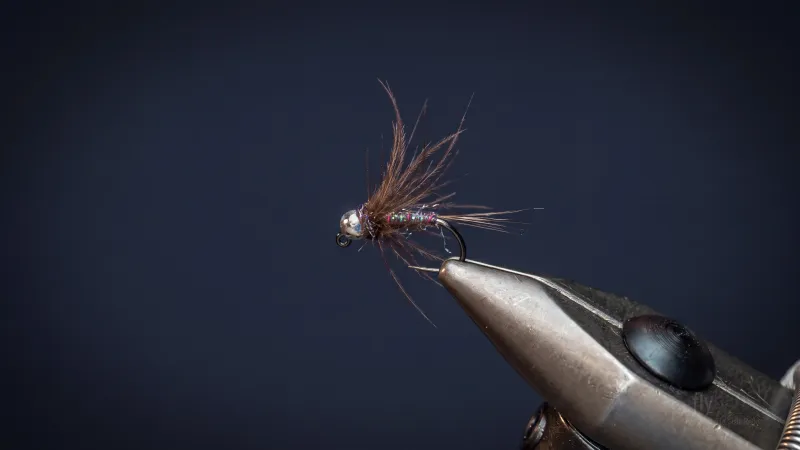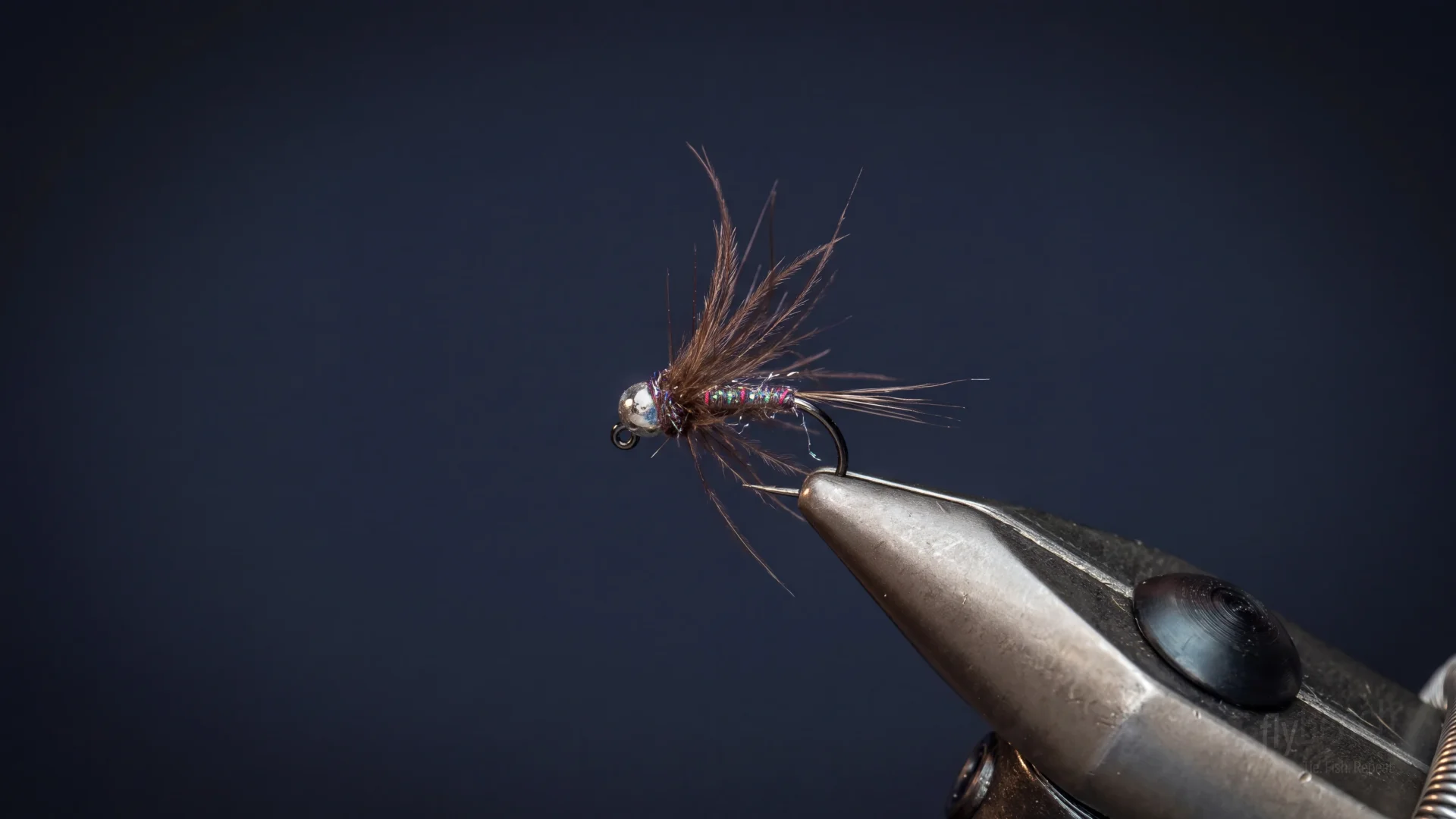
Overview
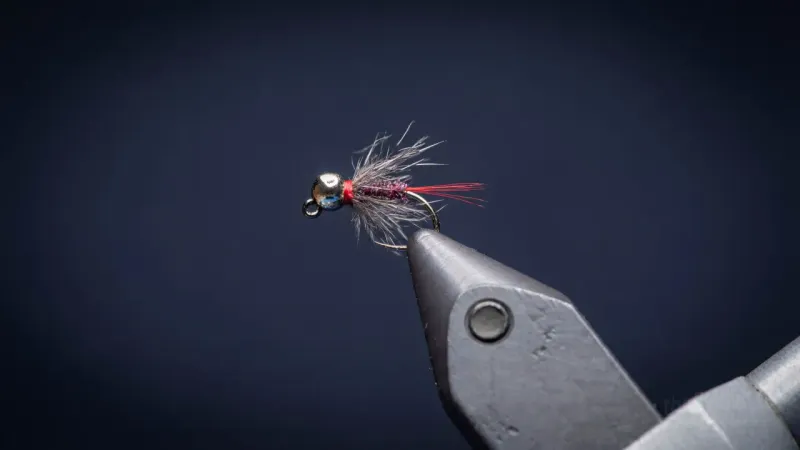
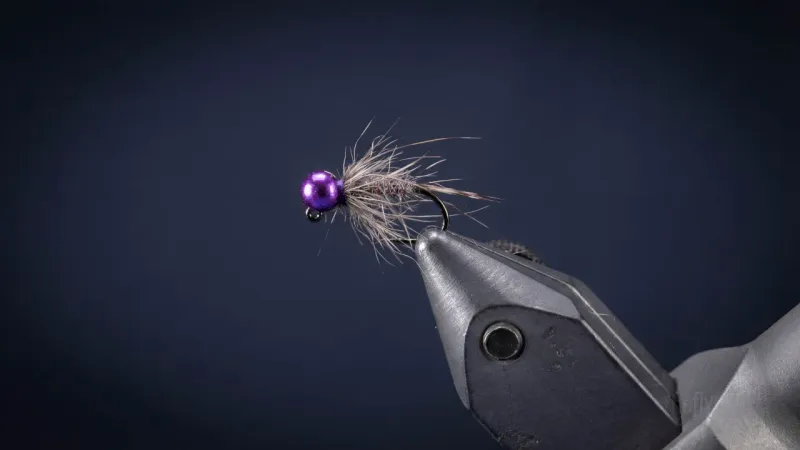
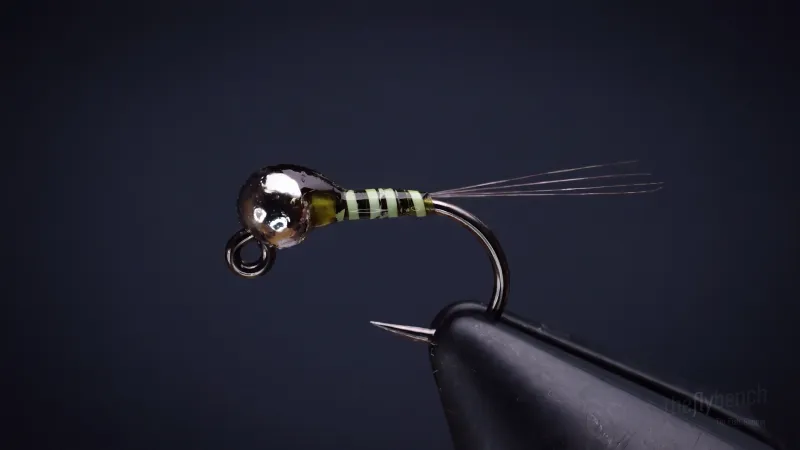
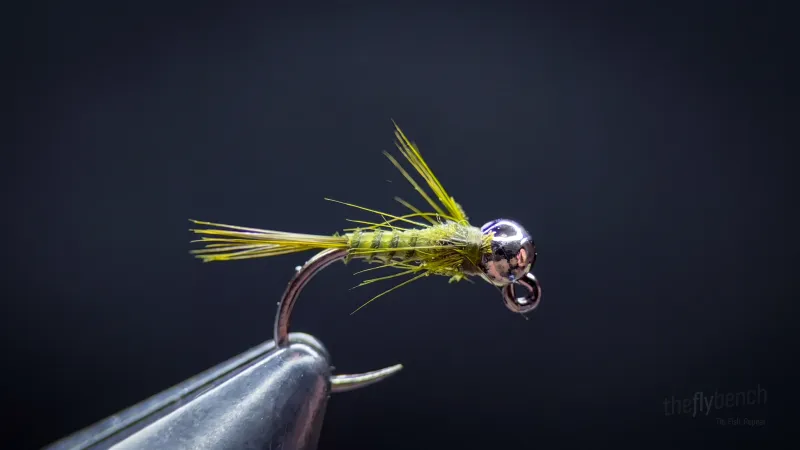
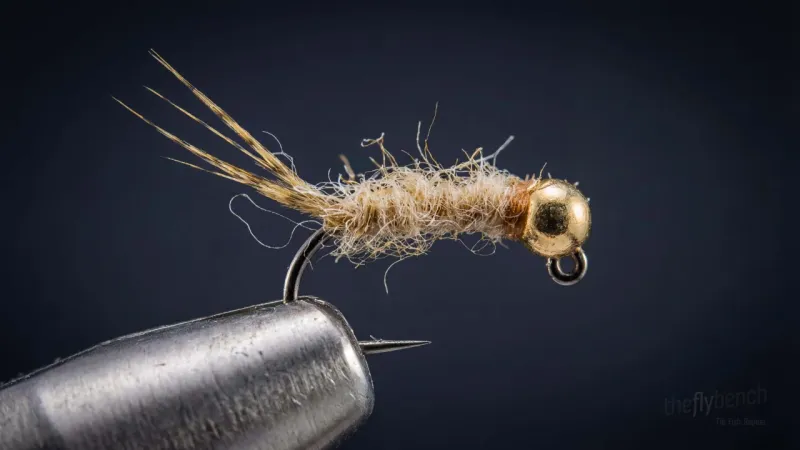
Scottish angler Craig McDonald, who ties for Fulling Mill, is credited with the Duracell, and it has been a standby on the European competition circuit for years. The name comes from an old slogan for the fly, "no fly is stronger longer." Keep the CDC collar to a few wraps so it pulses instead of dragging. A rusty olive body with a wood duck CDC collar makes a lighter version.
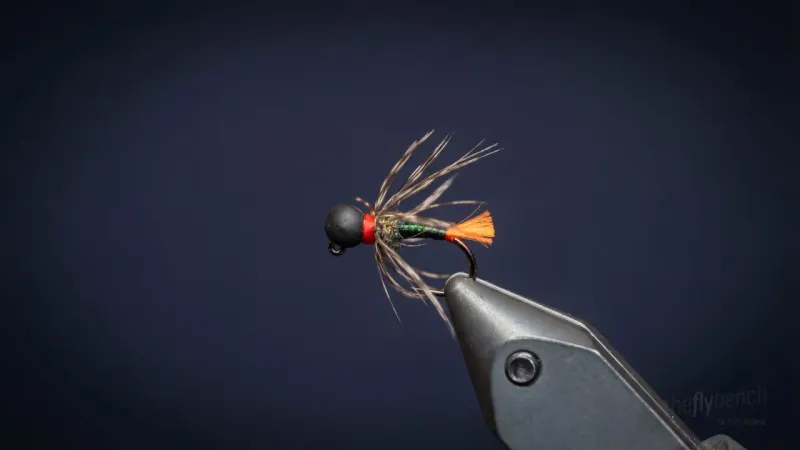
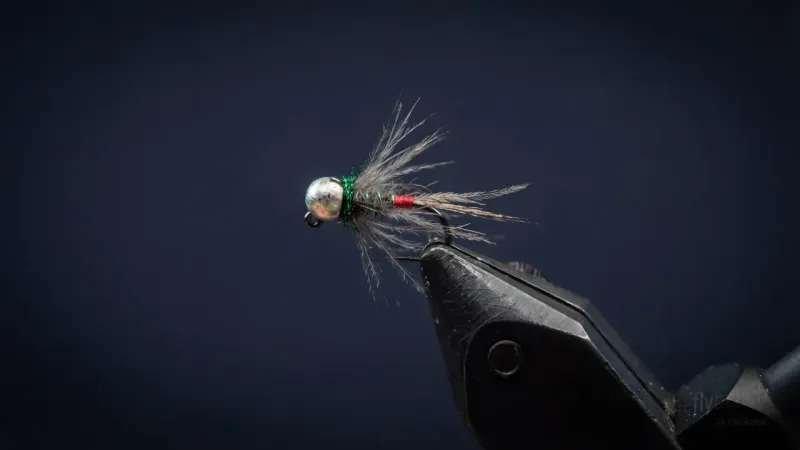
Related patterns

Behavior & presentation
- Natural Behavior
- Brown crawler and clinger mayfly nymphs lose their grip while grazing on cobble and roll downstream close to the bottom, legs flailing, until they can grab hold again.
- Where Trout Eat It
- In the bottom foot of the water column, where trout sit behind rocks and pick off nymphs tumbling past in the slower cushion along the streambed.
- How to Fish It
- Tight-line it as the heavy point fly, leading the sighter just ahead of the bead so the fly ticks along the stones with its point riding up. It also hangs well 18-24 inches under a big foam dry.
- Best Water
- Pocket water behind boulders, the inside seam of a fast riffle, and the head of a run where riffle water drops into a deeper slot.
- Strike Type
- The sighter stalls or jumps upstream for a split second; lift crisply on anything that breaks the rhythm of the drift, since the jig point sets cleanly on a quick hook set.
Fishing strategy
- Rigging Suggestions
- Fish on the point of a two-fly euro rig with 5X fluorocarbon, with a lighter nymph or soft hackle on a tag 20 inches above. For dry-dropper, tie it off the bend of a foam hopper or Chubby on 5X.
- Seasonal Timing
- Productive all year. Best from March through May and again September through November when brown mayfly nymphs are most active and the drift is heaviest.
- Pro Tips
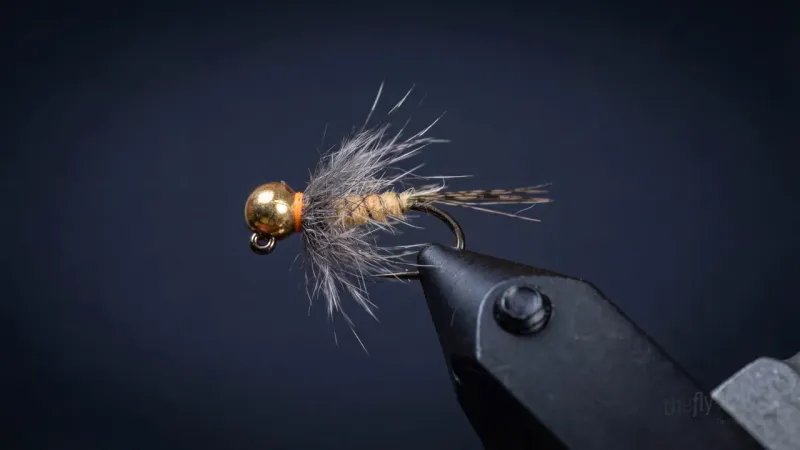
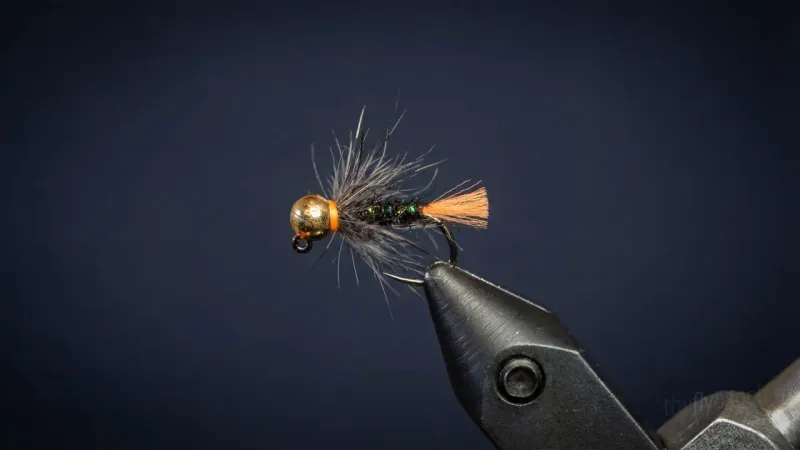
- Swap bead size before swapping flies; a 3.3mm bead on #12 covers most runs, and dropping to 2.8mm keeps it out of the rocks in skinny pocket water. Tie a few with copper or gold beads for off-colored water.
Entomology
Crawler and clinger mayfly nymphs graze algae off stones in riffles and runs and regularly lose their footing, drifting downstream near the bottom. Their mottled brown coloring and slender bodies make them a constant, easy meal for trout holding in the current.
- Order
- Ephemeroptera
- Common name
- Mayfly
- Organism
- insect
- Life stage
- nymph
Pattern details
- Moving Water
- Europe
- tight-line-nymph
- competition
- dead-drift
- jigging
- searching-pattern
- dry-dropper
- modern