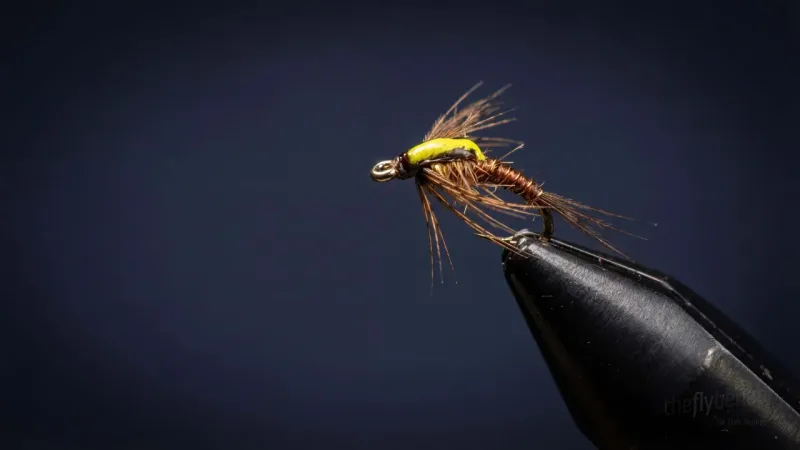
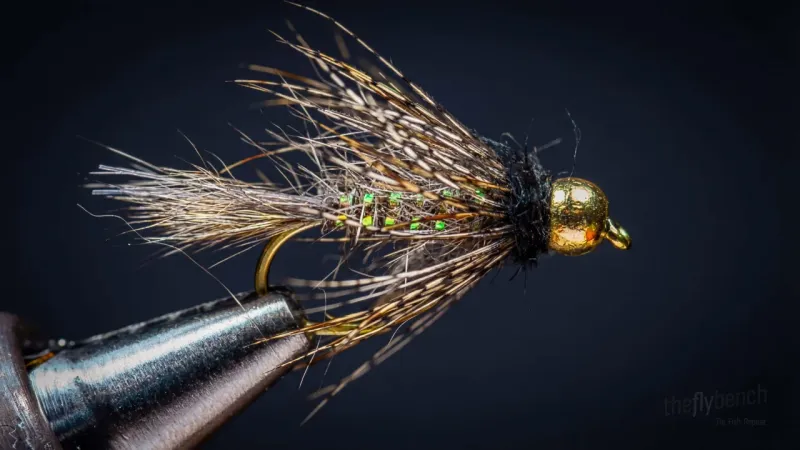
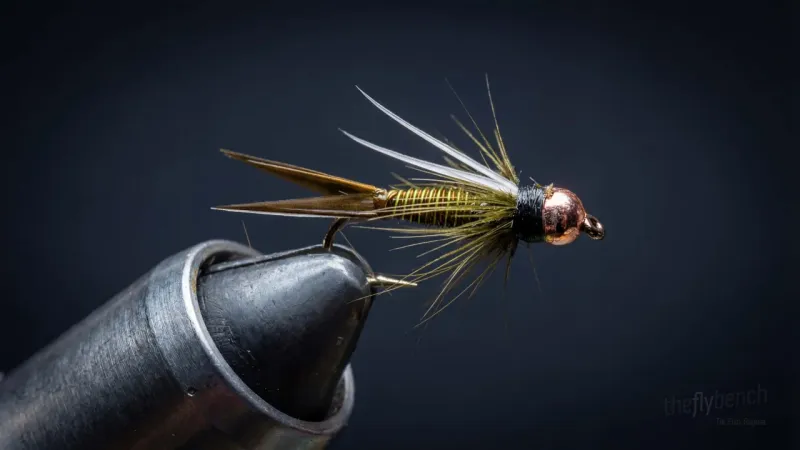
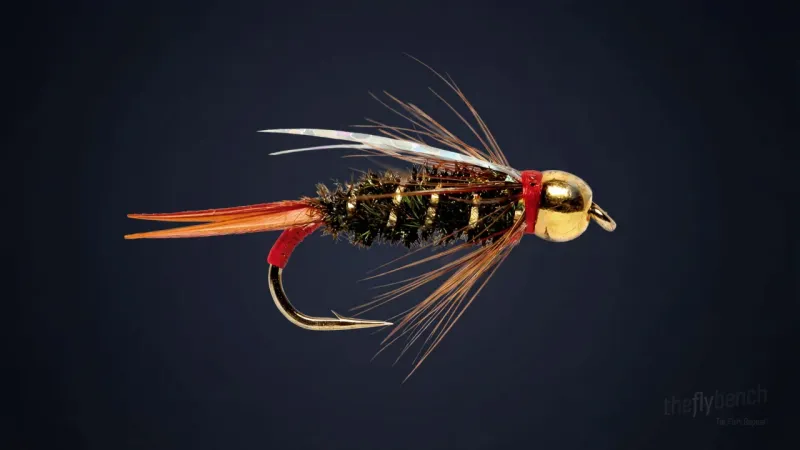
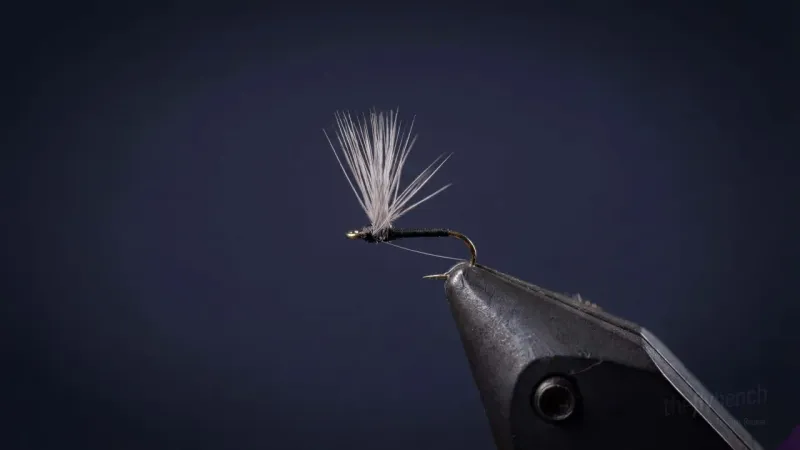
NymphBurk's Aggravator Prince
The Aggravator Prince is a highly effective nymph pattern that can mimic a variety of aquatic insects. Its flashy body attracts fish in clear and stained water alike. It provides a great profile and movement, making it irresistible to trout.
Spring, Fall
Intermediate
Trout
Apr 2025
Overview
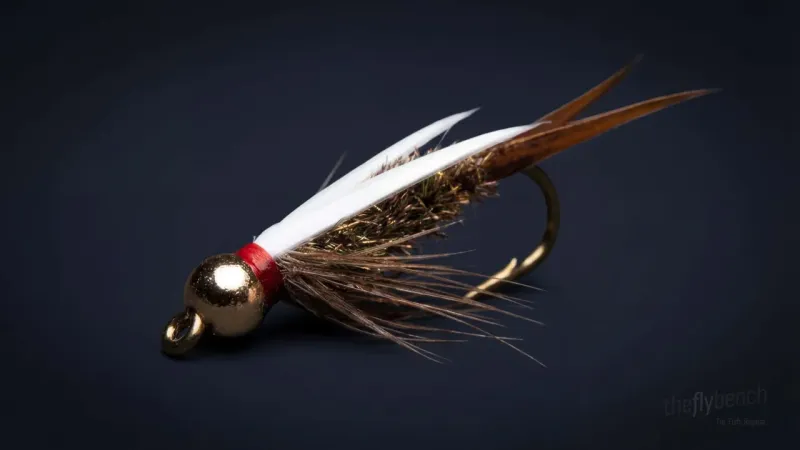
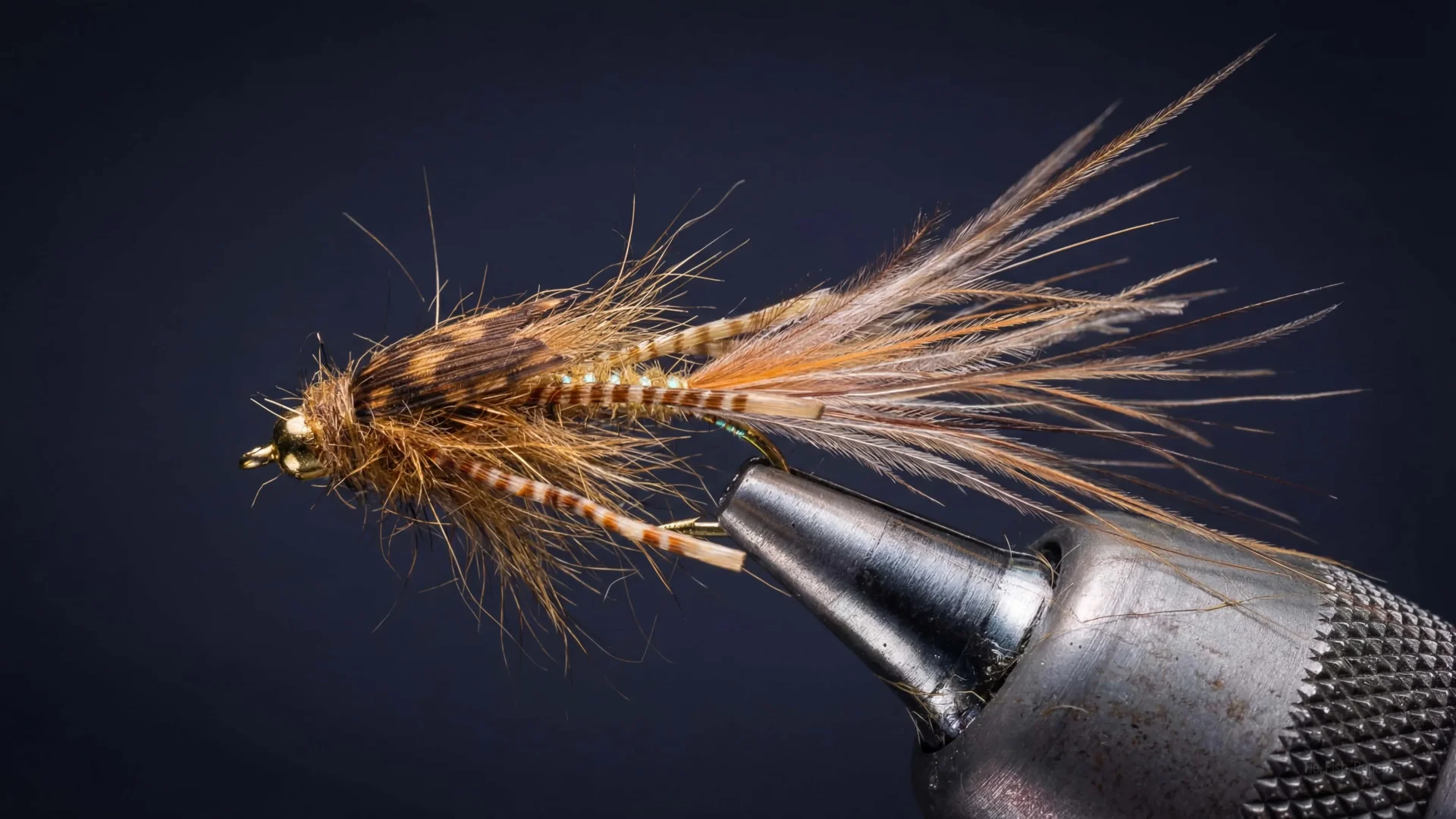
Burk's Aggravator Prince keeps the classic Prince Nymph's peacock herl body but simplifies the recipe: brown goose biots form the tail, and oval gold tinsel is wound over the herl for rib and flash. A wrap of brown hen hackle at the throat adds a soft, mobile collar that pulses in the current, and a gold tungsten bead up front gets it down and gives it visibility. It's tied on a standard nymph hook and works as a searching pattern for trout keying on mayflies or stoneflies in faster or discolored water.
Where to Buy This Fly
We only link to fly shops we trust. Some links are referral links, which may earn us a commission at no extra cost to you.
Materials
- Hook:
- Hanák H 400BL, size #12–#16
- Thread:
- Black Veevus 14/0
- Tail:
- Brown goose biots
- Ribbing:
- Gold oval tinsel
- Body:
- Peacock herl
- Throat:
- Brown hen hackle
- Bead:
- Gold tungsten bead, size to match hook
Behavior & Presentation
Natural Behavior: Large stonefly nymphs crawl deliberately across cobble substrates in fast water, gripping rocks with powerful legs while foraging on algae and detritus. They periodically lose their grip during high flows or pre-emergence migrations, tumbling downstream with legs and antennae extended in a helpless drift that makes them highly visible to opportunistic trout.
Where Trout Eat It: Trout intercept these nymphs in the bottom third of the water column, particularly where rocky substrates and moderate to fast currents concentrate drifting insects.
How to Fish It: Fish with dead drifts through runs and tailouts, maintaining bottom contact with weighted rigs. The beadhead helps keep the fly ticking along structure where stoneflies naturally tumble.
Best Water: Most productive in tail-outs, seams, and pocket water where current breaks deliver concentrated drifts of displaced nymphs.
Strike Type: Watch for indicator dips, subtle line tightening, or hesitation in the drift as trout intercept the tumbling nymph.
Fishing Strategy
Rigging Suggestions: Fish as a dropper 18-24 inches below a dry fly, or as the lead fly in a two-nymph Euro rig. Use 4X or 5X tippet.
Seasonal Timing: Most productive during from April through June and from September through October when mayflies and stoneflies are most active.
Pro Tips: The beadhead provides quick sink rate in fast, deeper water while the biots and hackle create natural movement. This attractor pattern often triggers strikes when fish aren't feeding selectively.
Entomology
Stonefly nymphs crawl aggressively along bottom structure in fast water, using their powerful legs and flat bodies to maintain position while feeding on detritus and smaller invertebrates. These large nymphs periodically dislodge during high flows or pre-emergence migrations, tumbling downstream with legs splayed and creating an obvious, meaty silhouette that triggers strikes from large, opportunistic trout. Their substantial size and protein content make them preferred prey items during early season runoff and throughout the year in productive freestone rivers.
- Order
- Plecoptera
- Common Name
- Stonefly
- Organism Type
- insect
- Life Stage
- general