

Overview
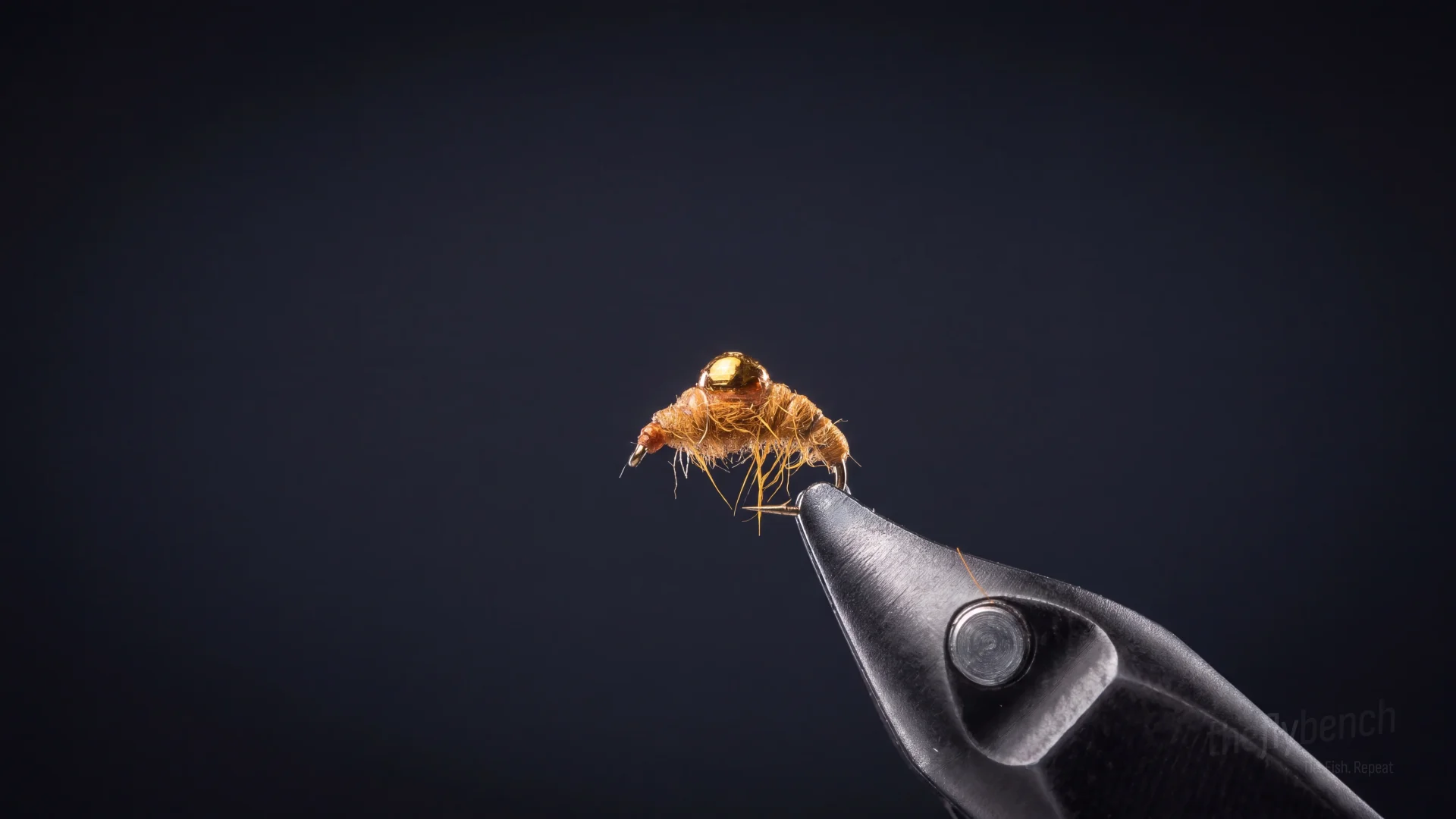
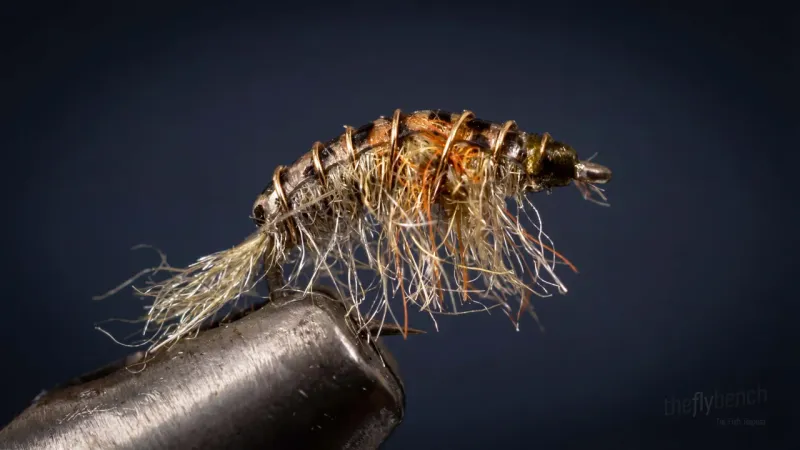
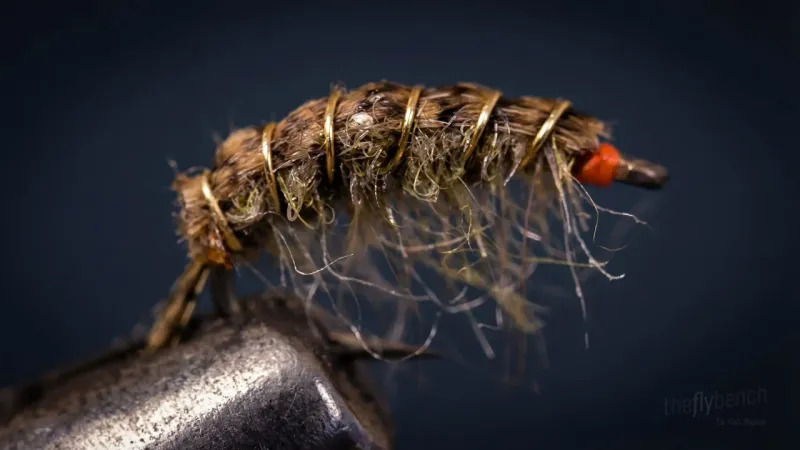
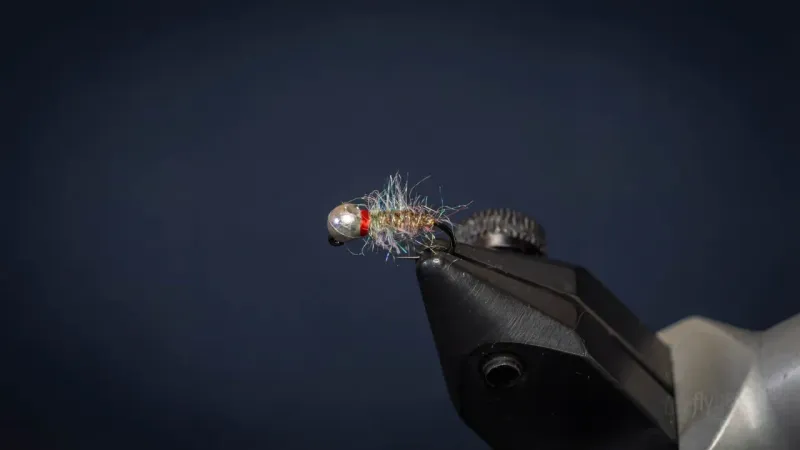
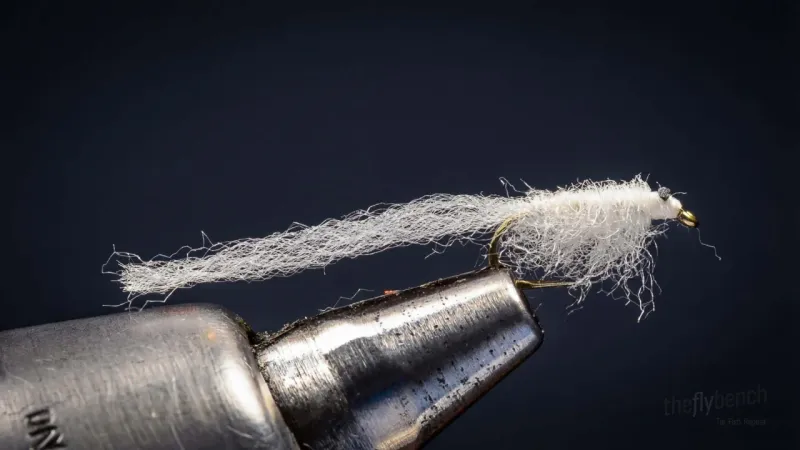
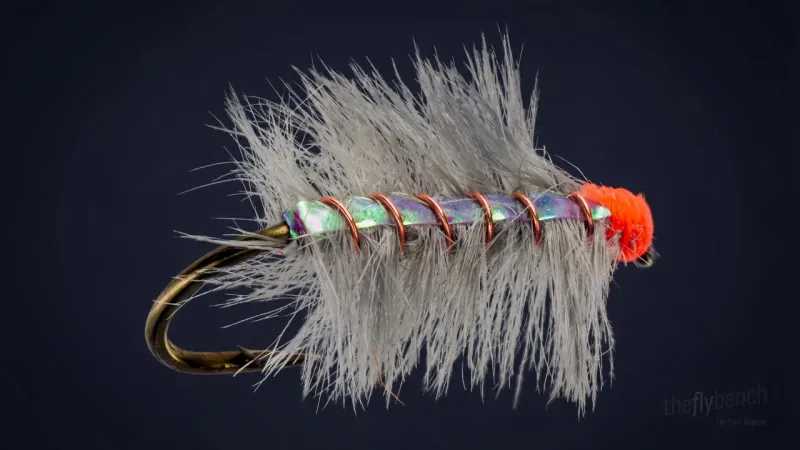
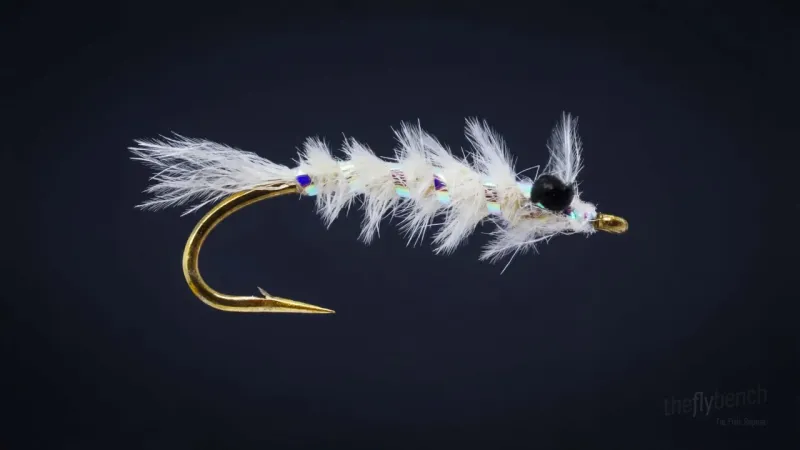
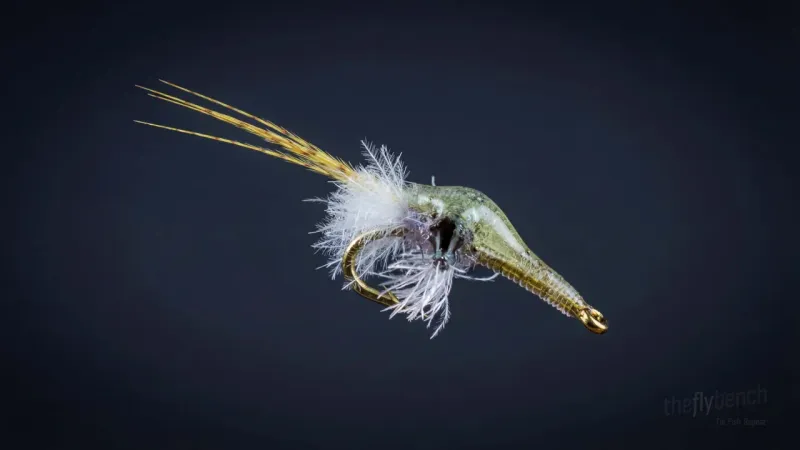
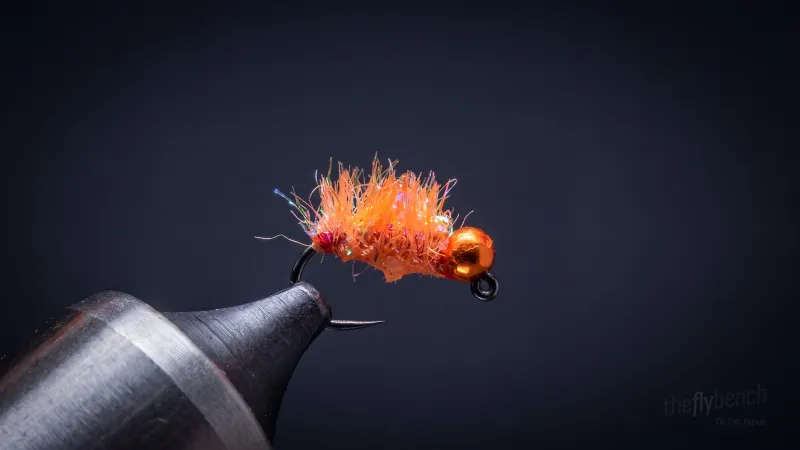
Hans Mylant, a guide for Anglers All and an Umpqua signature tyer, designed and refined the Scud Bomb over several seasons of guiding on the South Platte drainage. He built it for tight-line nymphing as a point fly heavy enough to replace split shot. The Jig Bomb bead flips the hook point up to cut snags. Tie it in olive or burnt orange with a copper or orange bead.
Related patterns
Behavior & presentation
- Natural Behavior
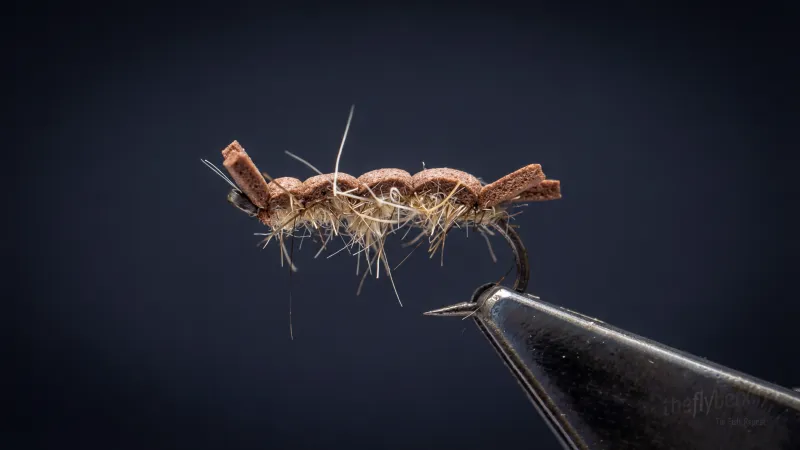
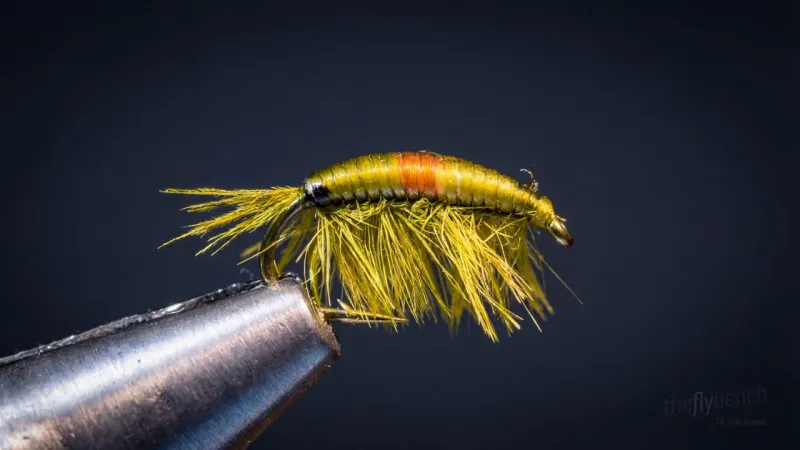
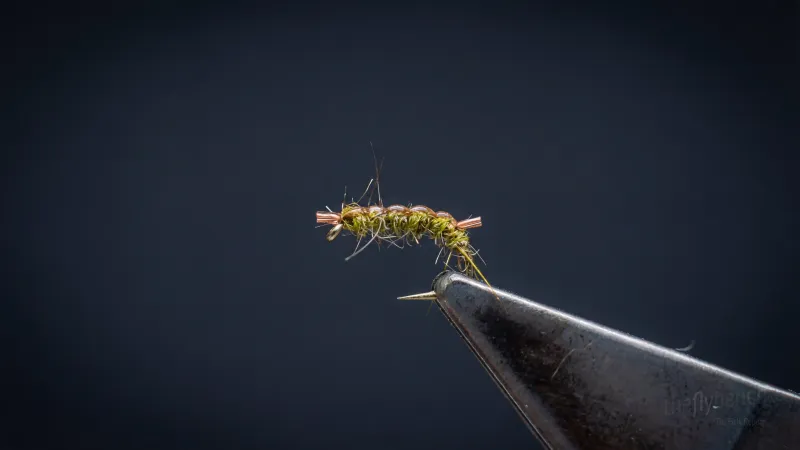
- Scuds crawl through weed beds and gravel, swimming in short bursts with their bodies stretched out and curling up when they get knocked loose. Flow changes and disturbed bottoms send them tumbling downstream in numbers.
- Where Trout Eat It
- Trout pick scuds off the bottom in tailwater weed channels, freestone runs and the shallow weedy margins of reservoirs and alpine lakes.
- How to Fish It
- Run it as the heavy point fly on a tight-line rig and lead the drift just slower than the current so it ticks bottom, or hang it as the anchor below an indicator with a smaller fly trailing.
- Best Water
- Deep seams below riffles, weedy troughs, drop-offs at the head of pools and slow inside edges where dislodged scuds settle out.
- Strike Type
- On a tight line, the sighter stalls or twitches upstream. Under an indicator, expect a short dip or sideways slide as the heavy fly stops.
Fishing strategy
- Rigging Suggestions
- On a Euro rig, fish it on the point with 5X or 6X fluorocarbon and a lighter nymph or midge 18-20 inches above. Under an indicator, use it as the lead fly in place of split shot and trail a small pattern 12-18 inches behind on 5X-6X.
- Seasonal Timing
- Scuds are available all year, so it fishes well in every month. Winter and early spring on tailwaters are prime, and so are high, off-color flows when scuds get knocked loose.
- Pro Tips
- Pick the bead size by depth and current: 2.5mm for shallow runs, 3.5mm for deep, fast water. Brush the dubbing out under the shell for legs, and carry olive and orange to match the scuds where you fish.
Entomology
Scuds are small freshwater amphipods that live in dense numbers among aquatic plants, moss and gravel in tailwaters, spring creeks and lakes. They feed on decaying plant matter and swim in quick, darting bursts, and they get swept into the drift when flows rise or the bottom is disturbed. Their abundance all year makes them a dependable meal for trout in fertile water.
- Order
- Amphipoda
- Common name
- Scud
- Organism
- crustacean
- Life stage
- general
Pattern details
- Moving Water
- Stillwater
- Rocky Mountain
- tight-line-nymph
- indicator-nymph
- dead-drift
- tailwater
- freestone
- guide-fly
- modern