

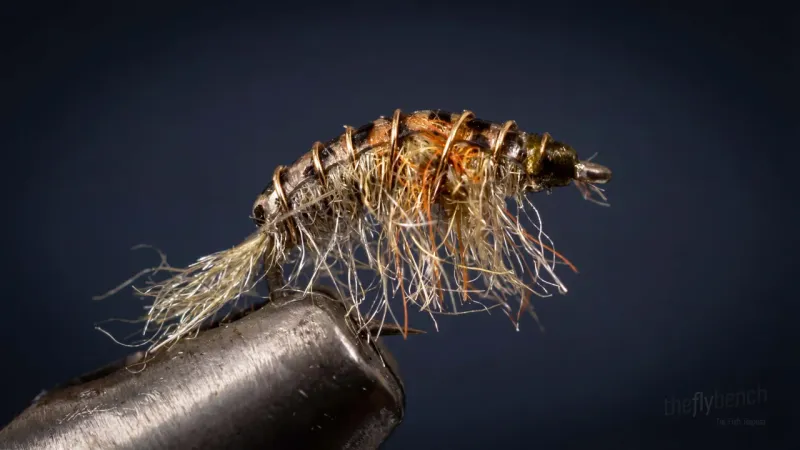
Overview
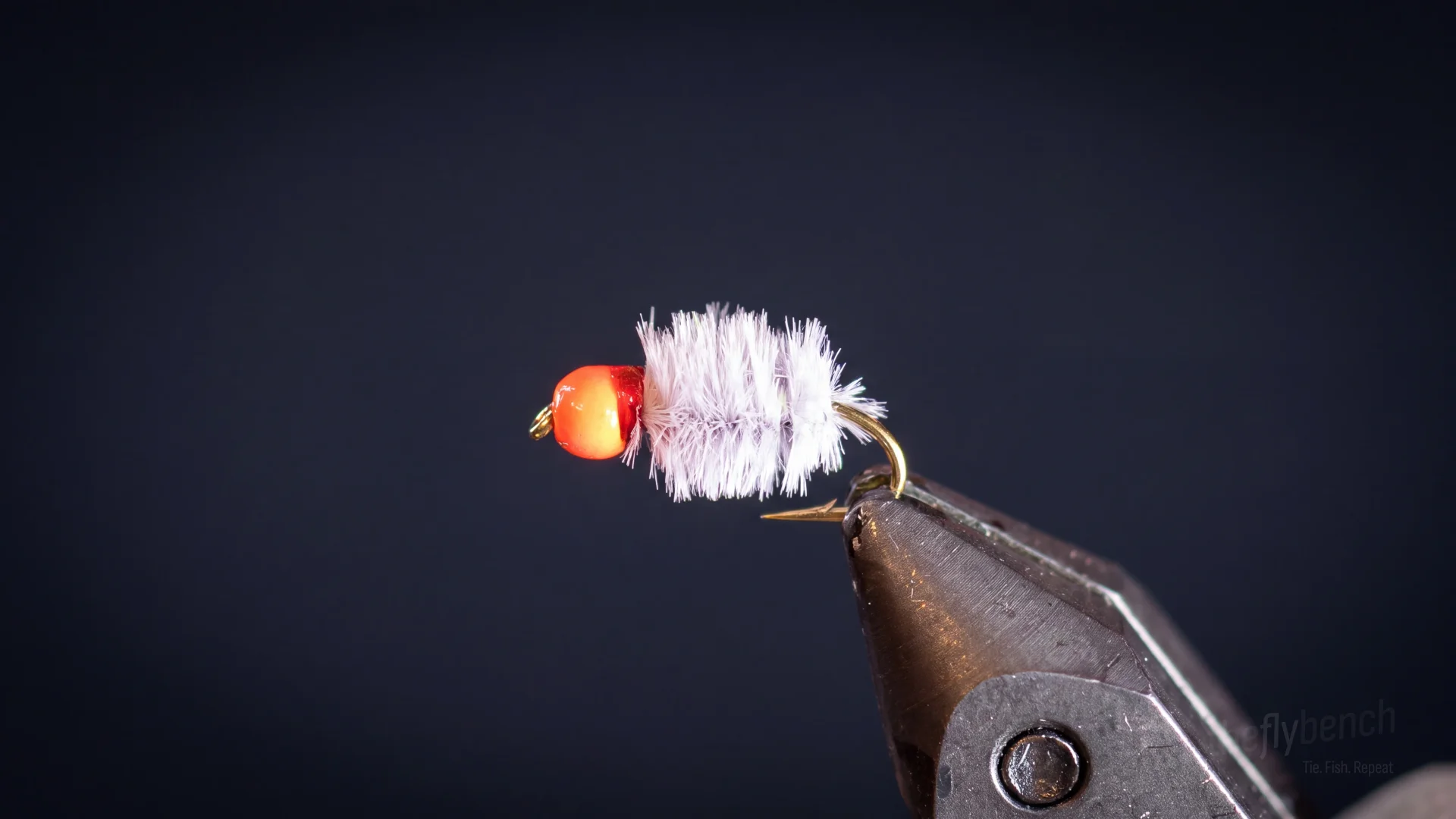
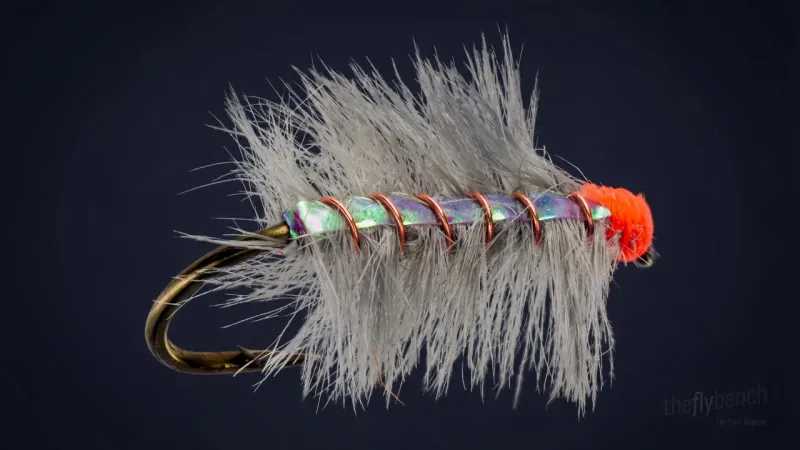
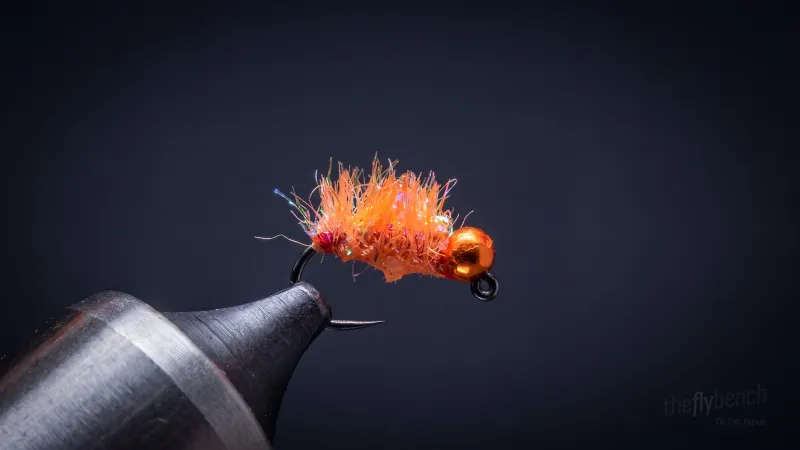
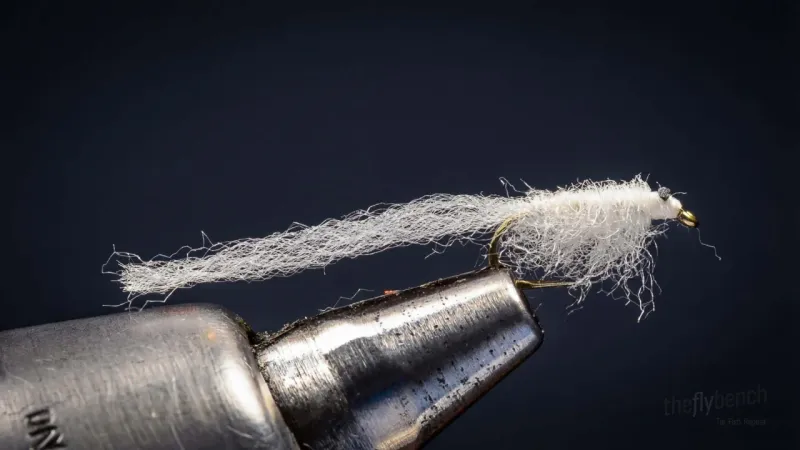
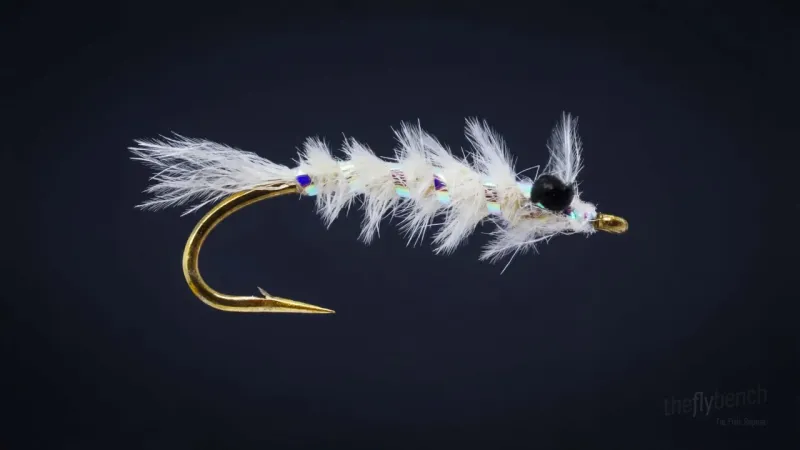
The original Ray Charles started as a guide fly on Montana's Bighorn River in the early 1990s, and no one has a firm claim to designing it. This version adds a fluorescent orange brass bead at the eye, so the fly gets down without extra split shot and carries a hot spot that can trigger fish ignoring the plain version. Ostrich herl in any color works, so tie gray, tan, olive, and pink to match local bugs.
Related patterns
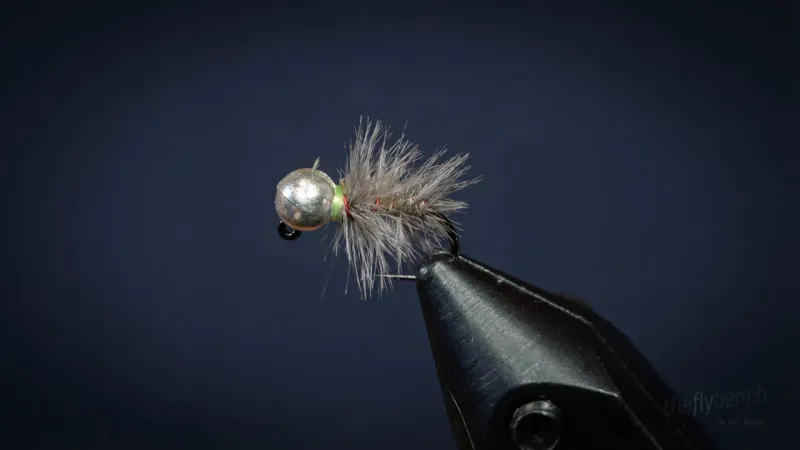
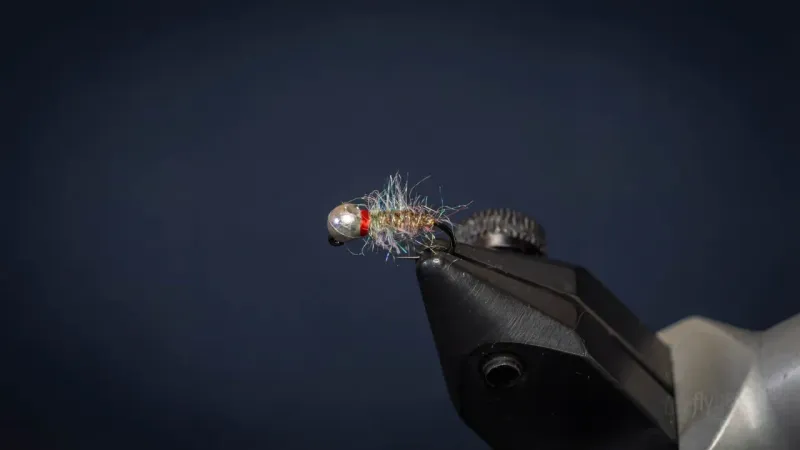
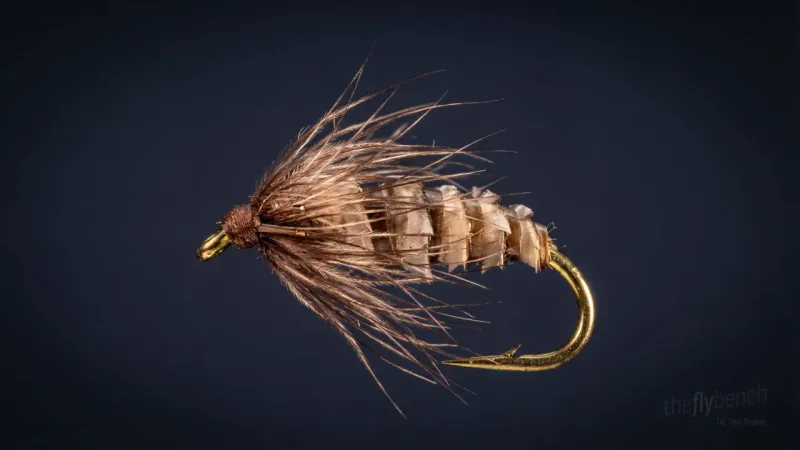
Behavior & presentation
- Natural Behavior
- Sowbugs are flat, many-legged crustaceans that crawl slowly over silt, gravel, and weed stems. They are poor swimmers, so a surge in flow or a wading angler upstream sends them rolling along the bottom with legs flailing.
- Where Trout Eat It
- Below dams, trout settle into slow, weedy lanes and pick off sowbugs tumbling just off the bottom. In lakes, fish root around weed beds and shallow silty bays where the bugs crawl.
- How to Fish It
- Dead-drift it low under an indicator or on a tight line, letting the bead pull it to the bottom. In lakes, suspend it just above the weeds or inch it back with a very slow hand-twist.
- Best Water
- Weed-lined slots in tailwaters, soft seams behind gravel bars, the tail-out below a riffle where dislodged bugs settle, and the edge of the drop-off on lake shoals.
- Strike Type
- Takes are slow and soft. The indicator dips or slides sideways as a trout tips down to inhale the drifting fly, so set on any change in the drift.
Fishing strategy
- Rigging Suggestions
- Fish it on 5X-6X fluorocarbon, either as the dropper 12-18 inches below a heavier stonefly or worm or as the point fly on a euro rig. The bead often supplies enough weight in shallow tailwater runs, so add split shot only in faster or deeper water.
- Seasonal Timing
- Sowbugs are present all year. Winter and early spring are prime on tailwaters, when few insects hatch and trout feed on crustaceans, and the fly also fishes well right after a flow change knocks bugs loose from the weeds.
- Pro Tips
- Carry the beaded and unbeaded versions together. Start with this one in off-color or deeper water, and switch to the plain fly when fish start refusing the bright bead in low, clear flows. Keep the herl sparse so the tinsel shellback reads as a slim back.
Entomology
Sowbugs crawl across silt, gravel, and aquatic plants in tailwaters, spring creeks, and lakes, feeding on decaying vegetation. They cannot swim well, so current or flow changes knock them loose to drift along the bottom, where trout eat them in every month of the year.
- Order
- Isopoda
- Family
- Asellidae
- Common name
- Sowbug
- Organism
- crustacean
- Life stage
- general
Pattern details
- Moving Water
- Stillwater
- Rocky Mountain
- dead-drift
- indicator-nymph
- tailwater
- beginner-friendly
- attractor
- guide-fly