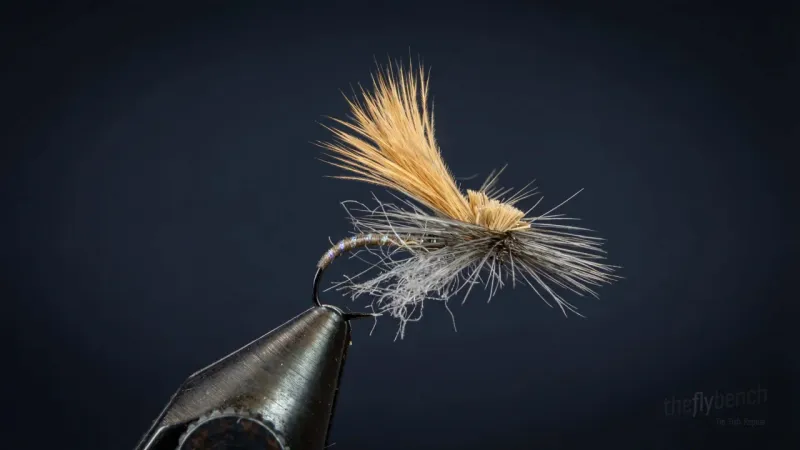
Overview
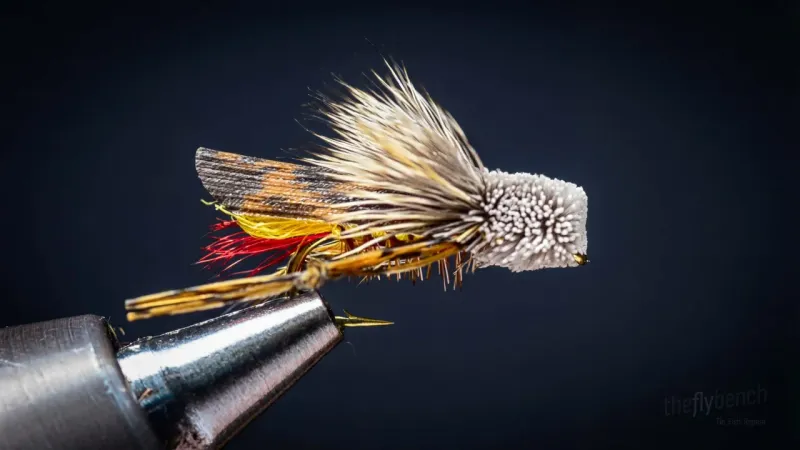
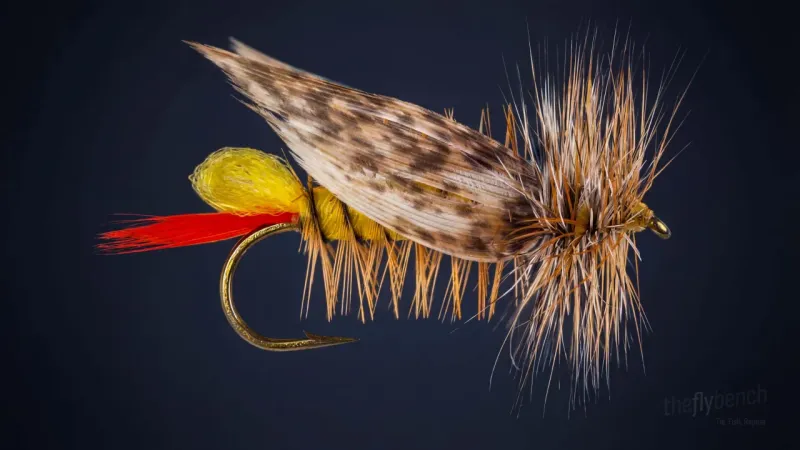
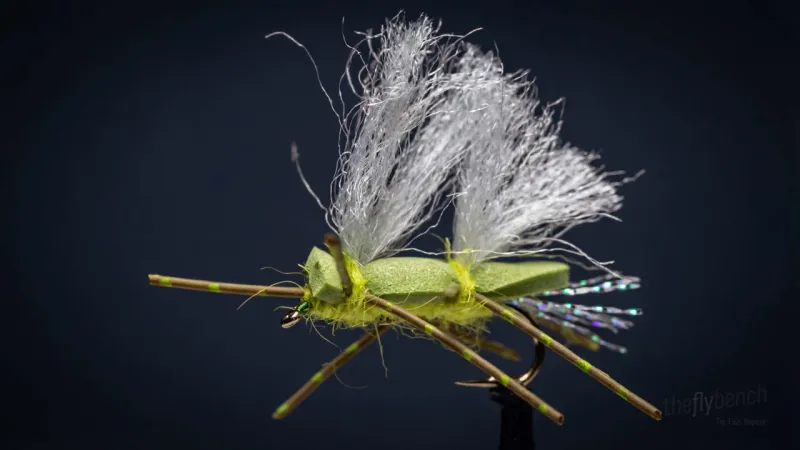
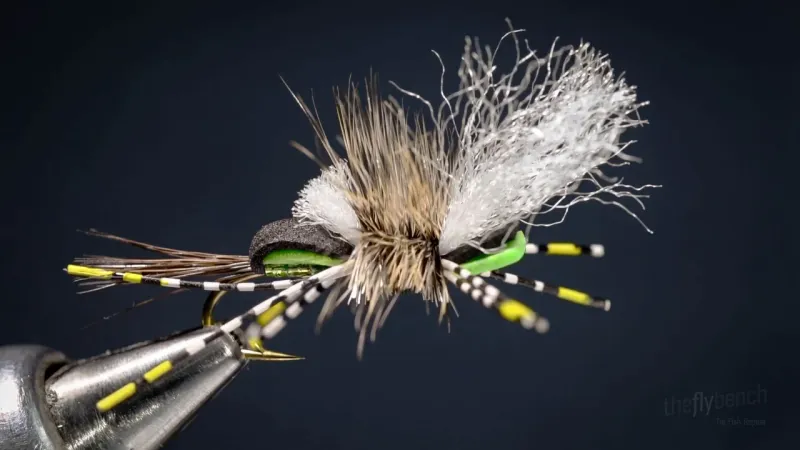
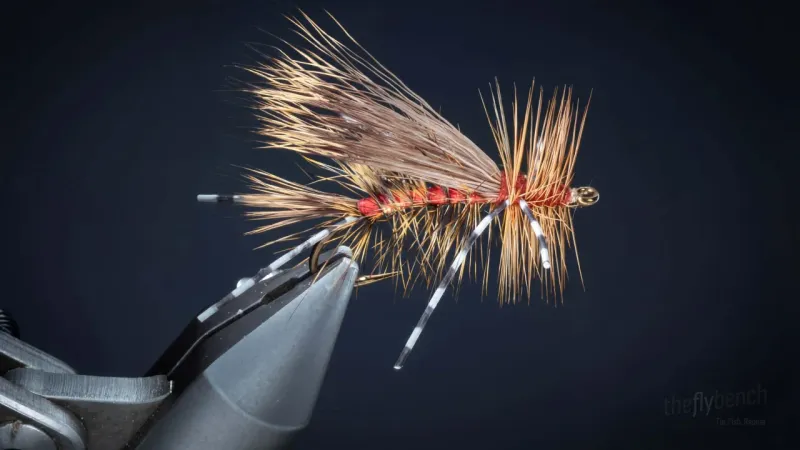
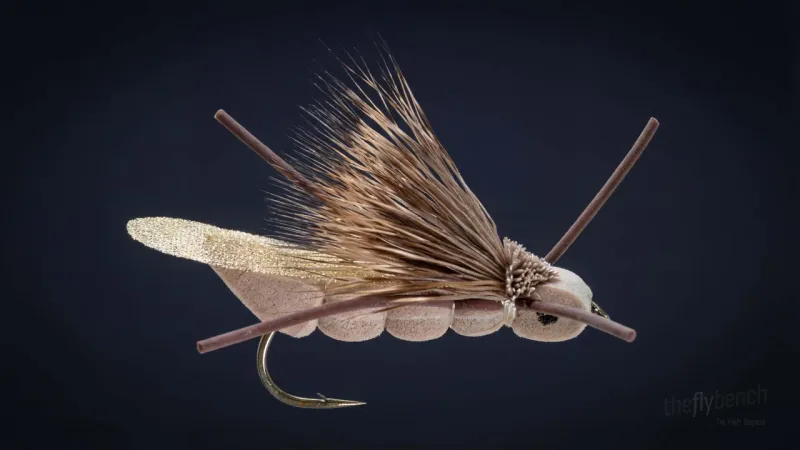
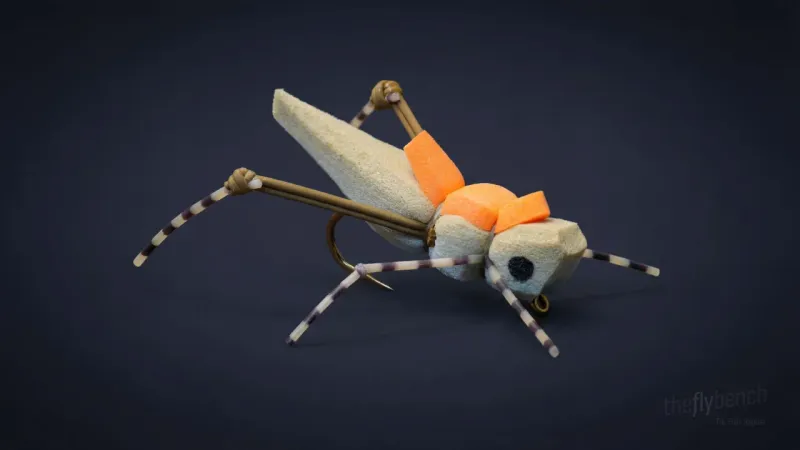
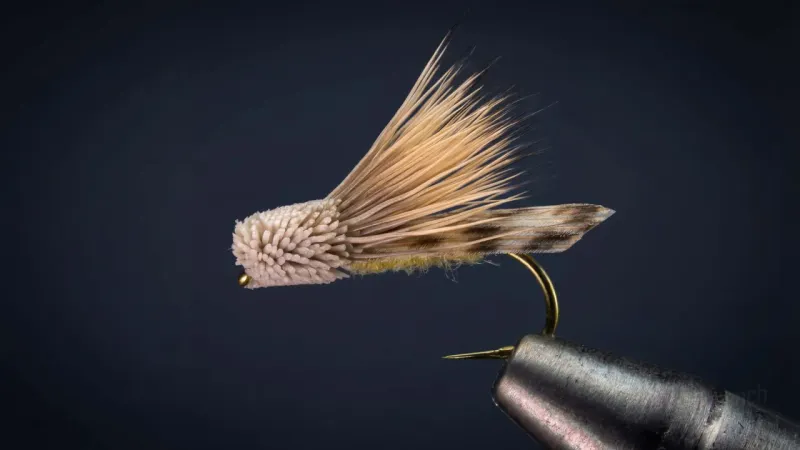
This classic terrestrial pattern is built on a yellow poly yarn body with knotted pheasant tail fiber legs and a mottled, vinyl-coated turkey quill wing for a lifelike hopper shape. A red deer belly hair tail and a head and collar of spun, trimmed deer body hair round out the profile, floating the fly high and pushing a visible wake. It's a satisfying tie for anglers comfortable shaping deer hair, and a proven searching pattern through hopper season.
Related patterns
Behavior & presentation
- Natural Behavior
- Hoppers tumble from streamside grasses after failed jumps, their legs thrashing the surface while attempting escape. Late afternoon warmth increases hopper activity along vegetated banks, triggering explosive visual strikes.
- Where Trout Eat It
- Focus on grassy banks and vegetated edges in rivers and streams where hoppers naturally fall.
- How to Fish It
- Cast tight to banks, allowing natural drift into main current. Subtle twitches mimic struggling insects.
- Best Water
- Target bank edges, undercuts, seams, and riffles with overhanging vegetation where wind-blown hoppers accumulate.
- Strike Type
- Expect visible rises, explosive splashes, or aggressive surface strikes on the large profile.
Fishing strategy
- Rigging Suggestions
- Dave's Hopper can be used as a single dry fly or as the top fly in a dry-dropper setup.
- Seasonal Timing
- is the prime time for Dave's Hopper, as it imitates grasshoppers which are abundant during this season. Use this pattern during the when grasshoppers are most active.
- Pro Tips
- The foam body of this fly makes it highly buoyant and visible on the water. The vibrant yellow color also improves its visibility.
Where to fish it
Rivers anglers pair with this fly, with local shops that stock it.
River details and fly shops from River & Run, our sister site.
Entomology
Grasshoppers land heavily on the water after failed jumps from streamside vegetation, their legs churning the surface as they attempt to right themselves and escape. The distinctive silhouette and panicked surface activity during late summer months triggers visual hunting behavior in trout, who learn to anticipate hopper falls along vegetated banks and respond with explosive surface strikes.
- Order
- Orthoptera
- Family
- Acrididae
- Common name
- Grasshopper
- Organism
- terrestrial
- Life stage
- adult
Pattern details
- Moving Water
- Rocky Mountain
- Southeast
- dead-drift
- hopper-season
- classic
- beginner-friendly